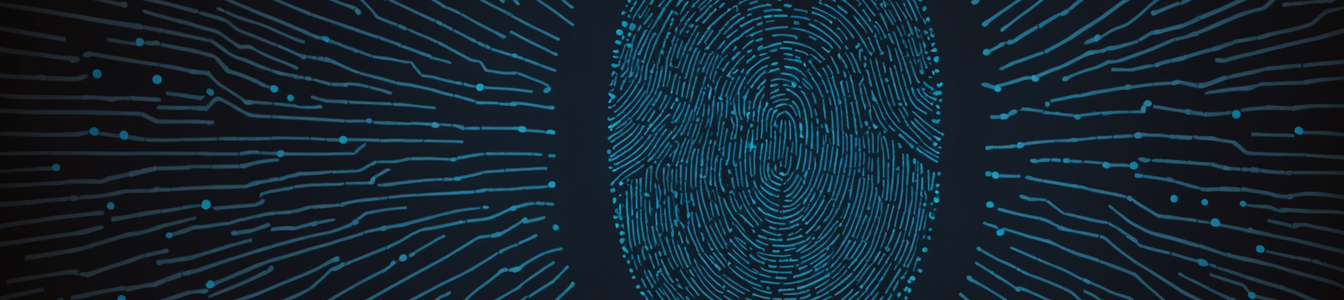
A seismic shift is underway in the cybercrime underworld. The lucrative business of phishing, long focused on stealing passwords and credit card numbers, is evolving to target a far more sensitive and permanent class of data: our biological identity. Security researchers are raising the alarm over the emergence of 'Biometric Phishing' campaigns, where threat actors use advanced social engineering, often supercharged by Artificial Intelligence (AI), to harvest fingerprints, facial recognition data, and voiceprints.
The core mechanics of these attacks represent a sinister refinement of traditional phishing. Instead of a poorly written email urging a password reset, victims are lured into interactions designed to capture their unique biological traits. One prevalent method involves fake mobile application updates or security verification prompts. A user might receive a convincing SMS or notification, seemingly from a trusted service like their bank or a government agency, urging them to 're-verify' their identity due to a 'security breach.' The link leads to a flawlessly cloned website or a malicious app that, under the guise of enhanced security, requests a fingerprint scan via the device's sensor or prompts the user to take a selfie for facial authentication.
Artificial Intelligence is the primary accelerant for this threat. As reported in analyses of emerging campaigns, AI tools are being used to generate phishing content of unprecedented quality. This includes creating perfect replicas of corporate login portals, drafting persuasive and grammatically flawless messages in multiple languages, and even synthesizing voice or video to impersonate trusted contacts in vishing (voice phishing) or deepfake video calls. The level of realism is now so high that it can bypass the scrutiny of attentive users and, in some documented cases, deceive cybersecurity specialists during controlled tests.
The implications of a successful biometric data breach are catastrophic and fundamentally different from a password leak. A compromised password can be changed; a biometric template, once stolen, is compromised forever. An individual has only one face, ten fingerprints, and a unique voice. This stolen data could be used to create a 'digital clone' capable of bypassing biometric multi-factor authentication (MFA) systems protecting critical infrastructure, financial accounts, and corporate networks. On a broader scale, stolen biometric databases could fuel a black market for identity fraud, enabling criminals to assume the identities of victims for years to come.
For the cybersecurity community, this trend demands an urgent paradigm shift in defense strategies. The traditional 'detect and respond' model is insufficient. A proactive, prevention-centric approach is critical. Recommendations include:
- User Education Reboot: Training must move beyond spotting typos in emails. Users need to be taught to be skeptical of any unsolicited request for biometric validation, especially those invoking urgency or fear.
- Implementation of Liveness Detection: Organizations relying on biometrics must integrate advanced anti-spoofing technologies. Liveness detection, which requires a blink, smile, or head movement, can thwart the use of static photos or masks.
- Adoption of On-Device Processing: The gold standard is to ensure biometric data never leaves the user's device. Authentication should occur locally, with only a cryptographic confirmation (not the raw biometric template) being sent to the verifying server.
- Layered Defense (Defense-in-Depth): Biometrics should not be a standalone solution. They must be part of a layered authentication strategy, combined with hardware security keys or behavioral analytics that are harder to replicate.
- Regulatory and Privacy Focus: This new threat vector strengthens the argument for robust data privacy regulations that treat biometrics as a special, high-risk category of personal data, mandating stringent protection and breach notification requirements.
The era of biometric phishing marks a pivotal moment. As cybercriminals weaponize AI to target the very essence of our physical identity, the security industry must respond with equally sophisticated, privacy-preserving innovations. The goal is no longer just to protect data, but to safeguard human identity itself in the digital realm.
Comentarios 0
Comentando como:
¡Únete a la conversación!
Sé el primero en compartir tu opinión sobre este artículo.
¡Inicia la conversación!
Sé el primero en comentar este artículo.