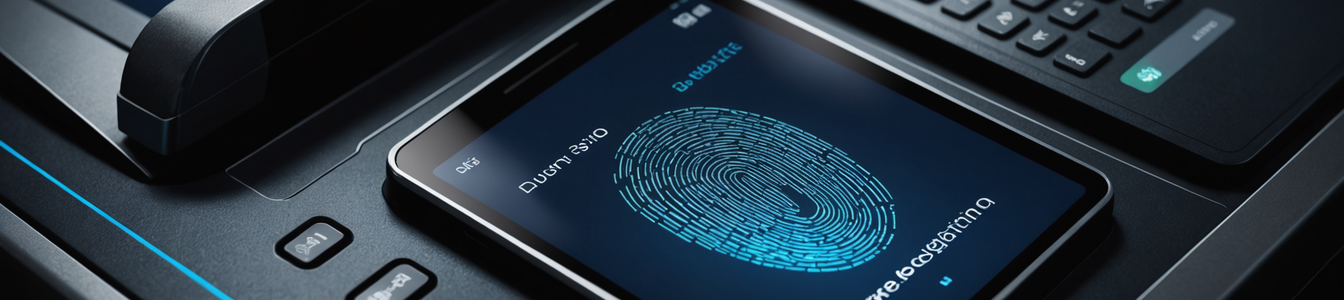
The retail security landscape is witnessing a paradigm shift as biometric authentication technologies transform point-of-sale (POS) systems, offering unprecedented security while enhancing customer experience. Recent industry recognitions and technological advancements signal a mature market ready for widespread adoption.
Industry leaders including Verifone, J.P. Morgan Payments, and Wink have been recognized as best-in-class providers in Javelin Strategy Research's 2025 Emerging Biometric Authentication at the Point-of-Sale Scorecard. This recognition underscores the growing market acceptance and technological sophistication of biometric solutions in retail environments. These systems are moving beyond pilot phases into mainstream implementation, addressing critical security vulnerabilities in traditional payment methods.
The biometric revolution at checkout counters represents a fundamental rethinking of transaction security. Unlike traditional card-based systems that rely on potentially stealable or cloneable credentials, biometric authentication uses unique physiological characteristics—fingerprints, facial recognition, iris patterns, or vein mapping—to verify customer identity. This approach significantly reduces fraud risks associated with stolen cards, skimmed information, or compromised PINs.
Parallel developments in India's Aadhaar system demonstrate the scalability and versatility of biometric authentication beyond pure payment scenarios. The UIDAI's enhanced Aadhaar application now supports faster check-ins at hotels and events, showcasing how biometric identity verification can streamline various consumer interactions while maintaining security standards. This expansion into hospitality and event management illustrates the broader applicability of biometric systems across multiple sectors.
From a cybersecurity perspective, the adoption of biometric POS systems addresses several critical vulnerabilities. Traditional payment methods suffer from inherent weaknesses: magnetic stripes can be easily copied, EMV chips while more secure still rely on physical possession, and contactless payments can be vulnerable to relay attacks. Biometric authentication introduces a layer of security that is intrinsically tied to the individual, making unauthorized transactions exponentially more difficult.
The technical implementation of these systems involves sophisticated encryption and secure processing of biometric data. Unlike passwords that can be reset, biometric identifiers are permanent, necessitating advanced security measures. Leading systems employ template matching rather than storing raw biometric data, converting biological characteristics into encrypted mathematical representations that cannot be reverse-engineered into the original biometric.
Privacy considerations remain paramount in biometric implementation. Regulatory frameworks like GDPR in Europe, CCPA in California, and India's Aadhaar Act establish strict guidelines for biometric data handling. Retailers and payment processors must implement comprehensive data protection strategies, including secure storage, transmission encryption, and clear consumer consent mechanisms.
The integration of biometric systems with existing payment infrastructure presents both challenges and opportunities. Compatibility with current POS hardware, standardization across different biometric technologies, and interoperability between various payment networks require careful planning and execution. However, the potential benefits—reduced fraud, faster transaction times, improved customer experience—make this technological transition compelling for retailers and financial institutions alike.
As biometric authentication becomes more prevalent, cybersecurity professionals must address new threat vectors. Spoofing attacks using high-resolution photographs or 3D-printed fingerprints, database breaches containing biometric templates, and system vulnerabilities in the capture devices themselves represent emerging concerns that require continuous monitoring and mitigation strategies.
The future of retail security appears increasingly biometric, with industry analysts predicting rapid adoption across various retail segments. From grocery stores to luxury boutiques, the implementation of biometric authentication promises to redefine the balance between security and convenience, creating a more seamless and secure shopping experience for consumers worldwide.
Comentarios 0
Comentando como:
¡Únete a la conversación!
Sé el primero en compartir tu opinión sobre este artículo.
¡Inicia la conversación!
Sé el primero en comentar este artículo.