The landmark approval of spot Bitcoin Exchange-Traded Funds (ETFs) in early 2024 marked a watershed moment for cryptocurrency, unlocking trillions in traditional capital. Yet, beneath the surface of this institutional triumph, a counter-movement is gaining momentum among security-conscious holders: a deliberate return to self-custody. The mantra "Not your keys, not your coins," once the battle cry of crypto purists, is experiencing a renaissance, driven not by ideology alone, but by a clear-eyed assessment of the new risk landscape created by institutional centralization.
The Centralization Paradox of Institutional Adoption
ETFs, by design, are custodial products. Investors buy shares of a fund that holds Bitcoin on their behalf, managed by a traditional financial institution like BlackRock or Fidelity. This model provides regulatory clarity, ease of use within existing brokerage accounts, and a familiar structure for mainstream investors. However, from a cybersecurity and cryptographic integrity perspective, it represents a significant step backward. It reconcentrates control of Bitcoin into a handful of regulated entities, creating attractive, high-value targets for sophisticated cyber-attacks, insider threats, and operational failures. The very decentralization that secures the Bitcoin network is bypassed at the ownership layer.
This creates a bifurcated market: one for convenient, regulated exposure (the ETF), and another for sovereign, secure ownership (self-custody). For cybersecurity professionals, the risks inherent in the custodial model are glaring. These include:
- Counterparty Risk: Dependence on the fund manager's solvency, integrity, and operational security.
- Single Points of Failure: Centralized custody vaults, despite being highly secure, are still centralized targets.
- Regulatory Seizure Risk: Assets held by regulated entities are subject to government action and freezing orders.
- Abstraction from the Protocol: ETF investors do not interact with the Bitcoin blockchain, losing the ability to use their holdings in decentralized finance (DeFi) applications, participate in layer-2 networks, or verify their ownership on-chain.
The Self-Custody Security Framework
In response, a sophisticated approach to self-custody is emerging, moving beyond simple software wallets to multi-layered, resilient security architectures. Modern self-custody is not about recklessness, but about applying professional-grade security principles to personal asset management.
1. Hardware Wallets: The Non-Negotiable Foundation
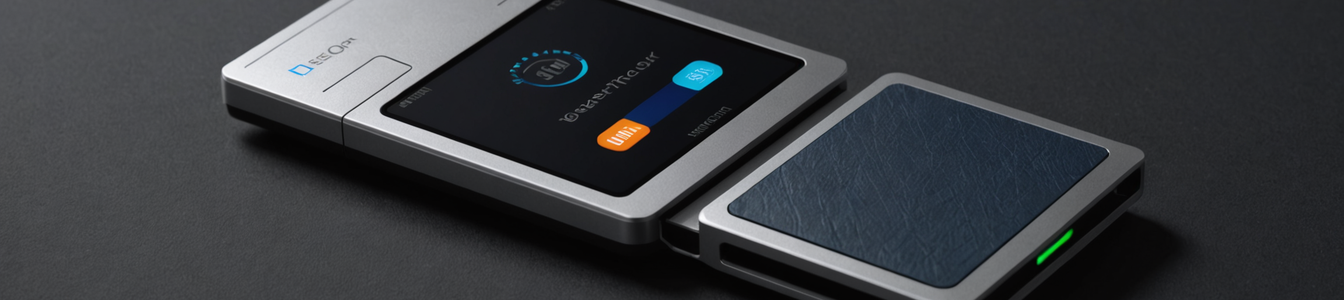
The cornerstone of secure self-custody remains the hardware wallet—a dedicated, air-gapped device that stores private keys offline. Leading models from manufacturers like Ledger, Trezor, and newer entrants such as Blockstream's Jade or Coldcard, offer tamper-resistant secure elements, open-source firmware for auditability, and increasingly sophisticated interfaces. The choice now hinges on specific threat models: some prioritize absolute air-gapping (never connecting to a computer), while others balance security with usability for more frequent transactions.
2. Multi-Signature (Multisig) Setups
For significant holdings, a single hardware wallet is a single point of failure. The professional standard is a multisignature configuration. This requires M-of-N private keys to authorize a transaction (e.g., 2-of-3). Keys can be distributed across different devices, locations, and even trusted individuals, dramatically reducing risks from theft, loss, or coercion. Setting up and managing multisig requires more technical knowledge but is considered best practice for high-net-worth individuals and institutional self-custody.
3. Robust Key and Seed Phrase Management
The 12 or 24-word recovery seed phrase is the ultimate key. Its protection is paramount. Best practices have evolved from writing it on paper to using encrypted digital backups, cryptographic steel plates (like Cypherwheel or Billfodl) to survive fire/water damage, and geographic distribution of shards via techniques like Shamir's Secret Sharing. The principle is clear: the seed must be accessible only to the owner and resilient against physical and digital threats.
4. Operational Security (OpSec) and Behavioral Hygiene
Self-custody shifts the security burden to the individual. This necessitates impeccable OpSec:
- Phishing Resistance: Verifying addresses meticulously, using hardware wallet screens to confirm transactions, and never entering seeds into a computer or phone.
- Device Integrity: Using clean, malware-free computers for wallet interactions, or better yet, using dedicated devices.
- Privacy: Avoiding linking Bitcoin addresses to personal identities and understanding blockchain analysis.
The Evolving Role of Digital Wallets
While hardware wallets secure the "cold" storage of bulk assets, digital (software/hot) wallets remain essential for managing day-to-day transactions and interacting with the blockchain ecosystem. Modern non-custodial software wallets like Sparrow Wallet (for desktop) or mobile wallets with hardware integration offer powerful features for managing UTXOs, setting custom fees, and connecting to personal nodes for enhanced privacy. They are the secure interface to the network, but they should never hold the majority of one's wealth.
Conclusion: Sovereignty as the Ultimate Security
The ETF era has not made self-custody obsolete; it has recontextualized its critical importance. For the cybersecurity community, self-custody is the logical extension of core principles: minimizing attack surfaces, eliminating unnecessary trust, and maintaining direct control over critical systems—in this case, one's financial assets. It represents a conscious trade-off: accepting the personal responsibility of security management in exchange for true, censorship-resistant ownership that is verifiable on a public ledger.
This renaissance is not a rejection of institutional progress but a complementary evolution. It ensures that as cryptocurrency enters the mainstream, its foundational promise of individual financial sovereignty remains accessible and, more importantly, secure. The message is clear: for those who understand the technology, the safest place for your bitcoin is still under your own cryptographic control.
Comentarios 0
Comentando como:
¡Únete a la conversación!
Sé el primero en compartir tu opinión sobre este artículo.
¡Inicia la conversación!
Sé el primero en comentar este artículo.