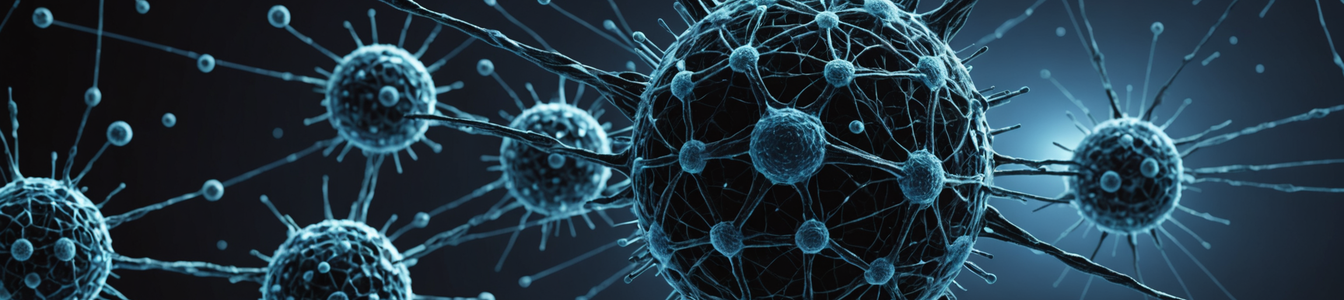
The Immune System Hack: How Tumors Teach Cyber Defense Evasion
Recent breakthroughs in cancer research have uncovered sophisticated biological mechanisms that tumors use to disable the body's immune defenses, providing unexpected but invaluable lessons for cybersecurity professionals. These findings reveal how advanced threat actors could similarly manipulate security systems to create persistent, undetected footholds in critical infrastructure.
Molecular Manipulation: The Tumor's Playbook
Cancer cells employ a sophisticated strategy of molecular signaling that effectively 'exhausts' T-cells, the body's primary immune defenders. Through specific protein interactions and signaling pathways, tumors induce a state of functional paralysis in these immune cells, preventing them from mounting effective attacks against cancer cells. This biological equivalent of disabling security monitoring creates what researchers term 'immune tolerance' – a dangerous state where the defense system fails to recognize and respond to clear threats.
This exhaustion mechanism doesn't kill the immune cells outright but rather reprograms them to become ineffective. The T-cells remain present in the tumor microenvironment but lose their ability to coordinate attacks, proliferate, and eliminate cancer cells. This subtle approach allows tumors to grow unchecked while maintaining the appearance of normal immune system function.
Cybersecurity Parallels: Advanced Persistent Threats
The tumor's strategy bears striking resemblance to how advanced persistent threats (APTs) operate in digital environments. Sophisticated attackers don't necessarily try to destroy security systems outright but instead work to disable their effectiveness through subtle manipulation. They may alter logging mechanisms, tamper with security alerts, or manipulate system behavior to create blind spots in security monitoring.
Just as tumors exploit molecular signals to exhaust T-cells, cyber attackers can exploit system vulnerabilities to exhaust security resources. This might involve overwhelming security teams with false positives, consuming computational resources to degrade performance, or manipulating security tools to ignore genuine threats. The result is similar: security defenses remain technically present but functionally compromised.
The Revival Breakthrough: Restoring Defense Capabilities
Perhaps the most promising finding from the cancer research is the discovery that exhausted immune cells can be 'revived' to resume their defensive functions. Scientists have identified specific molecular pathways that, when targeted with appropriate therapies, can reverse T-cell exhaustion and restore their tumor-fighting capabilities. This breakthrough demonstrates that compromised defense systems aren't necessarily permanently damaged but can be restored to full functionality with the right interventions.
In cybersecurity terms, this suggests that security systems compromised through sophisticated manipulation may be recoverable without complete replacement. The research points toward developing 'revival' strategies for security tools and processes that have been subtly compromised by advanced attackers. This could involve resetting security configurations, clearing manipulated data, or implementing countermeasures that reverse the effects of sophisticated attacks.
Critical Infrastructure Implications
The biological insights have particularly significant implications for critical infrastructure protection. Like the human body's vital systems, critical infrastructure requires constant, reliable defense mechanisms to maintain operational integrity. The tumor model demonstrates how sophisticated attackers could work to disable these defenses through gradual, subtle manipulation rather than dramatic attacks.
Security teams in critical infrastructure environments should consider how their monitoring and response capabilities might be similarly 'exhausted' through sophisticated attack techniques. This includes evaluating whether security tools are functioning as intended or have been subtly compromised to ignore specific threats. Regular 'health checks' of security systems, similar to medical diagnostics, could help identify when defenses have been manipulated.
Developing Cyber Resilience Strategies
The cancer research provides a powerful framework for developing more resilient cybersecurity strategies. By understanding how biological systems can be manipulated and subsequently restored, security professionals can design more adaptive defense architectures. This includes:
- Implementing regular 'immune system checks' for security tools
- Developing rapid restoration protocols for compromised defenses
- Creating layered security that can compensate when specific components are exhausted
- Building in redundancy and diversity to prevent single points of failure
The research also highlights the importance of continuous monitoring for subtle changes in system behavior that might indicate manipulation. Just as medical researchers look for biomarkers of immune exhaustion, cybersecurity teams should develop indicators of security system compromise.
Future Research Directions
The parallels between tumor biology and cybersecurity vulnerabilities open exciting new research directions. Future studies could explore:
- How different types of security 'exhaustion' manifest in various systems
- The development of automated 'revival' mechanisms for compromised security tools
- Early warning systems for detecting subtle manipulation of security defenses
- Cross-disciplinary approaches that apply biological defense mechanisms to cybersecurity
As threat actors continue to evolve their techniques, the cybersecurity community must look beyond traditional computer science for innovative defense strategies. The sophisticated manipulation strategies employed by tumors represent millions of years of evolutionary refinement in defeating defense systems – lessons that could prove invaluable in protecting our digital infrastructure.
Conclusion
The discovery of how tumors manipulate immune responses provides more than just medical insights; it offers a powerful analogy for understanding sophisticated cyber threats. By studying these biological evasion techniques, cybersecurity professionals can develop more effective strategies for detecting, preventing, and recovering from advanced attacks. The ability to 'revive' exhausted defenses represents particularly promising territory for future security innovation, potentially leading to more resilient and self-healing security architectures.
Comentarios 0
Comentando como:
¡Únete a la conversación!
Sé el primero en compartir tu opinión sobre este artículo.
¡Inicia la conversación!
Sé el primero en comentar este artículo.