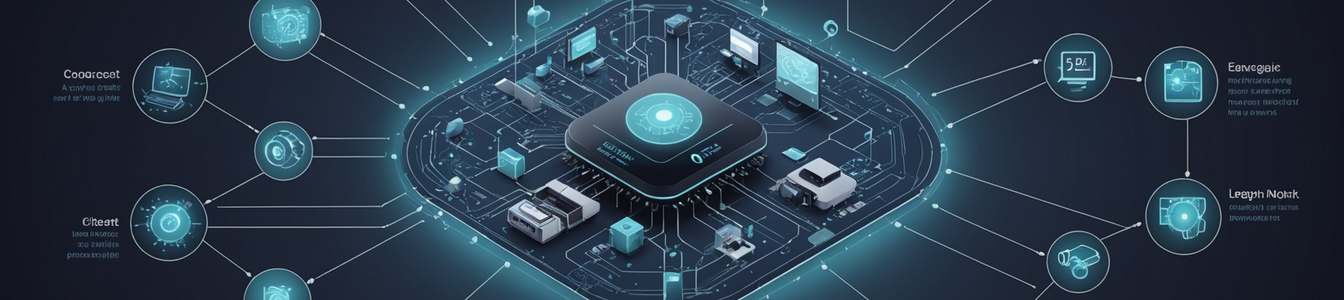
The automotive industry's rapid integration of IoT technologies through strategic partnerships with major tech companies is creating complex cybersecurity challenges that threaten vehicle safety and transportation infrastructure. Recent developments including Microsoft's partnership with LG to bring Xbox Game Pass to vehicles, Geotab surpassing 5 million connected vehicle subscriptions, and YFORE's deployment of multiple smart mobility solutions demonstrate the accelerating convergence of entertainment, connectivity, and vehicle systems.
These partnerships represent a fundamental shift in vehicle architecture, transforming cars from isolated mechanical systems into interconnected platforms that blend entertainment, navigation, vehicle controls, and third-party services. The Microsoft-LG collaboration enables Xbox gaming integration directly into vehicle infotainment systems, while Geotab's massive connected vehicle network provides telematics and fleet management services across millions of vehicles worldwide. Simultaneously, companies like YFORE are introducing comprehensive smart mobility ecosystems that integrate multiple services through single platforms.
The cybersecurity implications are profound. Each partnership introduces new attack vectors through increased connectivity points, third-party software integrations, and cloud service dependencies. The blending of entertainment systems with vehicle networks creates potential pathways for attackers to move from less-critical systems to safety-critical vehicle controls. Supply chain complexity obscures security responsibilities, as automotive manufacturers, technology partners, and service providers each manage different components of the integrated system.
Geotab's achievement of 5 million connected subscriptions highlights the scale of this challenge. Each connected vehicle represents multiple potential entry points – from telematics devices and mobile applications to cloud services and partner integrations. The Life360-AccuWeather partnership further illustrates how weather data integration creates additional dependencies that must be secured against manipulation or service disruption.
Security professionals face several critical challenges: ensuring secure API integrations between partner systems, maintaining vehicle system isolation where required, protecting user data across multiple service providers, and establishing clear security accountability across organizational boundaries. The traditional automotive security model, focused on protecting closed systems, is inadequate for these new interconnected environments.
Effective security requires comprehensive risk assessment frameworks that address the entire ecosystem – from vehicle components and mobile applications to cloud services and partner integrations. Manufacturers and technology partners must implement zero-trust architectures, rigorous security testing throughout the development lifecycle, and continuous monitoring for emerging threats. Cross-industry collaboration and standardized security frameworks are essential for addressing these complex challenges.
The automotive industry must prioritize security-by-design principles in these partnerships, ensuring that new features and services are developed with security integrated from the beginning rather than added as an afterthought. As vehicles become increasingly connected and automated, the cybersecurity of these complex ecosystems will directly impact passenger safety and transportation infrastructure reliability.
Comentarios 0
Comentando como:
¡Únete a la conversación!
Sé el primero en compartir tu opinión sobre este artículo.
¡Inicia la conversación!
Sé el primero en comentar este artículo.