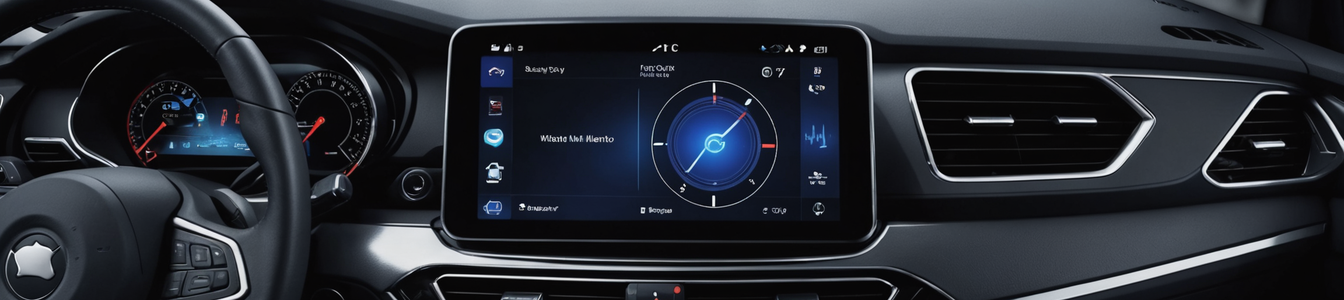
The automotive digital cockpit is undergoing its most profound transformation since the introduction of touchscreens. No longer confined to navigation and media playback, platforms like Apple CarPlay and Android Auto are rapidly evolving into hubs for generative artificial intelligence and real-time collaboration. The recent, near-simultaneous arrival of OpenAI's ChatGPT on CarPlay, Google's Gemini AI on Android Auto, and Google Meet on both platforms represents a paradigm shift with far-reaching security implications for the connected vehicle ecosystem.
The New In-Car Reality: AI Assistants and Video Calls
Drivers can now engage in complex, conversational interactions with large language models (LLMs) directly through their vehicle's infotainment system. Using voice commands, they can draft emails, summarize news, brainstorm ideas, or get contextual answers to questions—all while on the road. Parallelly, the integration of Google Meet transforms the car into a mobile conference room, enabling drivers to join audio and video meetings hands-free. While video is ostensibly disabled while the vehicle is in motion, the very presence of a conferencing app in this environment raises immediate flags.
From a pure feature perspective, these integrations promise unprecedented convenience and productivity. However, for cybersecurity professionals, they signal the explosive growth of a new and largely unhardened attack surface.
Deconstructing the Threat Landscape
The security risks introduced are multifaceted and stem from the unique confluence of technologies:
- Expanded Data Flow & Interception Points: Every voice query to ChatGPT or Gemini is captured, processed, and transmitted to cloud servers. This continuous stream of potentially sensitive audio data—which could include business discussions, personal queries, or location-based requests—creates a high-value target for interception. Man-in-the-middle (MitM) attacks targeting the connection between the vehicle, the user's smartphone, and the AI service provider's cloud could harvest this data. Furthermore, the AI's responses, which may contain synthesized private information, are also vulnerable during transmission back to the car.
- AI Prompt Injection & Manipulation: A critical, novel risk specific to LLM integration is prompt injection. A malicious actor could potentially exploit vulnerabilities in the text-to-speech or speech-to-text pipeline to inject hidden commands into the user's query or corrupt the AI's response. A manipulated response from a navigation AI could misdirect a driver, while a compromised meeting app could feed false audio or metadata into a corporate call. The inherent "trust" users place in the AI's output amplifies this threat.
- System Privilege Escalation & Vehicle Network Access: The primary security boundary has traditionally been between the infotainment domain (often managed by CarPlay/Android Auto) and the safety-critical vehicle control domain (like brakes or steering). However, history has shown that a persistent foothold in the infotainment system can sometimes be leveraged to probe and attack other connected vehicle modules via the Controller Area Network (CAN bus) or Ethernet backbones. A sophisticated exploit targeting the AI or Meet integration could seek to bridge this domain separation.
- Driver Distraction as a Security Vulnerability: While often framed as a safety issue, cognitive distraction is a core security vulnerability. A complex, engaging, or confusing interaction with an AI, or the cognitive load of participating in a work meeting, can severely impair a driver's situational awareness. This makes them more susceptible to social engineering attacks (e.g., a fraudulent call that seems to follow a meeting's context) or less likely to notice anomalous vehicle behavior that might indicate a cyber-physical attack.
- Privacy Erosion and Data Aggregation: These integrations deepen the data relationship between automotive users and tech giants. The combination of voice data, location history (from navigation queries), calendar access (for meeting integration), and personal communication patterns creates a profoundly detailed behavioral profile. The security of these aggregated data lakes, and the transparency around their use, becomes paramount.
The Road Ahead: Mitigation and Secure-by-Design Imperatives
The industry's response must be proactive, not reactive. The following steps are critical for OEMs, platform developers (Apple, Google), and AI service providers:
- Zero-Trust Architecture for In-Car Apps: Implement strict micro-segmentation, where the AI and meeting applications run in isolated, containerized environments with minimal permissions. Network access should be rigorously controlled and monitored.
- End-to-End Encryption (E2EE) for All Data Channels: All audio, video, and data transmitted between the car, the phone, and the cloud must be encrypted using strong, contemporary protocols. This includes the queries to and responses from AI models.
- Robust Input/Output Validation: Systems must include integrity checks for both voice input (to detect injected audio) and AI text output (to flag potentially malicious or manipulated content) before it is converted to speech for the driver.
- Clear, User-Controlled Privacy Frameworks: Users must be given granular, easy-to-understand controls over what data is shared, for how long it is stored, and for what purpose. "Privacy by default" settings should be the norm.
- Industry-Wide Security Standards: Bodies like ISO/SAE 21434 must evolve to explicitly address the risks of integrated third-party AI and real-time communication apps. Penetration testing and red-teaming exercises focused on these new integrations are urgently needed.
Conclusion
The integration of ChatGPT, Gemini, and Google Meet into our vehicles is not a mere feature update; it is the opening of a new front in automotive cybersecurity. It brings the sophisticated threats of the AI and cloud security world directly into the physical realm of transportation. While the benefits of these technologies are compelling, the security community must lead the charge in ensuring they are deployed with rigor, transparency, and a fundamental commitment to protecting both the digital and physical safety of drivers. The race is on to secure the AI-powered cockpit before attackers learn to exploit it.
Comentarios 0
Comentando como:
¡Únete a la conversación!
Sé el primero en compartir tu opinión sobre este artículo.
¡Inicia la conversación!
Sé el primero en comentar este artículo.