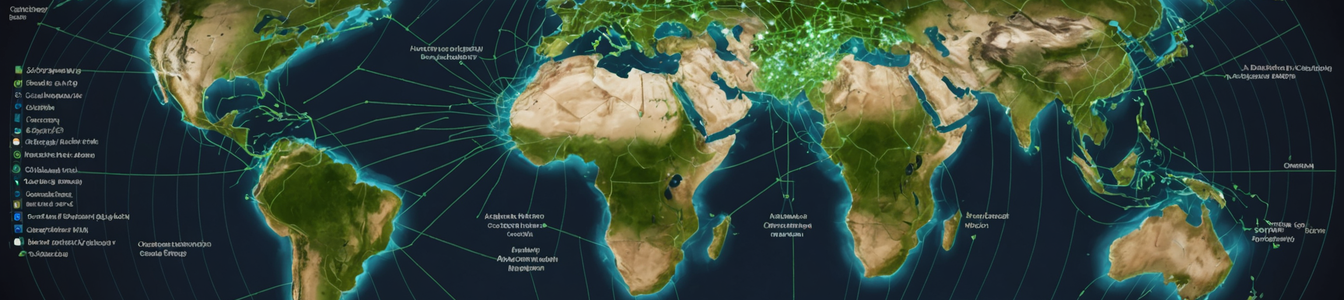
The intersection of climate science and cybersecurity is revealing unprecedented vulnerabilities in global food systems, with new research demonstrating how rainfall origins and atmospheric patterns create hidden risks that traditional security assessments have overlooked. As climate change accelerates, these vulnerabilities threaten to destabilize agricultural infrastructure worldwide, creating cascading effects on food security that malicious actors could potentially exploit.
Recent studies analyzing rainfall patterns have uncovered a critical blind spot in agricultural risk assessment. The geographical origin of precipitation, rather than just its quantity, plays a decisive role in determining drought resilience and crop viability. This complex relationship between atmospheric moisture sources and agricultural outcomes creates dependencies that extend far beyond traditional weather monitoring capabilities.
The cybersecurity implications are profound. Climate data integrity has become essential for agricultural planning and food security management. Sophisticated threat actors could potentially manipulate atmospheric data streams or compromise the AI systems used for climate prediction, leading to catastrophic miscalculations in food production planning. The recent CoreWeave financial concerns highlight how dependent modern climate modeling has become on advanced computing infrastructure, creating single points of failure that could be targeted.
Typhoon events in Southeast Asia provide stark examples of how climate disruptions translate into immediate food security crises. When extreme weather damages agricultural infrastructure and disrupts supply chains, the resulting vulnerabilities extend beyond physical damage to include data integrity concerns, communication breakdowns, and compromised monitoring systems. These events demonstrate how climate emergencies create conditions ripe for cyber exploitation during periods of maximum vulnerability.
Agricultural monitoring systems, increasingly dependent on IoT devices and satellite data, represent another critical vulnerability surface. These systems collect vast amounts of environmental data that inform crucial decisions about planting, irrigation, and harvest timing. Compromising these systems could lead to widespread agricultural failures by providing false environmental readings or disrupting automated farming operations.
The financial infrastructure supporting global agriculture also faces emerging threats. As climate modeling becomes more integral to commodity trading and insurance calculations, the accuracy and security of climate data directly impact financial markets. Manipulation of this data could create artificial market conditions or trigger inappropriate insurance payouts, destabilizing the economic foundations of food production.
Addressing these converging threats requires a multidisciplinary approach that integrates climate science expertise with advanced cybersecurity practices. Security teams must develop new assessment frameworks that account for atmospheric data integrity, climate-driven supply chain disruptions, and the complex interdependencies between environmental monitoring systems and agricultural operations.
Critical infrastructure protection must expand to include agricultural data systems and climate monitoring networks. This includes implementing robust encryption for environmental data streams, establishing redundant verification systems for critical climate measurements, and developing incident response plans that address combined climate-cyber emergencies.
The growing reliance on AI for climate prediction introduces additional security considerations. Machine learning models used for weather forecasting and agricultural planning require protection against data poisoning attacks and model manipulation. Ensuring the integrity of training data and model outputs is essential for maintaining accurate climate projections that inform global food security decisions.
As climate change continues to reshape global agricultural patterns, the cybersecurity community must anticipate how these changes will create new attack vectors and vulnerabilities. Proactive collaboration between climate scientists, agricultural experts, and security professionals is essential for building resilient food systems capable of withstanding both environmental and digital threats.
The hidden climate vulnerabilities in global food security represent one of the most significant emerging challenges for cybersecurity professionals. By understanding the complex relationships between atmospheric patterns, agricultural infrastructure, and digital systems, security teams can develop comprehensive protection strategies that safeguard both our food supply and the critical data systems that support it.
Comentarios 0
Comentando como:
¡Únete a la conversación!
Sé el primero en compartir tu opinión sobre este artículo.
¡Inicia la conversación!
Sé el primero en comentar este artículo.