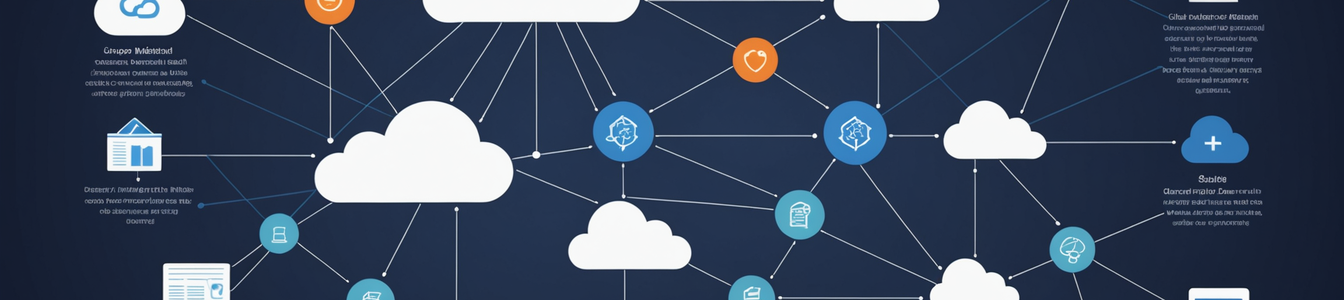
A strategic realignment is underway in how enterprises secure and govern their artificial intelligence initiatives. The gateway for this shift is no longer the traditional software vendor or specialized integrator, but the cloud marketplace. The recent inclusion of ModelOp's AI lifecycle management and governance platform in the AWS Marketplace is a bellwether event, signaling that third-party AI governance tools are entering the mainstream through official cloud procurement and deployment channels. This trend, paralleled by security-focused providers like Dispersive leveraging programs such as Google Cloud Partner Advantage, is creating a new layer of security dependencies and transforming cloud platforms into centralized hubs for critical AI security functions.
For cybersecurity professionals, this evolution represents a double-edged sword. On one side, it offers streamlined procurement, simplified billing through existing cloud commitments, and potentially deeper technical integration with native cloud services (like IAM, logging, and monitoring). The promise is a more cohesive security and governance framework for AI models, from development and training to deployment and monitoring, all accessible through a familiar console. ModelOp's platform, now available via AWS, aims to provide this unified control plane, helping organizations manage risk, ensure regulatory compliance, and maintain operational consistency across diverse AI projects.
However, this integration introduces novel risks that must be factored into enterprise security postures. First, it extends the third-party supply chain risk directly into the core of AI operations. Security teams must now assess not only the cloud provider's security but also the governance tool vendor's practices, as a compromise in the latter could directly impact the integrity of AI systems. The marketplace model can sometimes obscure the rigorous due diligence typically applied in enterprise software procurement.
Second, this trend accelerates architectural dependency on a single cloud provider's ecosystem. While tools like ModelOp may support multi-cloud environments, their primary distribution and integration pathway through a specific marketplace (e.g., AWS) can create subtle lock-in effects. Security policies, compliance workflows, and audit trails become enmeshed with the cloud platform's proprietary services and APIs.
The parallel move by companies like Dispersive, which provides stealth networking and zero-trust security, to deepen cloud partnerships underscores that this is not an isolated trend for AI tools alone. It reflects a broader pattern where specialized security and governance capabilities are being consumed as managed services or integrated solutions within cloud marketplaces. This consolidates critical security functions—network security, AI governance, data protection—into a handful of platform ecosystems.
From a compliance and audit perspective, this shift necessitates updates to risk assessment frameworks. Questions arise: Who is ultimately responsible for the security of the marketplace application—the vendor, the cloud provider, or the consumer? How are security updates and patches managed through the marketplace delivery mechanism? Does the integration satisfy specific regulatory requirements for AI governance in sectors like finance or healthcare? The shared responsibility model of cloud computing becomes more complex with these third-party layers.
Furthermore, the operational security implications are significant. Security operations centers (SOCs) must now monitor and correlate alerts from these integrated third-party tools alongside native cloud security services. Incident response plans need to account for scenarios where a vulnerability originates in a marketplace application governing critical AI models. The attack surface evolves, as these governance tools themselves become high-value targets for adversaries seeking to manipulate AI behavior or exfiltrate sensitive model data.
Looking ahead, cybersecurity leaders must develop a deliberate strategy for engaging with this new marketplace reality. This includes:
- Enhanced Vendor Assessment: Applying rigorous security questionnaires and compliance checks to marketplace applications as if they were directly procured, not relying solely on the marketplace's curation.
- Integration Security Review: Scrutinizing the permissions, data flows, and API connections between the marketplace tool and core cloud services to prevent privilege escalation or data leakage.
- Exit Strategy Planning: Designing architectures that retain the ability to replace a marketplace-based governance tool without crippling AI operations, avoiding critical path dependencies.
- Continuous Monitoring: Extending security monitoring tools to cover the performance and security telemetry of these integrated third-party services.
In conclusion, the arrival of sophisticated AI governance tools like ModelOp in major cloud marketplaces is a clear indicator of market maturation. It offers a path to manage the profound risks of enterprise AI at scale. Yet, for cybersecurity teams, it demands a proactive reevaluation of third-party risk management, cloud security architectures, and compliance strategies. The cloud marketplace is no longer just a convenience store for infrastructure; it is becoming the strategic control point for the next generation of enterprise technology risk, with AI governance at its forefront.
Comentarios 0
Comentando como:
¡Únete a la conversación!
Sé el primero en compartir tu opinión sobre este artículo.
¡Inicia la conversación!
Sé el primero en comentar este artículo.