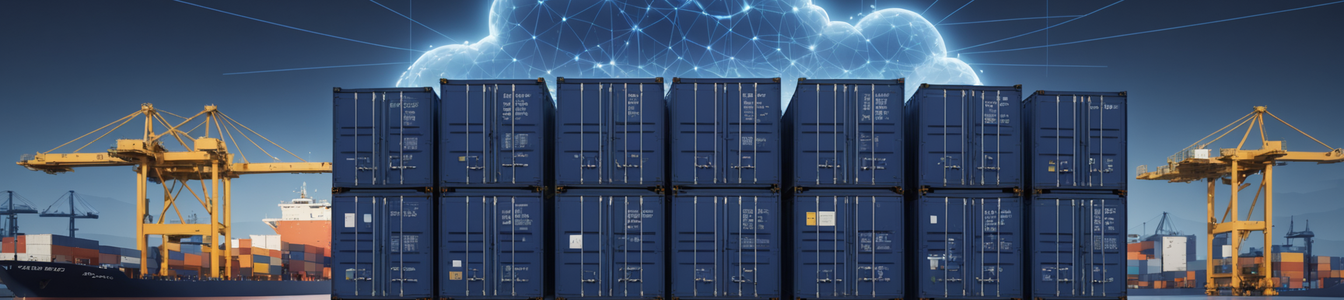
The Physical Backbone of the Cloud: A Security Conundrum
The recent announcement by India's Jawaharlal Nehru Port Authority (JNPA) of a record 12.64% surge in container traffic for 2025 is more than an economic indicator; it is a flashing red light for cybersecurity professionals. Handling over 6.5 million twenty-foot equivalent units (TEUs), JNPA's growth underscores a fundamental truth of the digital age: the cloud is physically anchored. This expansion of critical maritime trade infrastructure, essential for transporting the hardware that builds and sustains global data centers, creates a vast and complex attack surface where physical and digital security risks collide—a nexus demanding immediate strategic attention.
From Gantry Cranes to Cloud Canvases: The Expanded Attack Surface
Modern ports like JNPA are no longer just mechanical hubs. They are dense ecosystems of Operational Technology (OT)—supervisory control and data acquisition (SCADA) systems managing cranes, automated guided vehicles (AGVs), and container tracking systems—increasingly interconnected with corporate IT networks. This convergence is a primary vulnerability. An attack disrupting port logistics doesn't just delay goods; it can stall the delivery of critical server components, network hardware, and power infrastructure destined for hyperscale data center builds, creating downstream availability crises for cloud services worldwide.
The security implications are multi-layered. First, the OT systems themselves are often legacy-based, designed for reliability over security, and difficult to patch. Their connection to IT networks for efficiency gains creates pathways for threat actors. A ransomware attack on port logistics software, for instance, could freeze container movements, indirectly impacting the just-in-time supply chains that cloud providers rely on for maintenance and expansion.
The Containerized Supply Chain: A Trojan Horse for the Cloud
The physical container, the workhorse of global trade, now carries a dual cargo. Beyond physical hardware, shipping manifests and logistics data are digitally integrated with cloud-based platforms for tracking and management. This creates a data integrity risk. Unauthorized access to these systems could allow malicious actors to alter shipping routes, falsify manifests for high-value IT shipments, or insert tampered hardware into the supply chain—a sophisticated hardware supply chain attack with devastating potential for the cloud infrastructure that eventually houses it.
Furthermore, the software supply chain for the very applications managing this logistics is often built using containerized microservices, deployed and orchestrated via cloud platforms. A vulnerability in a widely used container image or an exploit in the cloud-based CI/CD pipeline of a port management software vendor could have cascading effects, compromising the systems that manage the flow of physical cloud infrastructure.
The Physical-Cloud Nexus: Strategic Security Imperatives
This scenario necessitates a paradigm shift in cybersecurity strategy, moving beyond siloed defenses to an integrated physical-digital security model. Key recommendations for security leaders include:
- Collaborative Risk Assessment: Cloud service providers (CSPs) and major enterprises must engage directly with logistics partners to conduct joint risk assessments. Understanding dependencies on specific ports and corridors is crucial for business continuity planning.
- Supply Chain Visibility and Integrity: Implementing robust hardware and software bill of materials (HBOM/SBOM) practices for data center components is non-negotiable. Coupled with cryptographic verification of shipments and tamper-evident packaging, this can mitigate hardware interdiction risks.
- Securing the Convergence: Port authorities and their technology vendors must adopt Zero Trust principles for their converged IT-OT networks. Strong network segmentation, continuous monitoring for anomalous behavior in OT environments, and specialized incident response plans for industrial control systems are essential.
- Resilience by Design: Cloud architectures must be designed with the fragility of physical supply chains in mind. This includes diversifying geographic dependencies for critical hardware, increasing on-site spares, and developing contingency plans for prolonged logistics disruptions.
Conclusion: Fortifying the Foundations of the Digital Economy
The record-breaking growth at JNPA is a microcosm of a global trend. As digital and physical worlds become inextricably linked, the security of one is wholly dependent on the security of the other. The cybersecurity community must expand its scope to encompass the physical gateways of the digital economy. Protecting the cloud now requires looking far beyond the data center fence—to the ports, the roads, and the global supply chains that form its vulnerable, yet vital, physical nexus. The resilience of our digital future depends on securing this often-invisible backbone.
Comentarios 0
Comentando como:
¡Únete a la conversación!
Sé el primero en compartir tu opinión sobre este artículo.
¡Inicia la conversación!
Sé el primero en comentar este artículo.