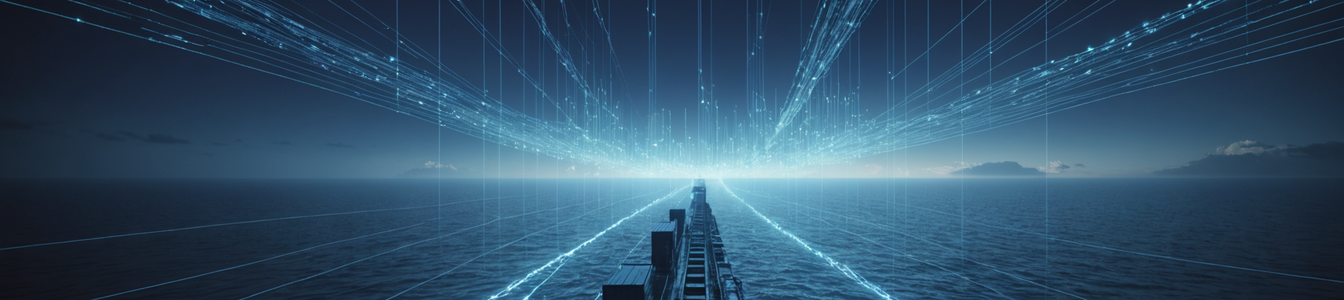
Cloud's Physical Lifeline Under Fire: How Attacks in the Strait of Hormuz Threaten Global Infrastructure
The digital cloud, often perceived as an ethereal, borderless entity, rests on a profoundly physical foundation. This foundation—comprising servers, networking gear, storage arrays, and specialized semiconductors—travels the world in standardized shipping containers. Recent events in one of the world's most critical maritime chokepoints, the Strait of Hormuz, have cast a stark light on the vulnerability of this physical supply chain to kinetic, real-world threats. A series of attacks on commercial vessels and the reported closure of the strait by Iranian military forces are not just regional security incidents; they are direct assaults on the logistical backbone of the global internet and cloud ecosystem.
The Kinetic Threat to Digital Logistics
According to multiple reports, tensions have escalated significantly in the Strait of Hormuz. Iranian gunboats have opened fire on vessels transiting the area, and a British military statement confirmed an attack on a container vessel near the strait. In a dramatic escalation, Iranian military authorities have reportedly closed the Strait of Hormuz, citing a U.S. blockade as the justification. This waterway is not merely a regional passage; it is a superhighway for global trade, with approximately one-fifth of the world's seaborne oil and a massive volume of containerized goods passing through its narrow confines.
For the cybersecurity and cloud industry, the immediate concern is the shipment of data center hardware. The production of servers, routers, switches, and GPUs is concentrated in manufacturing hubs in Asia. The primary routes to major markets in Europe and the East Coast of the Americas transit through the Suez Canal and the Strait of Hormuz, or around the Cape of Good Hope—a much longer and costlier journey. Any disruption, whether from direct attacks, insurance premium spikes, or outright closure, forces rerouting, creates massive delays, and injects severe uncertainty into delivery schedules.
From Maritime Disruption to Cloud Instability
The impact cascades from the high seas directly into data center deployment plans and service-level agreements (SLAs).
- Hardware Deployment Delays: New data center builds, capacity expansions, and hardware refresh cycles are planned with precise timelines. A delay of weeks or months in receiving critical server racks or networking equipment can stall multi-million dollar projects, delay service launches, and impede an organization's ability to scale to meet demand.
- Supply Chain Volatility and Cost Inflation: Attacks and closures immediately affect maritime insurance rates (war risk premiums) and freight costs. These increased logistical costs are ultimately absorbed into the price of hardware. For cloud providers operating on thin margins and for enterprises with fixed IT budgets, this volatility strains financial planning and can lead to difficult prioritization decisions.
- Threat to "Just-in-Time" Models: Modern cloud infrastructure has benefited from efficient, lean supply chains. The Hormuz crisis exposes the fragility of this model in the face of geopolitical shock. It forces a strategic reconsideration of inventory buffers, the geographic diversification of hardware stockpiles, and the feasibility of "just-in-time" delivery for critical components.
- Secondary Cyber Risk Amplification: Physical supply chain crises create fertile ground for cyber threats. Threat actors may exploit the confusion and communication chaos surrounding delayed shipments to launch phishing campaigns targeting logistics teams, insert counterfeit hardware into disrupted supply streams, or spread misinformation about alternative suppliers that are actually fronts for malicious activity.
Strategic Imperatives for Cloud and Security Leaders
This situation moves the threat from theoretical supply chain discussions to active, kinetic risk management. Cybersecurity leaders must now collaborate closely with procurement, logistics, and physical security teams. Key actions include:
- Mapping Critical Hardware Dependencies: Identify which components have single-source suppliers or transit routes that depend on high-risk chokepoints like Hormuz, the Suez Canal, or the Taiwan Strait.
- Stress-Testing Vendor Continuity Plans: Engage key hardware vendors to understand their contingency plans for maritime disruptions. Do they have alternative routing strategies, regional inventory hubs, or air freight options?
- Developing "Geopolitical Resilience" Playbooks: Integrate geopolitical risk indicators into threat intelligence feeds. Develop playbooks that trigger specific actions (e.g., accelerating orders, activating alternative suppliers) when tensions rise in key regions.
- Reevaluating Inventory Strategy: For truly mission-critical infrastructure components, consider holding strategic safety stock in geographically diverse locations, even if it contradicts lean inventory principles.
- Enhancing Verification for Disrupted Supplies: Strengthen processes for verifying the integrity and authenticity of hardware received during periods of supply chain disruption, when the risk of tampering or counterfeiting is elevated.
The attacks in the Strait of Hormuz serve as a powerful reminder that cloud security is not solely about firewalls, encryption, and zero-trust architectures. It is also about the security of the steel containers on the high seas that carry the physical atoms of our digital bits. As geopolitical tensions continue to manifest in the physical world, the resilience of our digital infrastructure will increasingly depend on how well we secure and diversify its most vulnerable, tangible links.
Comentarios 0
Comentando como:
¡Únete a la conversación!
Sé el primero en compartir tu opinión sobre este artículo.
¡Inicia la conversación!
Sé el primero en comentar este artículo.