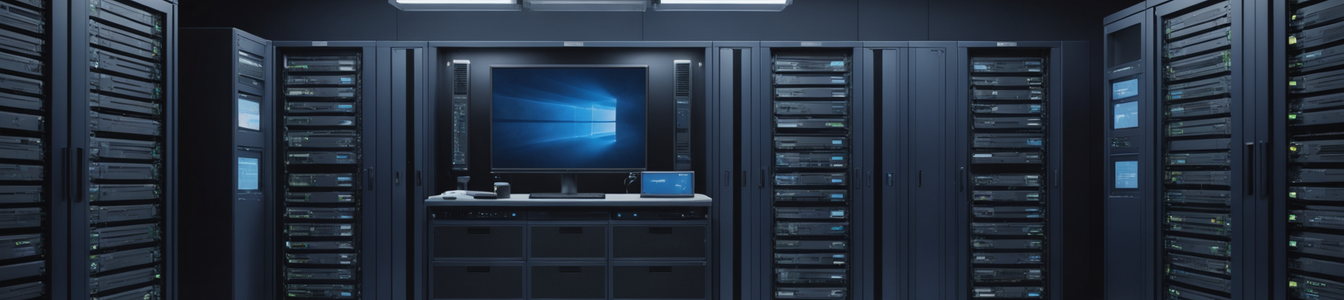
The cloud migration narrative has long been sold on agility, scalability, and cost savings. For countless enterprises, the initial foray into this new world involves the 'lift-and-shift' of reliable, yet aging, legacy workloads—think Windows Server 2019 or older—straight onto Infrastructure-as-a-Service (IaaS) platforms like Amazon EC2. The server spins up, the application runs, and the migration is declared a success. However, beneath this surface-level victory lies a growing mound of hidden operational and security debt that threatens to undermine the very benefits the cloud promises. This debt represents the gap between a merely running workload and one that is secure, resilient, and cost-effective in a dynamic cloud environment.
The Illusion of Completion: From Spin-Up to Security Checklist
The moment a legacy Windows Server instance is provisioned in AWS, the real work begins. Contrary to the on-premises model where hardware lifecycle and basic network perimeters offered a form of passive (if flawed) security, the cloud is a shared responsibility model. The provider secures the cloud, but the customer must secure everything in the cloud. For a legacy workload, this translates into an exhaustive operational readiness checklist that is often glossed over. This checklist isn't optional; it's the bare minimum to avoid catastrophic breaches and spiraling costs.
A proper deployment goes far beyond assigning an IP address. It requires meticulous configuration of Identity and Access Management (IAM) roles with the principle of least privilege, ensuring the instance itself doesn't become a launchpad for lateral movement. It demands encryption of data at rest (using AWS KMS or similar) and in transit (enforcing TLS 1.2+). The operating system itself needs immediate hardening: disabling legacy protocols like SMBv1, configuring Windows Defender or a cloud-aware endpoint solution, setting up a strict host-based firewall, and establishing a robust, automated patching regimen that doesn't rely on manual intervention. Network security groups must be configured as micro-perimeters, and logging to CloudWatch or a SIEM must be enabled from day one to ensure visibility. Each of these steps represents a line item in a debt ledger; if skipped, the debt accrues interest in the form of risk.
The Contrast with Cloud-Native Evolution
The hidden debt of legacy workloads becomes starkly apparent when contrasted with the evolution of cloud-native platforms. Consider Kubernetes, the de facto standard for container orchestration. Its recent 1.35 release introduced a critical feature for operational smoothness: in-place updates for Pods. This allows certain Pod specifications to be updated without requiring a full pod restart, minimizing application disruption and simplifying continuous deployment—a direct investment in reducing operational friction.
Simultaneously, Kubernetes 1.35 announced the deprecation of cgroup-v1, pushing the ecosystem toward the more modern and capable cgroup-v2. This is a planned, managed evolution of the platform's foundation. Legacy cloud workloads, however, are not on such an evolutionary path. A Windows Server 2019 image migrated in 2020 will still be running the same core OS in 2024, increasingly out of sync with the security postures and capabilities of the cloud platform surrounding it. The cloud platform advances; the legacy workload stagnates, widening the security gap.
The Cybersecurity Professional's Burden
For cybersecurity teams, this hidden debt manifests as a persistent and nebulous threat surface. Legacy workloads in the cloud are frequently:
- Configuration-Drift Vulnerable: Without Infrastructure as Code (IaC) templates (like Terraform or AWS CloudFormation), these systems are often configured manually once and forgotten, leading to drift from security baselines.
- Patch Management Nightmares: Automated patch management for legacy OSs in the cloud requires careful orchestration to avoid downtime, a process many organizations fail to operationalize, leaving known exploits wide open.
- Visibility Black Holes: Legacy systems may not integrate natively with cloud-native monitoring and security tools (like AWS Security Hub, GuardDuty), creating blind spots where malicious activity can go unnoticed.
- Costly to Secure: The specialized skills and third-party tools required to adequately secure and monitor a fleet of legacy cloud instances often erase the anticipated cost savings of the migration.
From Debt to Investment: A Strategic Pivot
Addressing this debt requires a fundamental mindset shift. The goal cannot be merely to run old software in a new data center. The strategy must encompass:
- Honest Assessment: Before any migration, conduct a rigorous audit of the legacy workload to understand its true security and operational requirements. Is a simple rehost the right answer, or is refactoring or replatforming warranted?
- Automated Baselines: Encode security and configuration standards into machine-readable IaC templates and CI/CD pipelines. Compliance must be continuous, not a point-in-time checklist.
- Managed Services Where Possible: Leverage cloud provider services (e.g., AWS Systems Manager for patching, managed databases) to offload operational heavy lifting and inherit a higher security baseline.
- Plan for Modernization: Treat the initial lift-and-shift as a transitional phase, not the destination. Establish a clear roadmap to refactor or replace the workload with more cloud-native, maintainable, and secure architectures.
Conclusion
The cloud's value is unlocked not by where software runs, but how it runs. Migrating a legacy workload without transforming its operational model simply transfers old problems into a new, more dynamic, and potentially more dangerous context. The hidden debt of unapplied patches, lax configurations, and poor visibility will eventually come due, often in the form of a security incident or an exorbitant unplanned recovery effort. For cybersecurity leaders, the mandate is clear: champion migrations that are strategic rather than tactical, and insist that operational readiness and continuous security are non-negotiable pillars of any cloud initiative, especially when legacy is involved. The true cost of the cloud is not in the compute hours; it's in the ongoing investment required to operate securely within it.
Comentarios 0
Comentando como:
¡Únete a la conversación!
Sé el primero en compartir tu opinión sobre este artículo.
¡Inicia la conversación!
Sé el primero en comentar este artículo.