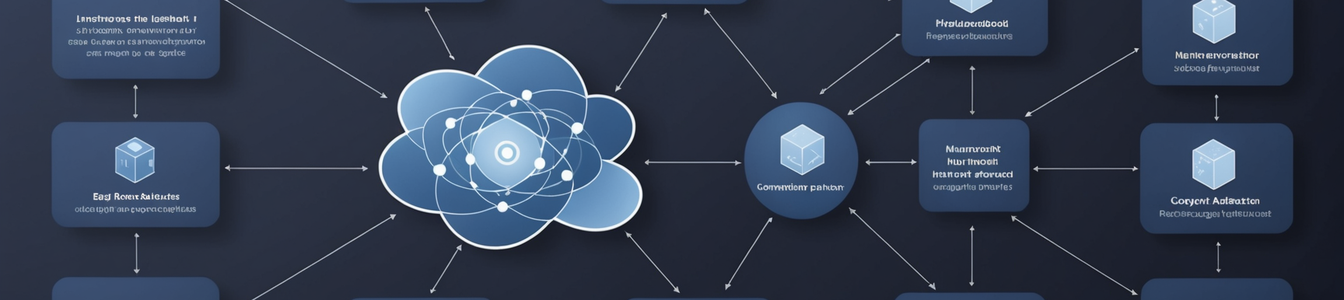
The cloud infrastructure landscape is undergoing its most significant transformation since the advent of virtualization. The once-distinct domains of traditional virtual machines (VMs), containerized workloads orchestrated by Kubernetes, and the massive data pipelines fueling artificial intelligence are rapidly converging. This movement toward a unified, cloud-native fabric is not merely an operational convenience; it represents a fundamental rearchitecting of the digital foundation with profound and complex implications for cybersecurity.
The End of Infrastructure Silos
For years, IT organizations managed parallel stacks: a virtualized environment for legacy and stateful applications, a Kubernetes cluster for modern microservices, and separate, often cumbersome, storage solutions for AI/ML data. This segregation created security silos to match—different teams, tools, and policies for each domain. Today, projects like KubeVirt, which is now approaching the prestigious "graduated" status within the Cloud Native Computing Foundation (CNCF), are breaking down these walls. KubeVirt allows developers and operators to manage VMs as first-class citizens within a Kubernetes environment, using familiar tools like kubectl. This technical convergence means a single Kubernetes control plane can orchestrate both container pods and VM instances.
From a security perspective, this unification is a double-edged sword. On one hand, it consolidates the control plane, offering a single pane of glass for policy enforcement, auditing, and compliance across diverse workloads. Security teams can potentially apply Kubernetes-native security paradigms—like Network Policies, Pod Security Standards, and service mesh integration—to legacy VM workloads. On the other hand, it creates a vastly more complex and high-value attack surface. A compromise of the Kubernetes API server or a container escape exploit could now provide a direct pivot point into adjacent, traditionally isolated VM environments that may house sensitive databases or critical legacy applications.
The AI Data Layer: Fuel and Risk in the Converged Cloud
The convergence is not limited to compute. The AI revolution demands high-performance, scalable, and seamlessly integrated data storage. Major cloud providers are now embedding first-party, cloud-native storage services directly into their ecosystems. These are not just managed disk services; they are intelligent data planes built for the specific throughput and parallelism requirements of AI training and inference. Companies like NetApp are leading this charge, building these integrated data fabrics that sit inside every major public cloud, turning storage into a powerful, AI-accelerating service.
This integration of high-value AI data pipelines into the unified compute platform dramatically escalates the security stakes. AI training datasets are often colossal in size, incredibly sensitive (containing proprietary, personal, or regulated data), and critically important to business operations. In a converged environment, a misconfigured network policy, a vulnerable container image running a data preprocessing job, or a compromised service account could expose this crown-jewel data. The security model must now account for data sovereignty, encryption-in-use for model training, and ultra-fine-grained access controls within a shared, multi-tenant platform running everything from a web frontend in a container to a monolithic ERP system in a VM, all adjacent to the AI data store.
Redefining Cloud-Native Security for a Converged World
This new frontier demands a corresponding evolution in security strategy. The old models of perimeter defense and workload-specific security tools are insufficient. The future lies in intrinsic security—controls that are embedded into the fabric of the converged platform itself.
- Identity as the Universal Control Plane: In a world where VMs, pods, and data services commingle, identity (of workloads, services, and users) becomes the primary security perimeter. Service accounts, workload identities, and managed identities must be rigorously managed, with lifecycle policies and just-in-time access. Zero-trust network access (ZTNA) principles must be applied internally, mandating verification for every request between workloads, regardless of their form (VM or container).
- Unified Policy Enforcement: Security policy cannot be siloed. Organizations need a single policy engine capable of expressing and enforcing rules across both containerized and virtualized workloads. This includes uniform secrets management, consistent runtime security (file integrity monitoring, behavioral analysis), and vulnerability management that scans VM images and container registries with equal rigor.
- AI Data-Centric Security: Security must wrap the data itself. This means mandatory encryption for data at rest and in transit, with strong key management. Beyond that, it requires data loss prevention (DLP) capabilities that understand AI data formats and can monitor for anomalous data egress from training clusters. Access to data pipelines must be logged and audited with the same severity as access to financial systems.
- Supply Chain Security for a Hybrid Stack: The software supply chain now includes VM templates (Golden Images), container images, Helm charts, and potentially AI model artifacts. A unified software bill of materials (SBOM) and vulnerability scanning process that covers all these components is essential. The compromise of a base VM image could be as devastating as a poisoned container image.
Conclusion: The Imperative for Proactive Adaptation
The convergence of VMs, Kubernetes, and AI data into a single cloud-native fabric is inevitable. It delivers the agility, scalability, and efficiency required for modern digital business. For cybersecurity leaders, this shift is not a distant future scenario but an imminent reality. The time to adapt is now. Building security expertise that spans these historically separate domains, investing in platforms that offer intrinsic, unified security controls, and developing policies that treat identity and data as the new core assets will separate resilient organizations from those exposed to unprecedented levels of risk in this new virtualization frontier. The attack surface has been redrawn; our defenses must evolve to cover it.
Comentarios 0
Comentando como:
¡Únete a la conversación!
Sé el primero en compartir tu opinión sobre este artículo.
¡Inicia la conversación!
Sé el primero en comentar este artículo.