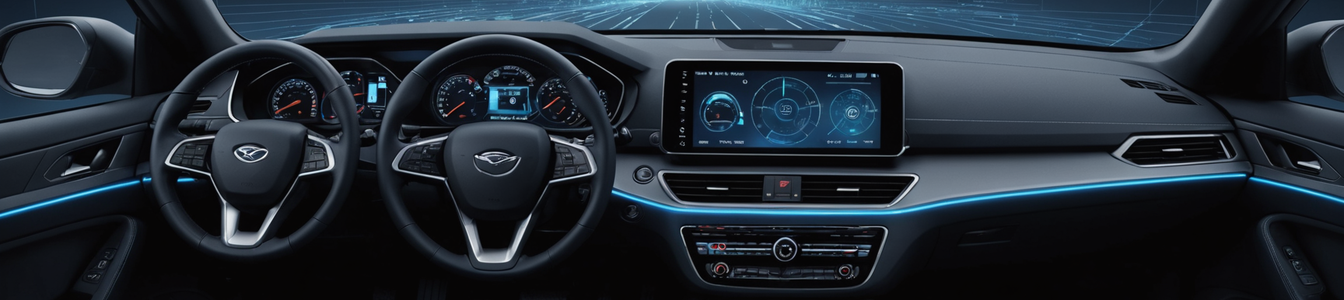
A seismic shift is underway in the automotive industry, transforming vehicles from mechanical marvels into complex, software-defined IoT platforms on wheels. Market analysts project the global connected car security market will surge to a staggering $7 billion by 2032, as major players aggressively expand their cybersecurity portfolios. Yet, beneath this headline-grabbing market growth lies a troubling paradox: the rapid proliferation of connected features is dramatically outpacing the implementation of robust, foundational security measures, creating a generation of vehicles with deeply embedded, unaddressed vulnerabilities.
The expansion is not limited to traditional automakers. The 2025 Tyre Manufacturers Telematics Activities report highlights a significant trend: leading tire OEMs are actively expanding into fleet management and connected services through mergers, acquisitions, and deep integration of Telematics Control Units (TCUs) and Tire Pressure Monitoring Systems (TPMS). This move transforms a fundamental, safety-critical component—the tire—into a data-generating node on the vehicle network. While this enables predictive maintenance and performance analytics, it also introduces new attack vectors. A compromised TPMS sensor or telematics module could provide a gateway to a vehicle's Controller Area Network (CAN bus), the central nervous system controlling everything from brakes to steering. The security of these third-party, often low-cost IoT components is rarely scrutinized with the same rigor as core automotive systems, creating a weak link in the security chain.
Simultaneously, the democratization of advanced technology is accelerating the attack surface. Chinese EV giant BYD is now integrating high-performance Nvidia Orin centralized compute platforms and Robosense LiDAR sensors into its affordable Seagull and Dolphin models. This strategy brings autonomous driving capabilities and sophisticated sensor fusion to the mass market. The Nvidia Orin platform, while powerful, runs a complex software stack. The integration of LiDAR, cameras, and radar creates a massive data pipeline that must be secured. The challenge for cybersecurity professionals is monumental: securing these affordable models, which will be produced in the millions, against threats that target the AI perception stack, sensor spoofing, or data poisoning attacks. The scale of deployment makes patching vulnerabilities a logistical nightmare, especially if security was an afterthought in the design-for-cost process.
This connectivity wave is also reshaping personal mobility. In India, a revolution in electric two-wheeler commuting is being driven entirely by software. Features like battery management, ride diagnostics, anti-theft mechanisms, and over-the-air (OTA) updates are controlled via smartphone applications. This represents a hyper-scale deployment of vulnerable IoT endpoints. The security model for these vehicles often relies on basic mobile app authentication, with little to no hardware security module (HSM) protection for critical functions. An attacker compromising the cloud backend or the mobile app could potentially disable thousands of vehicles or manipulate battery management systems, creating safety risks. The focus in this high-growth market has been on functionality and user acquisition, not on building a security-first architecture.
The core issue is a fundamental disconnect between market forces and security maturity. The connected car security market is booming because compliance requirements and fear of brand-damaging incidents are driving investments in after-the-fact security solutions—intrusion detection systems (IDS), security operation centers (VSOCs), and endpoint protection. However, these are often layered onto vehicles after the core architecture is finalized. True security must be 'baked in,' not 'bolted on.' It requires secure-by-design principles from the initial electronic architecture planning: implementing hardware-enforced isolation between critical driving domains and infotainment, robust cryptographic key management for OTA updates, and rigorous penetration testing of every connected component, from the TCU to the TPMS.
For the cybersecurity community, this presents a dual challenge and opportunity. The threat landscape is expanding to include supply chain attacks targeting tier-2 and tier-3 suppliers (like telematics or sensor providers), AI model integrity attacks, and large-scale vehicle fleet attacks. Security researchers must pivot to understand the unique protocols and architectures of software-defined vehicles. Conversely, there is an urgent need for cybersecurity professionals within automotive OEMs and suppliers to advocate for security budgets during the design phase, not as a reaction to a forecasted market. Standards like ISO/SAE 21434 provide a framework, but adoption is uneven.
The road ahead requires a collaborative shift. Regulators must move beyond safety crash tests to include digital resilience ratings. Insurance models should incentivize manufacturers that demonstrate provable security postures. Most importantly, the billions flowing into the connected car security market must be directed toward preventing vulnerabilities at the source—in the silicon, the software, and the system architecture—rather than just monitoring and detecting breaches after millions of vulnerable vehicles are already on the road. The 'Connected Car Security Industrial Complex' will only be effective if it solves the root cause, not just profits from its symptoms.
Comentarios 0
Comentando como:
¡Únete a la conversación!
Sé el primero en compartir tu opinión sobre este artículo.
¡Inicia la conversación!
Sé el primero en comentar este artículo.