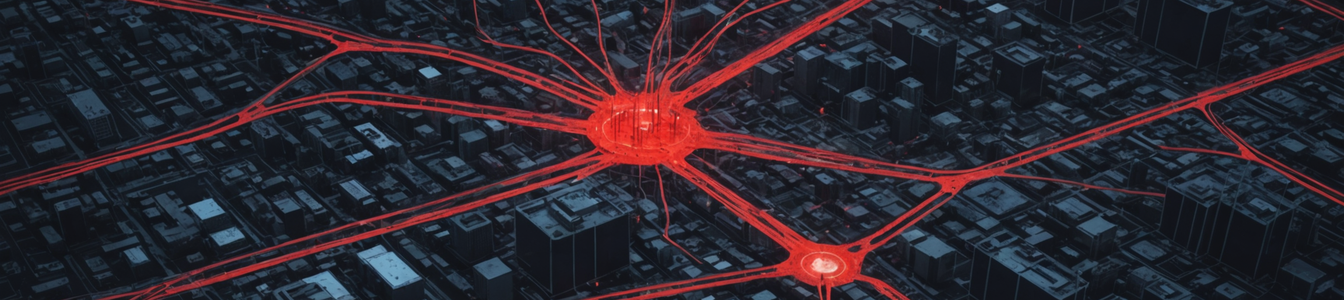
The digital siege on critical infrastructure has entered a new, more perilous phase, characterized by a dual-threat landscape where the lines between state-sponsored sabotage and highly sophisticated criminal activity are increasingly blurred. Recent developments on opposite sides of the globe reveal a concerted assault on the foundational systems that power modern society, from national energy grids to metropolitan transit networks. This convergence of threats from both geopolitical adversaries and resourceful criminal entities demands a fundamental reassessment of defensive strategies by cybersecurity professionals, government agencies, and critical infrastructure operators.
The State-Sponsored Shadow: Covert Platforms and Strategic Targets
Intelligence and cybersecurity research communities are tracking a sophisticated, covert cyber attack platform allegedly operated by state-linked actors. This platform is not designed for broad-spectrum espionage or noisy data theft; its architecture suggests a primary mission of strategic sabotage against the critical infrastructure of neighboring nations. Targets are meticulously selected to maximize disruptive impact, focusing on sectors like energy distribution, transportation control systems, and telecommunications backbone networks.
The operational security (OPSEC) of this platform indicates a high level of state-level resources and planning. It employs advanced techniques to maintain persistence within victim networks while evading traditional signature-based detection. The objective appears to be the establishment of a latent capability—a digital 'hold' on critical systems that could be activated during periods of geopolitical tension to cause cascading failures, economic damage, and social instability without the overt signature of conventional military action. This represents a clear evolution of hybrid warfare tactics, where cyber operations provide plausible deniability while achieving strategic effects.
The Criminal Frontier: Sophistication Beyond Age
In a starkly different yet equally alarming case, the United Kingdom's legal system is proceeding against two teenagers accused of orchestrating a devastating £39 million cyber-attack against Transport for London (TfL). Described by prosecutors as 'highly sophisticated,' the attack targeted the financial and operational heart of one of the world's busiest public transport systems. The scale of the alleged financial damage underscores the very real-world consequences of such breaches, which can cripple revenue streams and erode public trust in essential services.
The sophistication of this attack, allegedly masterminded by individuals so young, challenges traditional profiling of cyber threat actors. It demonstrates that advanced tradecraft—potentially involving ransomware, complex fraud mechanisms, or direct attacks on payment infrastructure—is now accessible outside of traditional nation-state or organized crime syndicates. The perpetrators' remand in custody pending trial highlights the severe legal consequences now being pursued for attacks on critical national infrastructure (CNI), reflecting a global trend toward stricter enforcement and harsher penalties.
Converging Threats and the Imperative for a Unified Defense
These parallel narratives reveal a dangerous convergence. While motives differ—geopolitical coercion versus financial gain—the target set is identical: critical infrastructure. Both threat actor types leverage similar vulnerabilities, such as poorly segmented IT and OT networks, unpatched legacy systems, and insufficient supply chain security. The technical sophistication once exclusive to advanced persistent threat (APT) groups is now demonstrably present in the criminal domain, and vice-versa, with state actors adopting criminal-like tools for obfuscation.
For the cybersecurity community, this dual-threat landscape mandates a multi-layered defense-in-depth strategy with several key pillars:
- Enhanced OT/ICS Security: Moving beyond IT-centric models to implement robust security for operational technology and industrial control systems, employing zero-trust architectures and continuous anomaly detection.
- Threat Intelligence Sharing: Accelerating trusted information sharing between private infrastructure operators, government Computer Emergency Response Teams (CERTs), and international allies to identify cross-border threat patterns and platform signatures.
- Resilience by Design: Building systems with the assumption of breach, focusing on rapid recoverability, segmentation, and fail-safe operational modes to ensure continuity even during an active attack.
- Legal and Diplomatic Deterrence: Strengthening international norms and agreements on the non-targeting of civilian critical infrastructure, coupled with domestic laws that ensure severe consequences for all perpetrators, regardless of affiliation.
Conclusion: A New Era of Collective Responsibility
The attacks on neighboring nations' infrastructure and London's transport system are not isolated incidents. They are symptomatic of a world where critical infrastructure is the primary battlefield for both state and non-state actors. Defending against this requires a paradigm shift from reactive compliance to proactive, intelligence-driven resilience. Cybersecurity professionals must now think like strategists, understanding not just the technical 'how' of an attack, but the geopolitical or criminal 'why.' The security of our lights, our water, our transportation, and our communications is no longer just a technical challenge—it is a fundamental imperative for national and economic security in the 21st century. The time for siloed defense is over; the era of collective, integrated vigilance has begun.
Comentarios 0
Comentando como:
¡Únete a la conversación!
Sé el primero en compartir tu opinión sobre este artículo.
¡Inicia la conversación!
Sé el primero en comentar este artículo.