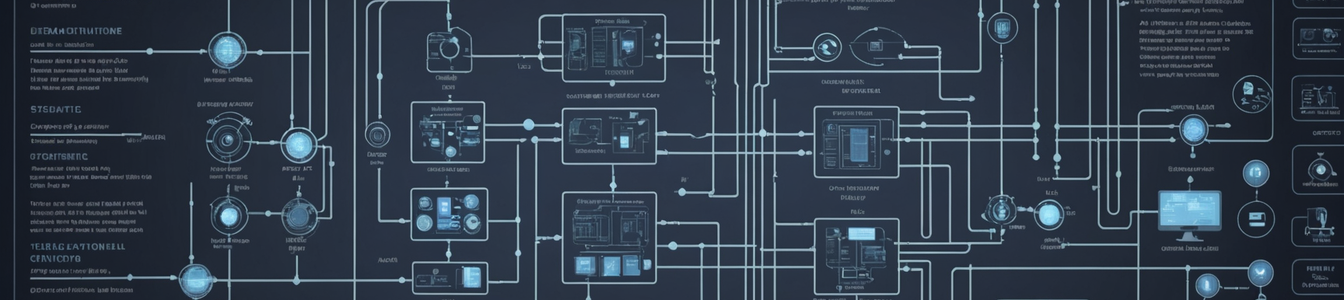
Across three continents, a disturbing pattern has emerged that should alarm every cybersecurity professional: critical public infrastructure systems are leaking vital operational data for years, even decades, with devastating consequences for public health and safety. These aren't traditional data breaches involving stolen credentials or ransomware attacks, but something more insidious—systemic failures in Operational Technology (OT) and Industrial Control Systems (ICS) that create persistent data exposure vectors.
The Irish Case: Two Decades of Unmonitored Environmental Data
In Wexford, Ireland, raw sewage has been leaking into the local harbor for over twenty years, representing what authorities describe as "a serious health risk" for residents. From a cybersecurity perspective, this isn't just an environmental failure—it's a catastrophic breakdown in data integrity and monitoring systems. The sewage monitoring infrastructure, likely consisting of legacy SCADA (Supervisory Control and Data Acquisition) systems and environmental sensors, has either failed to detect the leak or failed to communicate the severity of the situation to responsible authorities.
This represents a critical OT security failure: systems designed to monitor public health parameters have become unreliable data sources. The "data leak" here is continuous—real-time information about water quality, bacterial levels, and environmental contamination that either isn't being collected properly, isn't being analyzed, or isn't triggering appropriate alerts. For cybersecurity professionals, this case highlights the challenge of securing legacy industrial systems that were never designed with modern connectivity or security protocols in mind.
The Indian Incident: Industrial Systems as Toxic Data Vectors
In Dhanbad, India, a toxic gas leak hospitalized a Kenduadih resident, with reports indicating "ongoing danger" to the community. Industrial control systems in manufacturing and chemical processing facilities represent some of the most vulnerable OT environments. These systems often run on outdated operating systems, use proprietary protocols with minimal security features, and lack basic cybersecurity hygiene.
When these systems fail to properly monitor gas levels, pressure parameters, or containment integrity, they're essentially leaking critical safety data. The cybersecurity implications are profound: compromised data integrity in industrial sensors can mean the difference between early warning and catastrophic failure. Unlike traditional IT systems where data breaches might expose financial information, OT data integrity failures expose communities to physical harm.
The Israeli Tragedy: When Building Management Systems Fail
Perhaps the most heartbreaking example comes from Israel, where two infants died and 53 others were hospitalized following a suspected toxic leak in a childcare center's heating system. Initial reports suggest the facility was "unlicensed," which in cybersecurity terms often translates to unregulated, unmonitored, and unsecured OT systems.
Heating, ventilation, and air conditioning (HVAC) systems in modern buildings are increasingly connected to building management systems (BMS) that monitor air quality, temperature, and chemical levels. When these systems fail to detect or report dangerous conditions, they become data leak vectors of the most dangerous kind—ones that directly impact human life. The cybersecurity community must recognize that securing these systems isn't just about protecting data confidentiality, but about ensuring data accuracy and reliability.
The Cybersecurity Implications: A New Frontier in Data Protection
These incidents collectively reveal several critical challenges for cybersecurity professionals:
- Legacy System Insecurity: Much of the world's critical infrastructure runs on systems designed decades before modern cybersecurity threats emerged. These systems lack basic security features, use hard-coded credentials, and often cannot be patched without risking operational stability.
- The Integrity-Confidentiality Priority Shift: In OT environments, data integrity and availability often outweigh confidentiality concerns. A false sensor reading in a water treatment plant or gas monitoring system can be more dangerous than someone stealing the data.
- Convergence Risks: As IT and OT networks increasingly converge for efficiency gains, security vulnerabilities in traditional IT systems can provide attack paths into critical OT environments. The attack surface expands dramatically when previously air-gapped systems become connected.
- Regulatory Gaps: Many jurisdictions lack specific cybersecurity regulations for critical infrastructure OT systems, creating a patchwork of standards and leaving significant vulnerabilities unaddressed.
Moving Forward: A Call to Action for Cybersecurity Professionals
The cybersecurity community must expand its focus beyond traditional IT systems to include the OT environments that keep our societies functioning. This requires:
- Developing specialized OT security frameworks that recognize the unique requirements of industrial systems
- Creating continuous monitoring solutions for legacy systems that cannot be directly secured
- Establishing incident response protocols that address both digital and physical consequences of OT security failures
- Advocating for stronger regulatory frameworks that mandate basic cybersecurity hygiene in critical infrastructure
- Building cross-disciplinary teams that include both cybersecurity experts and industrial engineers
These incidents in Ireland, India, and Israel aren't isolated environmental or industrial accidents—they're cybersecurity failures with physical consequences. As our world becomes increasingly connected, the line between data security and public safety continues to blur. The cybersecurity community has both the expertise and the responsibility to address this silent epidemic before more lives are put at risk.
The time has come to recognize that securing our critical infrastructure means more than protecting data—it means protecting people, communities, and the environment through reliable, accurate, and secure operational technology systems.
Comentarios 0
Comentando como:
¡Únete a la conversación!
Sé el primero en compartir tu opinión sobre este artículo.
¡Inicia la conversación!
Sé el primero en comentar este artículo.