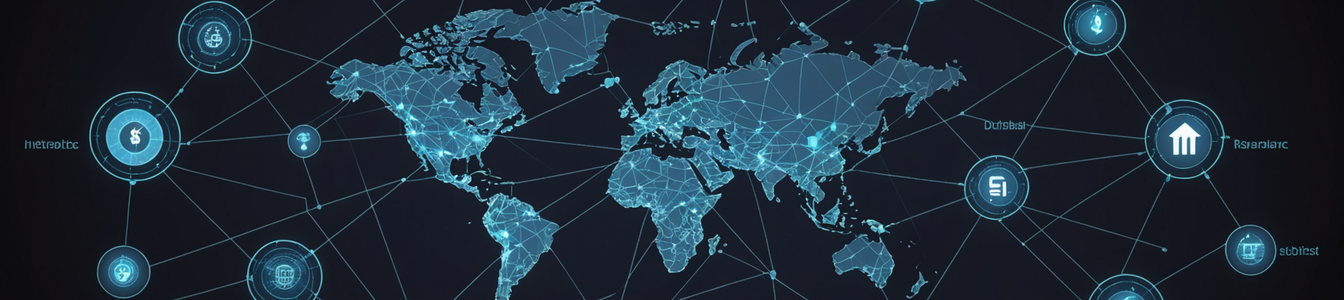
The global financial landscape is undergoing a significant transformation as new cross-border payment solutions emerge, bringing both opportunities and challenges for cybersecurity and compliance professionals. Recent developments, including Rivexa's innovative payment platform for Indian exporters and regulatory changes affecting international e-commerce, highlight the evolving nature of financial technology and its security implications.
Rivexa's cross-border trade payment solution, developed in collaboration with the International Financial Services Centres Authority (IFSCA), represents a paradigm shift in how international transactions are processed and secured. This platform addresses critical pain points for Indian exporters while implementing robust cybersecurity measures to protect sensitive financial data across borders. The integration of advanced encryption protocols, real-time transaction monitoring, and automated compliance checks sets a new standard for secure international payments.
The timing of these innovations coincides with significant regulatory changes affecting global e-commerce. The potential elimination of de minimis exemptions in various jurisdictions creates new compliance obligations for businesses engaged in cross-border trade. These exemptions, which previously allowed low-value shipments to bypass certain customs procedures and regulatory scrutiny, have been a cornerstone of international e-commerce growth. Their removal necessitates more sophisticated compliance frameworks and enhanced cybersecurity measures to manage increased regulatory oversight.
From a cybersecurity perspective, these developments present several critical considerations. The migration to digital cross-border payment platforms expands the attack surface for financial institutions and businesses. Cybersecurity teams must address vulnerabilities in API integrations, data transmission protocols, and cloud infrastructure that support these payment solutions. The implementation of zero-trust architectures and advanced threat detection systems becomes essential in protecting against sophisticated cyber threats targeting financial transactions.
Compliance professionals face equally complex challenges. The convergence of financial regulations, data protection laws, and international trade agreements requires comprehensive risk assessment frameworks. Anti-money laundering (AML) and know-your-customer (KYC) requirements must be integrated seamlessly into payment platforms while maintaining user experience and operational efficiency. The use of artificial intelligence and machine learning for transaction monitoring and suspicious activity detection is becoming increasingly sophisticated, but also raises questions about data privacy and algorithmic transparency.
The regulatory landscape is further complicated by varying international standards and enforcement mechanisms. Cybersecurity frameworks must accommodate different data localization requirements, privacy regulations, and financial oversight regimes across jurisdictions. This necessitates flexible security architectures that can adapt to regional compliance requirements while maintaining consistent protection standards.
For financial institutions and technology providers, the stakes are high. Security breaches in cross-border payment systems can result in significant financial losses, regulatory penalties, and reputational damage. The implementation of comprehensive security controls, including multi-factor authentication, end-to-end encryption, and continuous security monitoring, is no longer optional but essential for market participation.
The evolution of cross-border payment solutions also highlights the growing importance of public-private partnerships in cybersecurity. Collaboration between regulatory bodies like IFSCA, financial institutions, and technology providers enables the development of security standards that balance innovation with protection. Information sharing about emerging threats and vulnerabilities becomes crucial in maintaining the integrity of global financial systems.
Looking ahead, the integration of blockchain technology and distributed ledger systems promises to further transform cross-border payments while introducing new security considerations. The immutability and transparency of blockchain transactions offer potential benefits for compliance and audit trails, but also require new approaches to key management and smart contract security.
Cybersecurity professionals must stay ahead of these developments, understanding both the technical implementation of new payment platforms and the regulatory environment in which they operate. Continuous education, threat intelligence sharing, and proactive security testing will be essential in protecting the future of cross-border financial transactions.
The revolution in cross-border payments represents a fundamental shift in how global commerce operates. As these systems become more sophisticated and integrated, the role of cybersecurity in ensuring their safe and compliant operation becomes increasingly critical. Organizations that successfully navigate this complex landscape will be well-positioned to capitalize on the opportunities of global digital trade while managing the associated risks.
Comentarios 0
Comentando como:
¡Únete a la conversación!
Sé el primero en compartir tu opinión sobre este artículo.
¡Inicia la conversación!
Sé el primero en comentar este artículo.