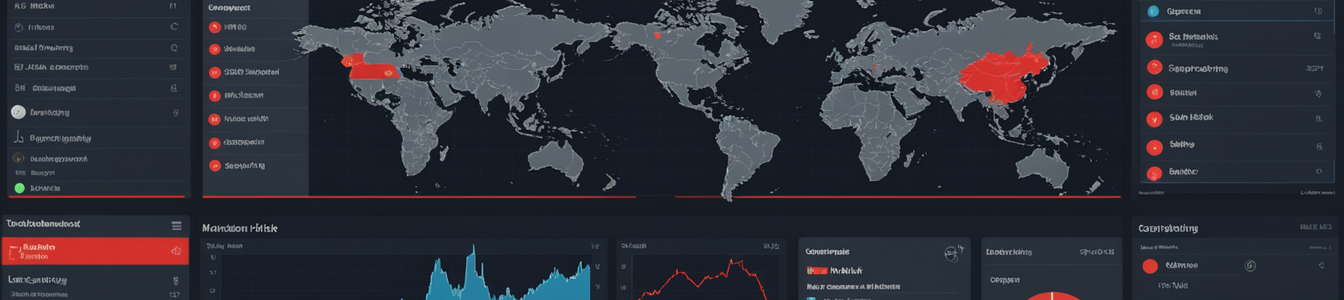
The cryptocurrency industry is facing an unprecedented global regulatory crackdown as financial watchdogs across multiple jurisdictions take coordinated action against major exchanges for anti-money laundering (AML) compliance failures. Recent enforcement actions totaling nearly $50 million in penalties highlight systemic weaknesses in the sector's compliance infrastructure.
In Europe, the Central Bank of Ireland has imposed a substantial $24.8 million fine against Coinbase Europe for significant AML program deficiencies. The regulatory body identified failures in customer due diligence procedures, transaction monitoring systems, and suspicious activity reporting protocols. This action represents one of the largest AML-related penalties against a cryptocurrency exchange in the European Union to date.
Simultaneously, South Korea's Financial Services Commission has levied a $24.3 million penalty against Dunamu, operator of the Upbit exchange, for violations of customer identification obligations. The regulatory findings indicate that the exchange failed to properly verify customer identities and maintain adequate records, creating potential vulnerabilities for financial crime exploitation.
These enforcement actions reveal a pattern of compliance gaps that cybersecurity and financial crime professionals have been warning about for years. The fundamental challenge lies in adapting traditional financial compliance frameworks to the unique architecture of cryptocurrency transactions, which operate across borders with varying regulatory standards.
The technical compliance failures identified in these cases include inadequate implementation of Know Your Customer (KYC) protocols, insufficient transaction monitoring algorithms, and weak suspicious activity detection systems. Many exchanges have struggled to balance user privacy expectations with regulatory requirements, leading to compliance shortcuts that regulators are now aggressively targeting.
In Japan, the regulatory landscape is evolving differently, with authorities considering easing certain restrictions to encourage market competition and innovation. This contrasting approach highlights the global divergence in cryptocurrency regulation strategies, creating a complex compliance environment for exchanges operating across multiple jurisdictions.
The operational mechanics of cryptocurrency exchanges present unique AML challenges that differ from traditional financial institutions. The pseudonymous nature of blockchain transactions, combined with the speed and borderless characteristics of crypto transfers, requires sophisticated monitoring solutions that many exchanges have been slow to implement effectively.
Cybersecurity professionals working in the cryptocurrency sector now face increased pressure to develop and implement robust compliance systems that can handle the volume and complexity of crypto transactions while meeting evolving regulatory standards. This includes implementing advanced analytics for transaction pattern recognition, developing blockchain forensic capabilities, and establishing comprehensive customer risk profiling systems.
The global regulatory coordination evident in these recent actions suggests that cryptocurrency exchanges can no longer rely on regulatory arbitrage between jurisdictions. Regulators are increasingly sharing information and coordinating enforcement approaches, creating a more unified global compliance standard for the industry.
For compliance officers and cybersecurity professionals, these developments underscore the critical importance of building AML programs that can withstand regulatory scrutiny across multiple jurisdictions. This requires not only technical compliance with local regulations but also the implementation of comprehensive risk assessment frameworks that can adapt to evolving regulatory expectations.
The cryptocurrency industry's maturation is being accelerated by this regulatory pressure, forcing exchanges to invest significantly in compliance infrastructure and professional expertise. This trend is likely to continue as regulators worldwide strengthen their oversight of digital asset markets, creating both challenges and opportunities for cybersecurity professionals specializing in financial crime prevention.
As the regulatory landscape continues to evolve, exchanges that proactively address compliance gaps and invest in robust AML systems will be better positioned to navigate the increasing scrutiny. The recent enforcement actions serve as a clear warning that regulatory patience with compliance failures in the cryptocurrency sector has reached its limit.
Comentarios 0
Comentando como:
¡Únete a la conversación!
Sé el primero en compartir tu opinión sobre este artículo.
¡Inicia la conversación!
Sé el primero en comentar este artículo.