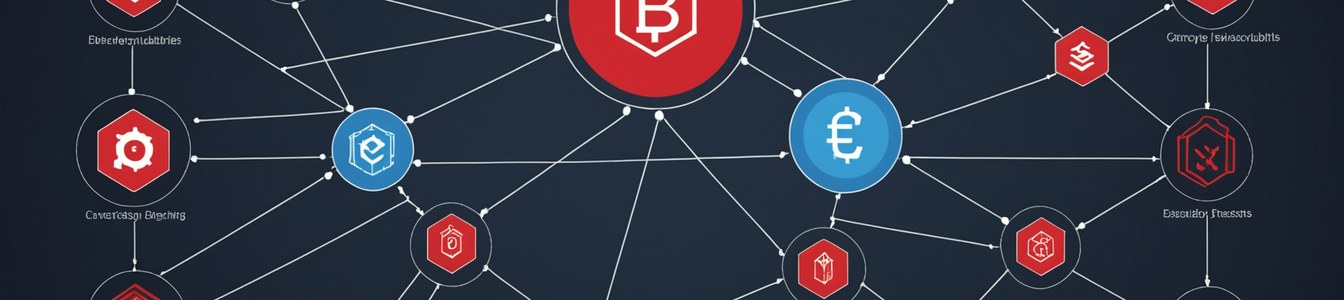
The cryptocurrency industry is facing a new wave of security challenges as third-party analytics providers become the latest attack vector compromising user data across multiple exchanges. Recent incidents involving compromised analytics vendors and malicious browser extensions have exposed fundamental weaknesses in the security supply chain that supports digital asset platforms.
Major Indian cryptocurrency exchange CoinDCX confirmed that a security breach at an undisclosed third-party analytics provider led to the exposure of sensitive user data. While the exchange assured users that their funds remain secure and protected by cold storage protocols, the incident highlights how vulnerabilities in ancillary services can undermine the security posture of even well-protected platforms.
Concurrently, security researchers uncovered that the Solana browser extension 'Crypto Copilot' had been secretly diverting user funds through unauthorized transactions. The extension, which presented itself as a legitimate trading tool, was found to be executing hidden trades that transferred assets to attacker-controlled wallets without user consent or knowledge.
These parallel incidents reveal a disturbing trend in cryptocurrency security: attackers are increasingly bypassing core platform defenses by targeting the extended ecosystem of tools and services that users rely on for analytics, trading assistance, and portfolio management. The strategy represents a sophisticated shift in attack methodology that exploits the trust relationships between users, platforms, and their service providers.
The compromised analytics providers typically have access to extensive user data, including trading patterns, portfolio compositions, and in some cases, Know Your Customer (KYC) information. This data richness makes them attractive targets for attackers seeking to build comprehensive profiles of cryptocurrency users for subsequent social engineering attacks, targeted phishing campaigns, or even extortion attempts.
Browser extensions present particularly concerning attack vectors due to their extensive permissions and the relative ease with which malicious code can be distributed. The Crypto Copilot incident demonstrates how even seemingly legitimate tools can be weaponized once they gain user trust and installation. The extension's ability to execute unauthorized transactions highlights the critical need for more granular permission models and runtime monitoring of extension behavior.
Security professionals emphasize that these incidents underscore the limitations of traditional security models that focus primarily on protecting core platform infrastructure. The distributed nature of modern cryptocurrency ecosystems means that security must extend to every component in the supply chain, from analytics providers and liquidity aggregators to browser extensions and mobile applications.
Effective mitigation requires a multi-layered approach including comprehensive third-party risk assessment programs, continuous security monitoring of integrated services, and user education about the risks associated with browser extensions and third-party tools. Organizations must implement strict vendor security requirements, conduct regular security audits of third-party providers, and establish clear incident response protocols for supply chain compromises.
For users, the incidents serve as a critical reminder to exercise caution when granting permissions to browser extensions and third-party tools. Security experts recommend regularly reviewing installed extensions, limiting permissions to only those absolutely necessary, and using hardware wallets for significant cryptocurrency holdings to isolate private keys from browser-based environments.
The regulatory implications of these breaches are also significant, as data protection regulations increasingly hold organizations accountable for third-party data handling. Cryptocurrency exchanges and service providers may face increased scrutiny regarding their vendor management practices and data protection measures.
As the cryptocurrency industry continues to mature, addressing supply chain security must become a priority for all participants. The recent breaches demonstrate that the security of any platform is only as strong as the weakest link in its extended ecosystem, making comprehensive third-party risk management essential for protecting user assets and maintaining trust in digital financial systems.
Comentarios 0
Comentando como:
¡Únete a la conversación!
Sé el primero en compartir tu opinión sobre este artículo.
¡Inicia la conversación!
Sé el primero en comentar este artículo.