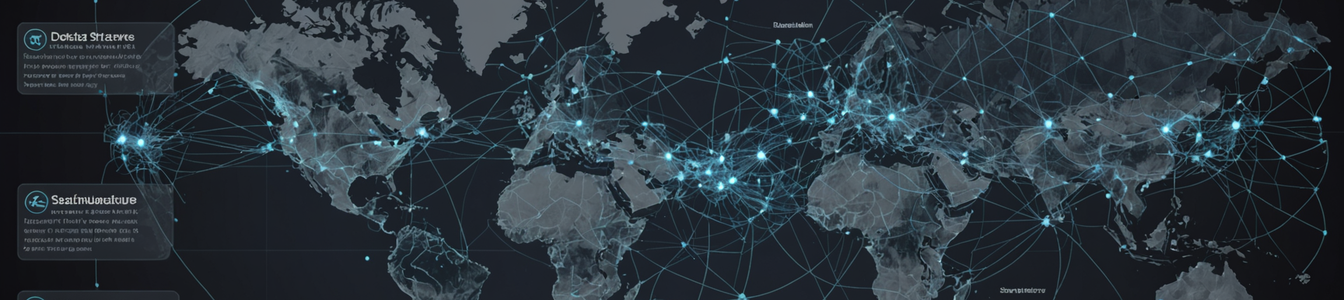
The cybersecurity landscape is witnessing a dangerous and coordinated escalation as a new wave of massive-scale Distributed Denial of Service (DDoS) attacks simultaneously targets two pillars of modern society: military communications and national civilian infrastructure. These incidents, occurring in parallel, signal a strategic shift in cyber warfare and criminal activity, aiming to cripple core operational and societal functions.
Military Communications Under Digital Siege
In a stark demonstration of cyber conflict's tangible impact on the battlefield, a secure messaging application critical for the coordination of Ukrainian military forces was recently knocked offline by a sustained DDoS attack. The platform, which serves as a vital conduit for command and control, operational orders, and situational awareness among units, was rendered inoperable for a significant period. This attack directly impeded military responsiveness and tactical coordination, highlighting how cyber tools are now integral to kinetic warfare. The incident underscores the vulnerability of even specialized, supposedly secure communication channels to volumetric attacks that overwhelm network capacity and infrastructure.
France's National Postal Service Hit by "Most Violent" Attack
Across Europe, a separate but equally alarming attack targeted France's essential services. La Poste, the national postal service, endured what French cybersecurity authorities and the company itself have labeled the most intense DDoS attack ever recorded in the country. The assault was not a brief spike in traffic but a prolonged, high-volume barrage designed to cause maximum disruption.
The impact was severe and multifaceted. La Poste's public-facing websites, customer portals, and online tracking systems became unreachable. More critically, the attack disrupted internal operational networks, delaying mail and package sorting, logistics, and delivery schedules across the nation. Given La Poste's role in providing government services, identity verification, and banking (via La Banque Postale), the disruption extended far beyond simple parcel delivery, affecting financial transactions and citizen access to essential administrative services.
Analysis: A Strategic Shift in DDoS Campaigns
Security analysts examining these parallel events identify several concerning trends. First, the scale and sophistication have reached new heights. The attacks leverage vast botnets, potentially incorporating compromised IoT devices and cloud infrastructure, to generate traffic volumes that can overwhelm even robust, enterprise-grade defenses.
Second, the target selection is strategic. Attackers are no longer just aiming for e-commerce or media sites for fame or ransom. They are deliberately choosing targets whose disruption causes cascading societal and operational effects: military coordination in a conflict zone and a national postal service that is a linchpin of logistics, finance, and government-citizen interaction.
Third, this represents a move towards multi-vector, sustained campaigns. Modern DDoS attacks often combine volumetric attacks (flooding bandwidth) with application-layer attacks (targeting specific web functions) and protocol attacks (exploiting server resources). This layered approach makes mitigation more complex than simply absorbing a traffic flood.
Implications for Cybersecurity Professionals
For the global cybersecurity community, these attacks serve as a critical wake-up call. Traditional, on-premise DDoS protection solutions are frequently insufficient against today's multi-vector, terabit-scale attacks. The need for cloud-based, scalable mitigation services that can absorb and filter attack traffic before it reaches the organizational network is now paramount.
Furthermore, incident response plans must be stress-tested for scenarios where critical external communications and operational tools are unavailable for extended periods. For infrastructure as vital as a national postal service or military comms, redundancy, failover systems, and offline operational protocols are not just best practices—they are national security imperatives.
Conclusion: Building Resilience in an Era of Digital Siege
The unseen battle is intensifying. These attacks on Ukrainian military messengers and La Poste are not isolated IT issues; they are deliberate acts of disruption against the nervous systems of nations and alliances. They prove that DDoS has evolved from a tool for hacktivists and petty criminals to a weapon of strategic disruption employed by state-sponsored actors and sophisticated cybercriminal groups alike.
The defense must evolve in tandem. This requires a commitment to investing in next-generation DDoS protection, fostering public-private partnerships for threat intelligence sharing, and mandating higher resilience standards for operators of critical national infrastructure. In the digital age, the continuity of postal services and military communications is inextricably linked to national security and societal stability. Protecting them is no longer just a technical challenge—it is a fundamental duty.
Comentarios 0
Comentando como:
¡Únete a la conversación!
Sé el primero en compartir tu opinión sobre este artículo.
¡Inicia la conversación!
Sé el primero en comentar este artículo.