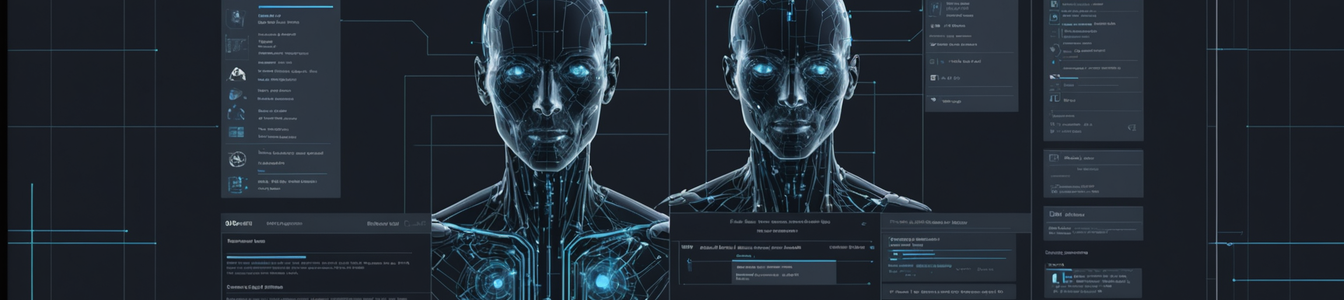
The enterprise security perimeter has traditionally been defined by firewalls, endpoint protection, and access controls. But a new, insidious threat vector is emerging not from external network attacks, but from within the hiring process itself. The convergence of two AI-driven trends—sophisticated deepfake candidates and automated recruitment systems—is creating what security experts are calling "the AI hiring crisis," potentially placing malicious actors directly into organizations with legitimate credentials and access.
The Deepfake Candidate Phenomenon
Recent incidents have demonstrated that threat actors are now leveraging generative AI to create entirely synthetic candidates capable of passing multiple interview stages. These deepfake personas—complete with realistic video presence, convincing vocal patterns, and fabricated professional backgrounds—are designed to infiltrate organizations. Unlike traditional social engineering, this approach bypasses technical controls by presenting what appears to be a legitimate human candidate through digital interview platforms.
The technology has evolved beyond simple voice cloning to full audiovisual synthesis that can respond to interview questions in real-time with appropriate emotional cues and industry-specific terminology. As noted in recent analyses, these synthetic candidates often target positions with elevated access privileges, particularly in IT, finance, and operations departments where they could facilitate data exfiltration, intellectual property theft, or establish backdoor access for future attacks.
The Blind Spots of AI-Powered Recruitment
Simultaneously, organizations have increasingly adopted AI-driven recruitment platforms that prioritize efficiency and bias reduction but introduce significant security vulnerabilities. These systems typically analyze resumes, screen video interviews, and rank candidates based on algorithmic assessments. However, most lack robust mechanisms to verify the authenticity of the candidate's identity or media.
Automated recruitment AI focuses on pattern matching—comparing candidate responses to ideal profiles—rather than detecting synthetic media. This creates a dangerous gap where deepfake candidates can score highly by matching algorithmic preferences while evading human scrutiny that might detect inconsistencies. The efficiency-first design of these platforms means security verification often becomes an afterthought, if considered at all.
The Convergence Threat
The intersection of these trends creates a perfect storm. Deepfake technology provides the means to create convincing synthetic candidates, while automated recruitment systems provide the vulnerable pathway for their entry. Threat actors can now scale social engineering attacks, potentially submitting dozens of deepfake applications to target organizations with minimal effort.
This represents a fundamental shift in the insider threat landscape. Instead of compromising existing employees, attackers can now "insert" their own personnel with carefully crafted identities designed to pass both automated and human review processes. The implications are particularly severe for remote and hybrid work environments where digital interactions replace in-person verification.
Technical Realities and Detection Challenges
Current deepfake detection technology struggles with the latest generation of synthetic media. While earlier deepfakes exhibited telltale signs like inconsistent lighting, unnatural blinking patterns, or audio-visual desynchronization, newer models have largely overcome these limitations. The AI arms race has reached a point where synthetic media can often fool both human observers and existing detection tools.
Recruitment platforms compound this problem by frequently compressing video feeds, reducing quality in ways that can mask remaining artifacts of synthetic generation while simultaneously degrading the signal that detection algorithms rely upon. Many platforms also prioritize bandwidth efficiency over media fidelity, creating additional challenges for verification.
Global Implications and Regional Considerations
The threat manifests differently across regions. In markets with high demand for technical talent, the pressure to fill positions quickly can lead to shortened verification processes. In regions with strong data protection regulations, the collection of additional verification data presents privacy compliance challenges. The Australian context, where AI recruitment adoption has accelerated rapidly, demonstrates how regulatory frameworks often lag behind technological threats.
The international nature of both the technology and recruitment markets means that a deepfake candidate could be generated in one country, applied to positions in another, and interview for roles in a third—complicating jurisdictional responses and attribution.
Mitigation Strategies for Security Teams
Addressing this crisis requires a fundamental rethinking of hiring security. Cybersecurity teams must establish direct collaboration with HR departments, moving beyond background checks to implement:
- Multi-Factor Identity Verification: Implementing layered verification that combines document validation, biometric checks, and real-time interaction tests that are difficult for deepfakes to replicate.
- Deepfake Detection Integration: Incorporating specialized detection tools directly into recruitment platforms, particularly at the video interview stage where synthetic media is most likely to be deployed.
- Process-Based Controls: Mandating in-person or live verification interviews for positions with privileged access, regardless of remote work policies.
- Vendor Security Assessment: Evaluating recruitment platform providers for their security capabilities, including their ability to detect synthetic media and verify candidate authenticity.
- Continuous Monitoring: Extending security monitoring to new hires during probationary periods, with particular attention to access patterns and behavioral analytics.
The Path Forward
The AI hiring crisis represents more than just another cybersecurity challenge—it signals a fundamental shift in how organizations must think about identity, authenticity, and trust in digital interactions. As the former Greek finance minister Yanis Varoufakis experienced when discovering deepfake videos of himself saying things he never said, the erosion of trust in digital media has profound implications beyond cybersecurity.
For enterprise security professionals, the immediate priority must be bridging the gap between HR processes and security protocols. This includes developing new frameworks for digital identity verification that can withstand increasingly sophisticated synthetic media while respecting privacy concerns and operational efficiency.
The convergence of AI-generated threats and AI-powered vulnerabilities in recruitment represents one of the most significant enterprise security challenges of this decade. Organizations that fail to adapt their hiring security now may find their next major breach begins not with a phishing email or malware, but with a seemingly perfect candidate who never actually existed.
Comentarios 0
Comentando como:
¡Únete a la conversación!
Sé el primero en compartir tu opinión sobre este artículo.
¡Inicia la conversación!
Sé el primero en comentar este artículo.