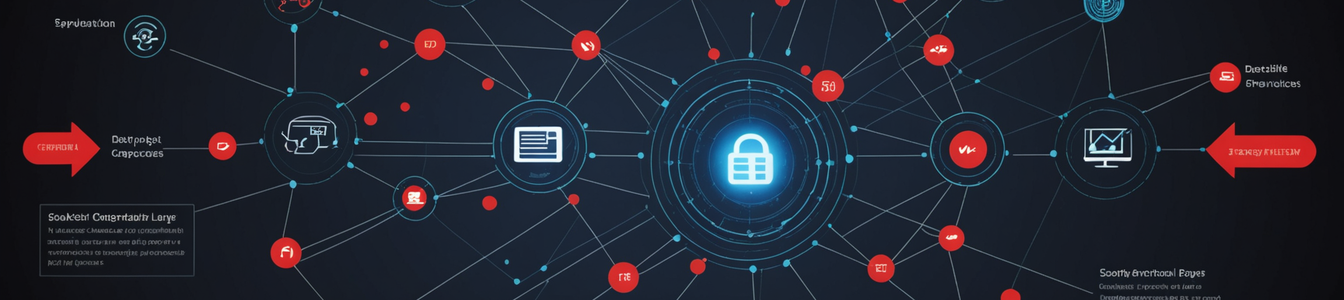
The digital payment revolution has hit a critical security wall, with systemic vulnerabilities forcing an unprecedented global infrastructure overhaul. As financial institutions scramble to address emerging threats, the cybersecurity community faces one of its most significant challenges in decades.
Recent security assessments of major payment technology providers have revealed alarming gaps in fundamental security protocols. Authentication systems, long considered the first line of defense, are showing signs of strain under sophisticated attack vectors. Multi-factor authentication implementations, once thought sufficient, are now being bypassed through advanced social engineering and technical exploits.
API security represents another critical vulnerability point. The interconnected nature of modern payment ecosystems relies heavily on API communications between banks, payment processors, merchants, and regulatory bodies. Security researchers have identified multiple instances of inadequate API authentication, insufficient rate limiting, and improper error handling that could expose sensitive financial data.
Transaction monitoring systems, designed to detect fraudulent activity in real-time, are struggling to keep pace with evolving attack methodologies. Machine learning algorithms trained on historical fraud patterns are proving inadequate against novel attack strategies developed by sophisticated threat actors.
The financial impact of these security gaps is staggering. Industry estimates suggest that payment fraud losses exceeded $32 billion globally in the past year alone, with digital payment channels accounting for an increasing share of these losses. Beyond direct financial impacts, the erosion of consumer trust poses a long-term threat to digital payment adoption.
Regulatory bodies worldwide are responding with urgent security mandates. New requirements focus on implementing zero-trust architectures, where no user or system is inherently trusted, regardless of their network location. Enhanced encryption standards, including quantum-resistant algorithms, are becoming mandatory for protecting sensitive financial data in transit and at rest.
Real-time threat detection capabilities are receiving particular attention from regulators. Financial institutions must now demonstrate the ability to detect and respond to security incidents within minutes rather than hours or days. This requires significant investments in security operations centers, advanced analytics platforms, and skilled cybersecurity personnel.
The human element remains a critical vulnerability. Social engineering attacks targeting payment system users have become increasingly sophisticated, often bypassing technical security controls entirely. Comprehensive security awareness training for both employees and customers is now recognized as essential to any effective security strategy.
Third-party risk management has emerged as another priority area. The complex web of relationships between banks, payment processors, technology vendors, and service providers creates multiple potential attack vectors. Institutions must now conduct rigorous security assessments of all third parties with access to their systems or data.
The path forward requires a balanced approach that enhances security without compromising the user experience that made digital payments popular. Biometric authentication, behavioral analytics, and adaptive security controls offer promising solutions, but their implementation must be carefully managed to avoid creating friction that drives users to less secure alternatives.
As the industry navigates this security transformation, collaboration between financial institutions, technology providers, regulators, and the cybersecurity community will be essential. The stakes are high, but with coordinated effort and strategic investment, the digital payment ecosystem can emerge stronger and more secure than ever before.
Comentarios 0
Comentando como:
¡Únete a la conversación!
Sé el primero en compartir tu opinión sobre este artículo.
¡Inicia la conversación!
Sé el primero en comentar este artículo.