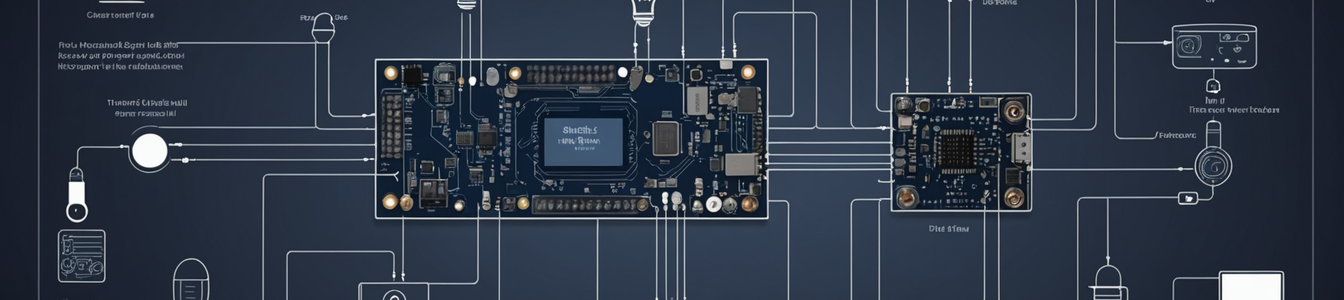
In living rooms and home offices across the globe, a quiet revolution is underway. Frustrated by smart devices that secretly communicate with unknown servers, a growing cohort of technically adept consumers is abandoning plug-and-play security solutions in favor of custom-built, granular firewall systems designed to lock down the Internet of Things. This grassroots movement represents a fundamental shift in home network defense, born from widespread distrust of commercial IoT manufacturers and their opaque data practices.
The core issue driving this DIY firewall revolution is what security researchers term "phoning home"—the often-undocumented practice of IoT devices establishing outbound connections to manufacturer servers, cloud platforms, or third-party analytics services. While some communication is necessary for functionality, the scope, frequency, and opacity of these connections have raised significant privacy and security concerns. Devices ranging from smart TVs and voice assistants to connected light bulbs and refrigerators have been caught transmitting detailed usage patterns, ambient audio snippets, network topology data, and even unencrypted personal information.
"The average smart home has become a data exfiltration platform," explains a cybersecurity engineer who built a custom Raspberry Pi-based firewall for his household. "Manufacturers provide minimal documentation about what data leaves the network, where it goes, or how it's protected. Taking control at the network layer is the only way to enforce actual privacy boundaries."
These custom solutions typically employ a multi-layered approach. First, network segmentation physically or logically isolates IoT devices from personal computers, phones, and sensitive data. This is often achieved through VLANs (Virtual Local Area Networks) on prosumer or enterprise-grade routers. Second, egress filtering—blocking all outbound traffic by default—is implemented. Devices are then granted only the specific permissions needed for core functionality, a principle known as least privilege.
The technical heart of these systems is often open-source software like pfSense, OPNsense, or custom iptables/nftables configurations running on dedicated hardware. Users implement Deep Packet Inspection (DPI) to analyze traffic content, not just headers, identifying connections to known advertising, tracking, or analytics domains. Blocklists targeting telemetry servers, geographic restrictions limiting traffic to specific countries, and DNS-level filtering via solutions like Pi-hole are common additions.
The challenges are substantial. Maintaining these systems requires ongoing research to identify necessary domains for basic functionality (like a smart speaker's weather updates) versus unnecessary telemetry. Some devices become "bricked" or dysfunctional if completely isolated, leading users to create complex rules that permit minimal, essential traffic. The time investment can be significant, placing this solution out of reach for non-technical users and highlighting the accessibility gap in consumer security.
This trend has profound implications for the cybersecurity industry. It demonstrates a failure of the "security by design" principle in consumer IoT, where convenience and data harvesting are consistently prioritized over user control. For enterprise security teams, the home DIY firewall movement serves as a real-world case study in zero-trust architecture at the micro-level. The principles being applied—network segmentation, least privilege access, and rigorous egress filtering—are directly analogous to best practices for securing corporate networks.
Furthermore, the movement creates a new market niche. Some DIY pioneers are beginning to package their configurations into more user-friendly solutions or offer consulting services. Open-source projects dedicated to curating blocklists for IoT devices are gaining traction. This bottom-up innovation pressures traditional security appliance vendors to develop more granular, user-controllable features for the prosumer market.
Looking ahead, the DIY firewall revolution is more than a technical workaround; it's a statement. It signals that a segment of consumers will no longer tolerate being passive subjects in their own smart homes. As regulatory frameworks like the EU's Cyber Resilience Act begin to mandate stricter security and transparency standards, the techniques pioneered by these home users may eventually become standardized features. Until then, the soldering irons and command-line interfaces will remain active, as individuals take a stand to ensure their connected devices serve them—and not the other way around.
Comentarios 0
Comentando como:
¡Únete a la conversación!
Sé el primero en compartir tu opinión sobre este artículo.
¡Inicia la conversación!
Sé el primero en comentar este artículo.