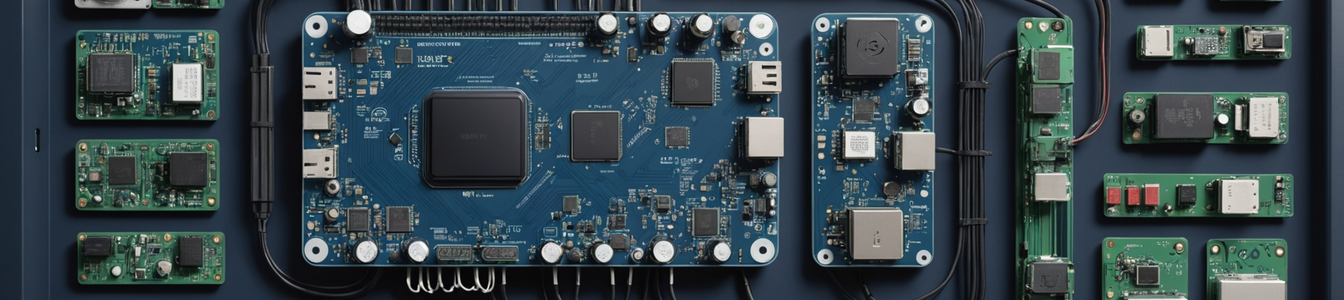
The smart home security landscape is undergoing a quiet but profound transformation. While major corporations continue to dominate the consumer IoT market with cloud-dependent, subscription-based devices, a parallel ecosystem is emerging from workshops and home offices. Tech-savvy users, frustrated by persistent security vulnerabilities, privacy concerns, and vendor lock-in, are building their own smart home systems using open-source hardware and software. This DIY defense movement isn't just about customization—it's fundamentally redefining what secure IoT architecture looks like.
At the heart of this revolution are accessible technologies like the ESP32 microcontroller. This affordable, Wi-Fi and Bluetooth-enabled chip has become the building block for countless custom devices, from environmental sensors and smart switches to security cameras and automation controllers. Unlike their commercial counterparts, these DIY creations typically operate entirely locally, communicating through secure protocols like MQTT with TLS over a private home network. This architectural choice alone eliminates entire categories of cloud-based attacks and prevents sensitive data—like when you're home or what devices you use—from ever leaving your premises.
The software cornerstone of this movement is Home Assistant, an open-source home automation platform designed for local control. Recent developments, such as native backup integration with Cloudflare R2, highlight the community's focus on robust, user-controlled data management. The free tier of such services often provides sufficient storage for comprehensive system backups, enabling quick recovery without relying on corporate cloud services. This approach contrasts sharply with commercial ecosystems where device functionality often ceases if manufacturer servers go offline or if subscriptions lapse.
From a cybersecurity perspective, the DIY model offers several distinct advantages. First is transparency: every component, from firmware to communication protocols, can be inspected and audited by the community. Vulnerabilities in popular libraries or frameworks are often identified and patched faster than in closed commercial systems. Second is minimization: users install only what they need, dramatically reducing the attack surface compared to commercial devices packed with unnecessary features and background services. Third is segmentation: DIY systems naturally encourage network segmentation, with IoT devices isolated on separate VLANs or subnets, limiting lateral movement potential for attackers.
However, this approach isn't without its challenges and risks. The security of a DIY system ultimately depends on the builder's expertise. Misconfigured MQTT brokers, weak authentication, unpatched software components, or insecure physical access to devices can create vulnerabilities. The community acknowledges this through extensive documentation, security-focused distributions, and shared best practices. For instance, many ESP32 projects now emphasize secure boot, encrypted communications, and regular OTA update mechanisms managed by the user, not a remote corporation.
This trend coincides with what some industry observers call the 'AI reboot' of smart homes, where major platforms are integrating large language models to create more conversational interfaces. Yet, for security-conscious users, this corporate AI push raises additional concerns about data collection and processing. The DIY community's response has been to explore local AI inference—running smaller models directly on devices like the ESP32-S3 or on home servers—keeping voice commands and pattern analysis completely private.
The implications for cybersecurity professionals are multifaceted. For those advising consumers, understanding this DIY ecosystem becomes essential when assessing home network security. An ESP32-based motion sensor running Tasmota firmware presents different risks and monitoring requirements than a commercial Google Nest product. For enterprise security, the principles demonstrated by this movement—local processing, open auditability, minimal attack surfaces—offer valuable lessons for corporate IoT deployments.
Perhaps the most significant impact is cultural. The DIY defense movement proves that with the right tools and knowledge, individuals can achieve security postures superior to billion-dollar corporations. It challenges the assumption that security must be sacrificed for convenience in consumer technology. As these practices mature and become more accessible through pre-built images, guided setups, and community support, they may pressure commercial vendors to adopt more transparent, user-respecting approaches.
The future of secure smart homes may not belong to the company with the largest cloud infrastructure, but to the communities building resilient, private, and user-controlled systems. As one enthusiast noted, 'My homemade sensor won't stop working if a startup gets acquired or a cloud service gets sunset.' In an era of increasing digital fragility, that reliability—coupled with enhanced security—is becoming priceless.
Comentarios 0
Comentando como:
¡Únete a la conversación!
Sé el primero en compartir tu opinión sobre este artículo.
¡Inicia la conversación!
Sé el primero en comentar este artículo.