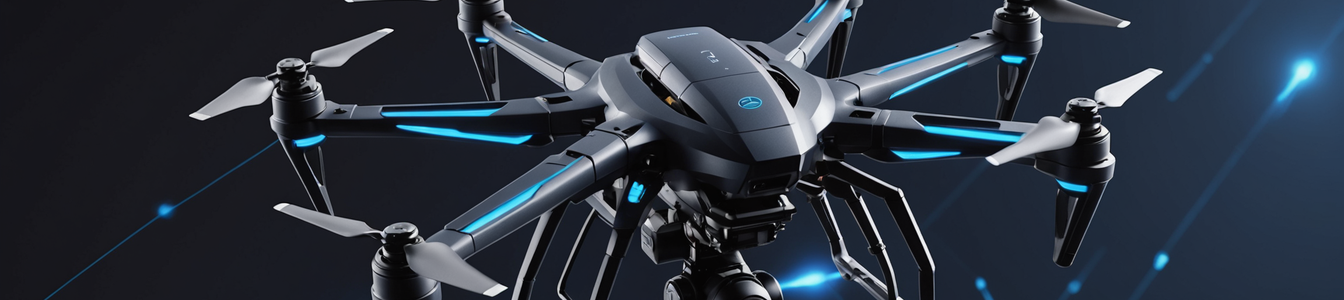
The silent hum of a drone's rotors now carries more than just a camera; it carries the potential for sophisticated espionage, electronic attack, and a new era of hybrid conflict. The cybersecurity landscape is undergoing a fundamental shift as unmanned aerial systems (UAS) evolve from passive surveillance tools into active, networked nodes in cyber-physical attack chains. Two recent developments underscore this alarming trend: the covert use of commercial drones for cross-border intelligence operations on the Korean Peninsula and the militarization of high-endurance drones like the U.S. Navy's MQ-9B SeaGuardian for advanced anti-submarine warfare (ASW). Together, they paint a picture of a future where the skies are filled with autonomous systems capable of bridging the digital and physical worlds in service of state-sponsored objectives.
The Korean Peninsula: A Case Study in Covert Drone Espionage
South Korean authorities are currently investigating a disturbing incident where drones, allegedly flown by a student activist into North Korean airspace, may have been funded and directed by an unnamed foreign intelligence service. This case is a textbook example of how unmanned systems are being weaponized for deniable, hybrid operations. The operation likely involved commercially available drones, modified with extended-range communications, hardened GPS, and specialized sensor packages for signals intelligence (SIGINT) or imagery. The use of a non-state actor as a cut-out provides plausible deniability, a tactic straight out of the cyber playbook now applied to physical systems.
For cybersecurity teams, the implications are profound. The command-and-control (C2) links for these drones represent a critical vulnerability and opportunity. These links, often using standard radio frequencies or even cellular networks, can be jammed, hijacked, or spoofed. Defenders must now consider the airspace around critical infrastructure as a new attack vector. A drone is not just a flying device; it's a mobile, internet-connected endpoint that can be used to drop malicious payloads, create a wireless bridge into air-gapped networks, or conduct close-in SIGINT against secure facilities. The incident highlights the need for integrated air defense that combines traditional counter-drone technologies (kinetic, jamming) with cyber-takedown capabilities targeting the drone's software and C2 infrastructure.
The SeaGuardian and the Militarization of Autonomous ISR
On the other end of the technological spectrum, the U.S. Navy's integration of the MQ-9B SeaGuardian drone with sonobuoy deployment capabilities represents the formal militarization of this trend. The SeaGuardian, a variant of the Predator-series drone, can now hunt submarines by deploying and monitoring sonobuoys—small, expendable sonar systems that relay acoustic data. This transforms the drone from an Intelligence, Surveillance, and Reconnaissance (ISR) platform into an active hunter-killer node in the undersea domain.
The cybersecurity angle here revolves around data links, sensor fusion, and autonomy. The sonobuoys create a wireless, underwater sensor network. The data they collect is transmitted to the drone, which must process, encrypt, and relay it via satellite links to command centers. Each step in this chain—the buoy's transmitter, the drone's data bus, the satellite uplink—is a potential target for cyber exploitation. An adversary could attempt to inject false acoustic data, spoof the drone's location, or hijack the data stream to gain intelligence on U.S. ASW tactics. Furthermore, the increasing autonomy of these systems, where the drone may eventually identify and track targets with minimal human intervention, introduces risks related to algorithmic warfare and the poisoning of machine learning models used for target recognition.
The Convergence: A New Frontier for Cyber-Physical Security
These two examples, one covert and deniable, the other overt and militarized, represent two sides of the same coin. They signal the emergence of unmanned systems as primary vectors for hybrid threats. The threat model for critical infrastructure and national security entities must now expand to include:
- Physical Network Intrusion: Drones as a means to place malicious hardware (e.g., rogue cell towers, packet sniffers) in proximity to secure perimeters.
- Electronic Warfare (EW) Platforms: Small drones equipped with jammers or interceptors to disrupt communications and radar.
- AI-Enabled Swarms: Coordinated groups of drones that could overwhelm defenses through autonomous, collaborative behavior, presenting a complex challenge for both cyber and kinetic defenders.
- Supply Chain Attacks: Compromising the software or components of commercial drone platforms (like DJI) that are later used for government or critical infrastructure operations.
Defensive Posture for the Age of Silent Skies
Addressing this threat requires a multidisciplinary approach. Cybersecurity professionals must collaborate with physical security, electronic warfare, and intelligence specialists. Key defensive strategies include:
- Developing Integrated C-UAS (Counter-Unmanned Aerial Systems) Suites: Solutions that blend radar/RF detection, directed energy or kinetic defeat, and cyber-takedown tools to disable drones by targeting their C2 or onboard firmware.
- Hardening C2 Links: Implementing strong encryption, frequency hopping, and blockchain-verified commands for legitimate drone fleets used by military and critical infrastructure operators.
- Air-Gap Monitoring: Deploying sensors to detect unauthorized wireless emanations or physical breaches in air-gapped networks, potentially caused by drone-dropped devices.
- Legislation and Standards: Advocating for robust regulations around drone manufacturing, including mandatory security-by-design principles and hardened communication protocols.
The era of silent skies is here. Drones and unmanned systems have irrevocably merged the cyber and physical battlespaces. For the cybersecurity community, the mission is clear: evolve beyond the firewall and develop the tools, tactics, and collaborative frameworks to secure the three-dimensional space where the next generation of threats will silently take flight.
Comentarios 0
Comentando como:
¡Únete a la conversación!
Sé el primero en compartir tu opinión sobre este artículo.
¡Inicia la conversación!
Sé el primero en comentar este artículo.