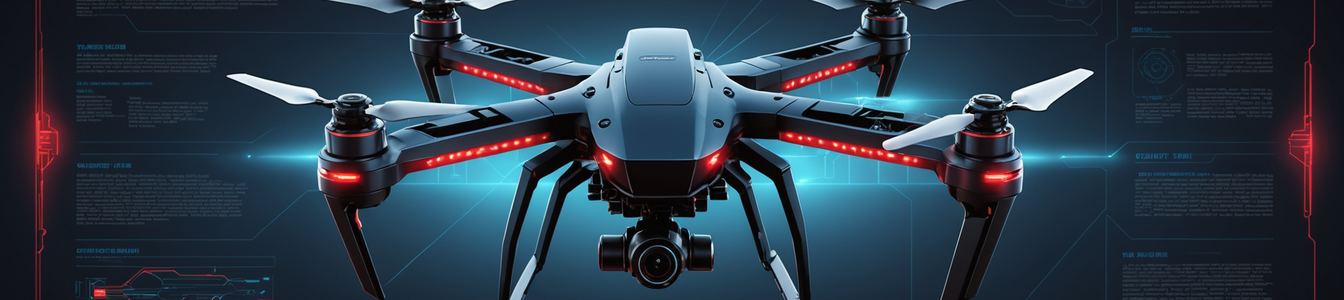
The definition of a cybersecurity expert is evolving. No longer confined to the virtual battlegrounds of code and networks, today's threats demand a mastery that spans from server racks to the skies themselves. This new reality is epitomized by the career pivot of a renowned cybersecurity figure who, after three and a half decades dedicated to thwarting digital hackers, has turned his attention to a more tangible target: drones. This strategic shift is not a mere curiosity but a direct response to an expanding threat landscape where cyber-physical systems are the new frontline.
This veteran's move into drone security research is a bellwether for the industry. It acknowledges that critical infrastructure—from power grids and water treatment facilities to transportation and manufacturing—is increasingly controlled by interconnected digital systems. These systems, often referred to as Operational Technology (OT) and Industrial Control Systems (ICS), were historically air-gapped but are now integrated into corporate networks for efficiency. This integration creates a vulnerable attack surface where a digital breach can have immediate physical consequences. Hacking a drone is no longer just about crashing a hobbyist's gadget; it's about understanding the protocols that could compromise surveillance systems, disrupt logistics, or even weaponize autonomous vehicles.
The tangible impact of this blurred line between cyber and physical was starkly demonstrated in the automotive sector. Jaguar Land Rover (JLR), a subsidiary of Tata Motors, recently navigated the aftermath of a significant cyberattack that disrupted its production capabilities. The incident, details of which remain closely guarded, forced a slowdown in manufacturing, impacting supply chains and delivery schedules. The company's subsequent report of a 61% sequential increase in production volumes is a clear indicator of recovery, but it also serves as a case study in operational resilience. For cybersecurity professionals, the JLR incident underscores the direct financial and operational stakes involved in protecting modern industrial environments. The attack vector likely targeted enterprise IT systems that bridge to factory floor OT, halting assembly lines and causing millions in losses—a scenario moving from theoretical risk to boardroom reality.
Parallel to this high-profile corporate attack, a separate incident highlighted the vulnerability of public-facing OT systems. In a public transport network, digital display boards on government-operated buses were compromised to scroll unauthorized political messages. While seemingly less sophisticated than an industrial sabotage campaign, this breach is profoundly symbolic. It reveals how easily connected devices in public infrastructure—LED displays, traffic lights, public announcement systems—can be hijacked. The attackers needed no physical access; they exploited a network vulnerability to inject their content, causing public alarm and eroding trust in municipal systems. This is a classic example of a cyber-physical convergence attack with psychological and reputational impact, showcasing that threat actors are targeting systems not just for data theft, but for propaganda and disruption.
These parallel narratives—the veteran researcher pivoting to drones, the automotive giant recovering from a production-halting attack, and the hijacking of public transport signage—paint a cohesive picture of an emerging threat era. The focus is shifting from data exfiltration to system manipulation and control. Security strategies must now account for the kinetic effects of a cyber breach.
For the cybersecurity community, this evolution demands a new skill set. Professionals must develop fluency in OT protocols like MODBUS and DNP3, understand the physics and safety mechanisms of industrial processes, and grasp the communication frameworks of IoT and drone ecosystems. Penetration testing must expand beyond web applications to include programmable logic controllers (PLCs), human-machine interfaces (HMIs), and telemetry links for unmanned aerial vehicles (UAVs).
Furthermore, incident response plans can no longer be solely the domain of the IT department. They require close collaboration with engineers, operations managers, and physical security teams. The recovery playbook for an attacked factory is vastly different from that of a breached database; it involves assessing equipment for integrity, ensuring environmental safety, and managing real-world supply chain fallout, as seen in JLR's rebound.
The pivot of a cybersecurity legend towards drone hacking is a powerful signal. It tells us that the frontier of defense is wherever digital commands meet physical action. As drones become integral to delivery, agriculture, and security, and as every bus, traffic light, and assembly line robot gets an IP address, the role of the cybersecurity expert expands accordingly. The mission remains the same—to protect assets and ensure continuity—but the battlefield now encompasses the entire physical world rendered smart and, consequently, vulnerable. The industry's challenge is to build defenses that are as hybrid and adaptive as the threats they now face.
Comentarios 0
Comentando como:
¡Únete a la conversación!
Sé el primero en compartir tu opinión sobre este artículo.
¡Inicia la conversación!
Sé el primero en comentar este artículo.