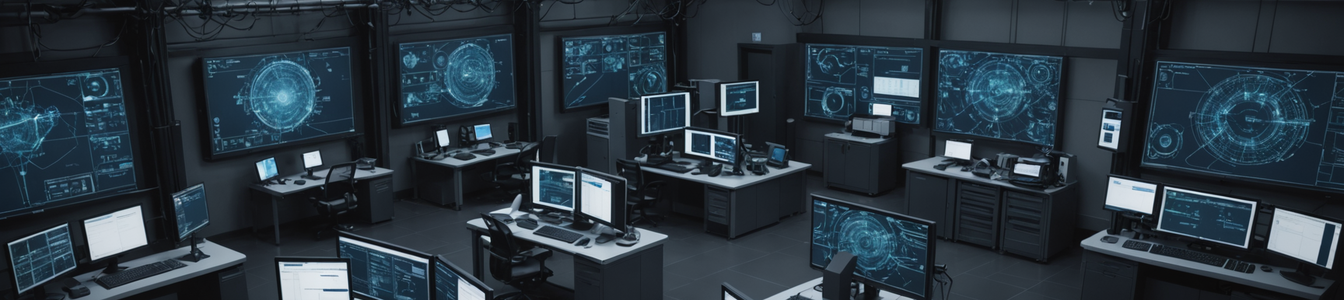
The cybersecurity industry is witnessing a revolutionary shift as Edge AI-powered Security Operations Centers (SOCs) redefine real-time threat management in industrial environments. This transformation centers around the deployment of industrial-grade hardware equipped with advanced System-on-Chip (SoC) technology that brings artificial intelligence capabilities directly to the network edge.
Recent developments from technology leaders demonstrate the rapid maturation of this approach. Companies are now deploying ruggedized Edge AI units featuring high-performance processors like the NVIDIA Orin SoC, designed to withstand harsh industrial conditions while delivering sophisticated AI inference capabilities. These systems represent a significant departure from traditional cloud-dependent security models, enabling localized processing of security data with minimal latency.
The technical architecture of these next-generation SOCs incorporates multiple AI processing cores capable of handling complex computer vision algorithms, anomaly detection models, and behavioral analysis in real-time. This local processing capability is particularly crucial for industrial applications where milliseconds can determine the success of threat mitigation and where network connectivity cannot be guaranteed.
Industrial applications for Edge AI SOCs span critical infrastructure protection, manufacturing security, and remote surveillance operations. In security checkpoint scenarios, these systems can process multiple video feeds simultaneously, identifying potential threats through advanced object recognition and behavioral analysis without requiring constant bandwidth to centralized cloud services. This capability proves invaluable in regions with limited connectivity or where data sovereignty concerns restrict cloud processing.
The integration of Edge AI into security operations addresses several longstanding challenges in industrial cybersecurity. By processing sensitive data locally, organizations reduce their attack surface and minimize the risk associated with data transmission. Additionally, the autonomous decision-making capabilities of these systems enable immediate response to security incidents, a critical advantage in environments where human monitoring may be intermittent or impractical.
Cybersecurity professionals must adapt to this evolving landscape by developing expertise in edge computing architectures, AI model deployment, and industrial network protocols. The shift toward distributed intelligence requires new approaches to security monitoring, incident response, and system maintenance. Traditional SOC workflows built around centralized data collection and analysis must evolve to accommodate distributed decision-making capabilities.
Implementation considerations for Edge AI SOCs include hardware resilience, power management in remote locations, and the development of robust update mechanisms for AI models. Security teams must also address the unique challenges of securing the AI models themselves against adversarial attacks and ensuring the integrity of edge computing nodes in potentially unsecured physical locations.
The economic implications of this technology are substantial, with potential reductions in bandwidth costs, improved operational efficiency through automated threat response, and enhanced compliance with data protection regulations. However, organizations must balance these benefits against the initial investment in edge infrastructure and the ongoing costs of maintaining distributed AI systems.
As Edge AI SOC technology continues to mature, we anticipate further integration with existing security ecosystems, including Security Information and Event Management (SIEM) systems and Security Orchestration, Automation, and Response (SOAR) platforms. This integration will enable hybrid security models that leverage both edge intelligence for immediate response and centralized analytics for strategic threat intelligence.
The evolution toward autonomous edge security represents one of the most significant developments in industrial cybersecurity, offering the potential to transform how organizations protect critical assets in an increasingly connected and vulnerable operational landscape.
Comentarios 0
Comentando como:
¡Únete a la conversación!
Sé el primero en compartir tu opinión sobre este artículo.
¡Inicia la conversación!
Sé el primero en comentar este artículo.