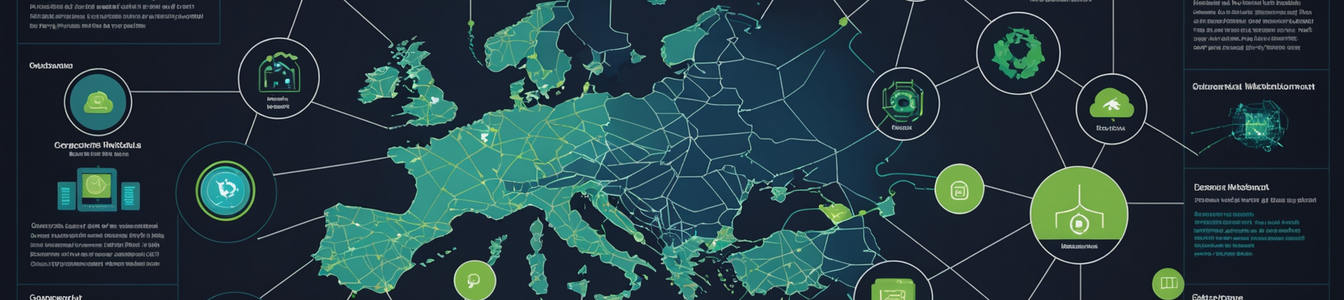
The European Union's ambitious environmental agenda is creating a new frontier for cybersecurity innovation, as companies scramble to secure the digital infrastructure required for compliance with stringent green regulations. Two key regulatory frameworks—the Carbon Border Adjustment Mechanism (CBAM) and enhanced methane emissions monitoring requirements—are driving this convergence between environmental compliance and cybersecurity.
CBAM represents a paradigm shift in how carbon emissions are tracked and verified across international supply chains. The mechanism requires detailed digital documentation of carbon footprints, creating a complex ecosystem of data exchange between manufacturers, importers, and regulatory authorities. This digital paper trail, including technologies like EnergKlette's traceable green certificates, introduces significant cybersecurity challenges. The integrity of these certificates is paramount—any compromise could lead to fraudulent carbon accounting, undermining the entire regulatory framework.
Simultaneously, the EU's methane emissions regulations are pushing energy companies toward advanced monitoring technologies. The recent large-scale methane inspection project completed by Netz Niederösterreich and Picarro demonstrates the scale of this transformation. Using sophisticated detection equipment and IoT networks, these systems generate massive volumes of environmental data that require robust protection against tampering and unauthorized access.
Cybersecurity professionals are now facing unique challenges in this emerging field. Environmental compliance data has become a high-value target for multiple threat actors. Competitors may seek to manipulate emissions data to gain unfair advantages, while hacktivists might target companies perceived as environmental laggards. State-sponsored actors could attempt to disrupt the EU's green transition by compromising critical compliance infrastructure.
The security requirements for environmental tech extend beyond traditional IT security. IoT devices used for emissions monitoring often operate in remote locations with limited physical security, making them vulnerable to physical tampering. The data transmission from these devices requires end-to-end encryption and integrity verification to prevent manipulation during transit.
Blockchain technology is emerging as a key solution for securing environmental compliance data. The immutable nature of distributed ledger technology makes it ideal for creating tamper-proof records of carbon certificates and emissions measurements. However, implementing blockchain in environmental applications introduces its own security considerations, including smart contract vulnerabilities and key management challenges.
As the regulatory landscape evolves, cybersecurity teams must develop specialized expertise in environmental compliance requirements. Understanding the legal implications of data breaches in this context is crucial—a security incident affecting emissions data could result not only in financial penalties but also in reputational damage and loss of operating licenses.
The convergence of environmental tech and cybersecurity is creating new career opportunities for security professionals. Roles focusing on ESG (Environmental, Social, and Governance) cybersecurity are emerging, requiring knowledge of both technical security controls and regulatory compliance frameworks. Companies are increasingly seeking professionals who can bridge the gap between IT security departments and sustainability teams.
Looking ahead, the cybersecurity implications of environmental regulations will only grow more complex. The EU's Digital Product Passport initiative and expanding emissions trading schemes will create additional data security challenges. Cybersecurity vendors are responding by developing specialized solutions for the environmental tech sector, including secure data platforms for compliance reporting and hardened IoT devices for environmental monitoring.
For organizations operating in or serving the EU market, investing in environmental compliance cybersecurity is no longer optional—it's becoming a business imperative. The companies that successfully integrate cybersecurity into their environmental compliance strategies will not only avoid regulatory penalties but also gain competitive advantages through enhanced data integrity and stakeholder trust.
Comentarios 0
Comentando como:
¡Únete a la conversación!
Sé el primero en compartir tu opinión sobre este artículo.
¡Inicia la conversación!
Sé el primero en comentar este artículo.