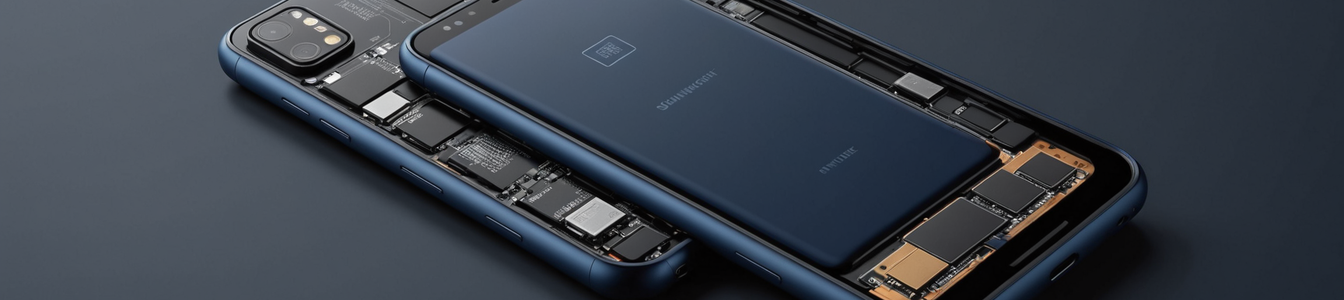
A seismic shift is coming to the smartphones in our pockets, driven not by a new chipset or camera sensor, but by a European Union regulation. By 2027, all phones sold in the EU must be designed with user-replaceable batteries, a direct mandate from Brussels to empower consumers and combat electronic waste. While heralded as a landmark victory for the Right to Repair movement, this policy is sending ripples of concern through the cybersecurity community, unveiling a paradox where consumer rights and device security may be on a collision course.
The End of the Sealed Era: Unpacking the Mandate
The EU's regulation targets the industry-wide shift towards permanently sealed devices, which manufacturers have long argued allows for slimmer designs, better water resistance, and optimized performance. The new rules will force a fundamental redesign. Batteries must be removable by consumers without specialized tools, and manufacturers must make replacement batteries available at a reasonable price for years. This move, aimed at extending device lifespans and reducing e-waste, is part of a broader EU strategy to create a circular economy. Major players like Google and Apple, whose design philosophies have increasingly favored sealed units, are already reportedly beginning internal engineering assessments to meet the 2027 deadline, a process that will redefine smartphone architecture globally.
The Security Paradox: New Doors for Old Threats
The cybersecurity implications are profound. A sealed device acts as a physical security boundary, a tamper-evident enclosure that complicates unauthorized hardware access. The move to user-accessible battery compartments dismantles this first line of defense. Security researchers are mapping a new threat landscape with several critical vectors:
- Physical Interface Exploitation: The battery connector becomes a new hardware attack surface. A malicious or tampered aftermarket battery could present a corrupted interface to the device's Battery Management System (BMS). This opens avenues for voltage-based attacks, data bus snooping, or even acting as a bridgehead to other internal components like the baseband processor or application CPU.
- Firmware and BMS Compromise: The BMS is a critical, low-level controller. A compromised or malicious battery could attempt to flash malicious firmware onto the BMS or exploit its privileged position to manipulate power delivery data, causing system instability or creating a persistent backdoor. The BMS often has communication channels to the main operating system, making it a potential pivot point.
- Supply Chain and Aftermarket Threats: A vibrant third-party battery market will emerge. Without rigorous industry-wide authentication standards, consumers could inadvertently install batteries embedded with malicious chips or modified firmware. This creates a massive, distributed supply chain attack surface that is nearly impossible for manufacturers to fully control.
- Tampering and Data Exfiltration: Easier physical access could facilitate more sophisticated hardware implants once the battery is removed. While not trivial, the barrier to entry for physical attacks is significantly lowered.
Engineering the Secure-Repairable Smartphone
The industry's challenge is to innovate security architectures that embrace repairability. This will likely involve:
- Hardware-Based Component Authentication: Implementing cryptographic handshakes between the device and a genuine battery, using a secure element or dedicated crypto-chip within the battery pack itself. This would render non-authenticated batteries non-functional or limit them to a safe 'limp mode'.
- Tamper-Resistant, Not Tamper-Proof, Design: Developing internal shields or sensors that detect when the device is opened, triggering a hardware fuse that requires authorized service reset or flags the device as potentially compromised to the OS.
- Isolated and Hardened BMS Architectures: Redesigning the BMS to run signed firmware only, with isolated communication paths and minimal privileges, treating any input from the battery connector as untrusted.
- Standardized Security Protocols: The industry may need to coalesce around an open, secure standard for removable battery authentication—a challenging prospect in a competitive market, but one the EU could potentially mandate.
The Global Ripple Effect and the Road to 2027
As with GDPR and USB-C charging, the EU's regulation will set a de facto global standard. Manufacturers are unlikely to produce separate sealed models for other markets. Consequently, cybersecurity teams worldwide must prepare for this new reality.
The period between now and 2027 is a critical window for security-by-design research. Penetration testers will need to develop new methodologies for testing removable hardware components. Incident response playbooks must be updated to consider physical battery swaps as a potential attack vector. For consumers, the lesson will be one of trusted sources: purchasing official or highly reputable replacement parts becomes a security imperative, not just a performance one.
The EU's removable battery mandate is more than an environmental policy; it is a large-scale experiment in secure, repairable hardware design. Its success or failure will hinge on whether the cybersecurity industry and device manufacturers can collaborate to build a future where openness doesn't mean vulnerability, and where the right to repair is underpinned by the right to security. The race to secure the replaceable battery has officially begun.
Comentarios 0
Comentando como:
¡Únete a la conversación!
Sé el primero en compartir tu opinión sobre este artículo.
¡Inicia la conversación!
Sé el primero en comentar este artículo.