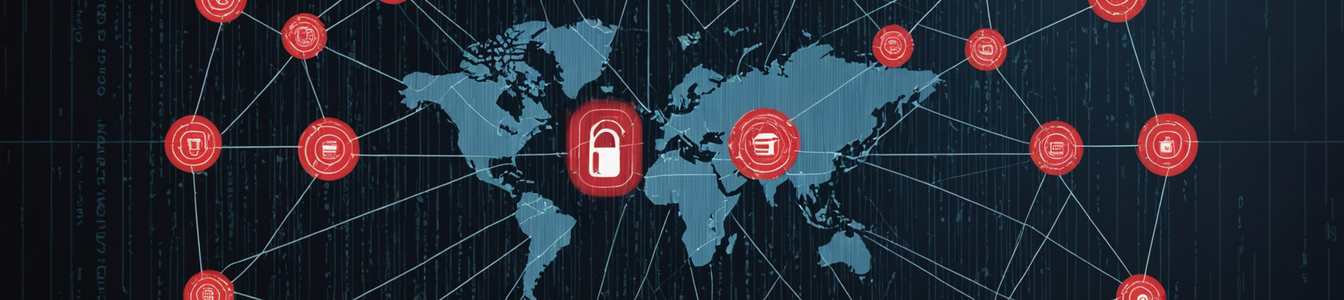
The global logistics network, the backbone of our package-obsessed economy, has become the latest and most effective lure for cybercriminals. A sharp rise in 'delivery deception' scams is seeing threat actors expertly impersonate courier services to execute highly convincing phishing attacks, capitalizing on the universal behavior of tracking online orders. This trend poses a significant threat to consumers and enterprises alike, with its risk profile expected to escalate around major global events that drive a surge in shipping volume.
The Anatomy of a Logistics Phishing Scam
The scam typically begins with a deceptive communication—a text message (smishing), email, or even a fraudulent push notification mimicking a delivery app. The message creates a sense of urgency or problem: a 'missed delivery,' an unpaid 'customs fee,' an 'incorrect address,' or a package 'held at the depot.' The branding, logos, and language are meticulously crafted to mirror legitimate companies like DHL, UPS, FedEx, Amazon Logistics, or national postal services.
The core objective is to drive the target to a fraudulent website. The link, often disguised using URL shorteners or domains with subtle misspellings (e.g., 'dh1-global.com' instead of 'dhl.com'), leads to a near-perfect clone of the courier's tracking or customer service page. Once there, victims are prompted to 'verify their identity,' 'pay a small redelivery fee,' or 'update delivery preferences.' These forms harvest a treasure trove of data: full names, physical addresses, phone numbers, email addresses, and, most critically, credit card details and login credentials. In some advanced schemes, the fake site may even deploy malware under the guise of a 'secure delivery plugin.'
The Perfect Storm: E-Commerce Growth and Global Events
The effectiveness of this scam is directly tied to macroeconomic trends. The exponential growth of e-commerce, accelerated by the pandemic, has normalized constant package tracking. Consumers are conditioned to expect and react to delivery notifications, making them less suspicious of such messages.
This threat vector is projected to intensify significantly around large-scale international gatherings. Security analysts have explicitly warned that events like the 2026 FIFA World Cup, which will be hosted across North America, will create a prime environment for these attacks. The tournament will generate an unprecedented volume of cross-border shipments—tickets, merchandise, equipment—and a corresponding flood of legitimate tracking communications. Cybercriminals will use this chaos as camouflage, launching targeted campaigns against fans, hospitality services, and participating businesses. The general alert level for digital fraud is expected to rise sharply in the lead-up to and during such events.
Enterprise Impact and Preparedness Gap
The danger extends far beyond individual consumers. Businesses are prime targets in two key ways. First, corporate procurement and office managers regularly handle high-value shipments and are attractive targets for business email compromise (BEC) variants of this scam. Second, the logistics and retail companies being impersonated face severe brand reputation damage and erosion of customer trust. A customer who falls for a fake DHL scam may blame DHL itself, leading to support overhead and churn.
Despite the clear risk, reports indicate a concerning lack of preparedness. Many companies, especially small and medium-sized enterprises in the supply chain, are under-invested in cybersecurity awareness training for staff and lack advanced threat detection systems capable of identifying domain spoofing and brand impersonation. Furthermore, collaboration between logistics giants and cybersecurity entities to proactively takedown fraudulent sites often remains reactive rather than proactive.
Mitigation Strategies for the Cybersecurity Community
Combating this threat requires a multi-layered approach:
- Public Awareness Campaigns: Logistics companies must lead transparent, clear communication on how they will and, more importantly, will not contact customers. They should promote the use of official apps from verified stores as the primary tracking method.
- Enhanced Email & Web Security: Organizations should implement robust DMARC, DKIM, and SPF protocols to make it harder to spoof their domains. Advanced threat intelligence feeds that track newly registered lookalike domains are crucial.
- Employee Training: Regular, updated training for all staff—especially in finance, procurement, and customer service—on identifying phishing attempts is non-negotiable. Simulations using fake delivery scams should be incorporated.
- Collaborative Takedowns: Faster and more systematic collaboration between brand protection teams, CERTs, and hosting providers is needed to dismantle phishing infrastructure swiftly.
- Consumer Guidance: The core advice remains: never click links in unsolicited delivery messages. Manually type the official website address into your browser or use the company's official app. Be hyper-suspicious of any message demanding payment or personal details to release a package.
Conclusion
The 'delivery deception' scam is a potent reminder that cyber threats evolve in lockstep with societal habits. As our physical and digital lives become increasingly intertwined through logistics, this vector will only grow more sophisticated. For the cybersecurity community, the challenge is to build resilience not just in networks, but in the everyday behaviors of consumers and employees. Proactive defense, cross-sector collaboration, and continuous education are the essential tools to prevent the world's delivery infrastructure from becoming a highway for fraud.
Comentarios 0
Comentando como:
¡Únete a la conversación!
Sé el primero en compartir tu opinión sobre este artículo.
¡Inicia la conversación!
Sé el primero en comentar este artículo.