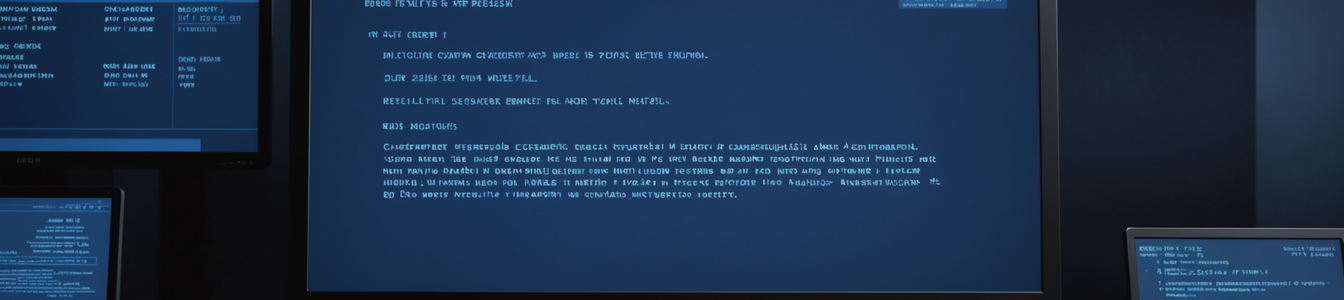
A sophisticated social engineering campaign is exploiting one of computing's most iconic and feared images—the Windows Blue Screen of Death (BSOD)—to target the global hospitality industry. Security researchers have uncovered a coordinated attack operation where threat actors create fraudulent Booking.com websites that trigger realistic BSOD simulations, tricking hotel staff into downloading malware or divulging sensitive information.
The Attack Mechanism: A Multi-Stage Deception
The attack begins with hotel employees receiving phishing emails or encountering search engine results that lead to fake Booking.com portals. These sites are convincing replicas of the legitimate booking platform, complete with proper branding, functional navigation elements, and plausible property listings. However, when users attempt to interact with certain elements—often reservation management tools or payment interfaces—the website triggers a simulated Windows crash.
The BSOD simulation is remarkably authentic, displaying the familiar blue background, white text, error codes (often mimicking common system failures like CRITICAL_PROCESS_DIED or SYSTEM_SERVICE_EXCEPTION), and even the QR code feature introduced in Windows 11. This attention to detail increases the deception's effectiveness, as even technically proficient users might initially believe their actual operating system has crashed.
The Social Engineering Hook
Once the fake BSOD appears, the attack leverages psychological pressure. The screen typically includes instructions urging the user to call a 'Microsoft Support' number or download a 'system repair tool' to resolve the issue. The provided phone numbers connect to call centers operated by the threat actors, where 'technicians' guide victims through steps that ultimately install remote access tools, information stealers, or ransomware.
Alternatively, the fake BSOD may include a direct download link for a 'BSOD Fix Tool' or 'Windows Recovery Utility.' These applications are actually malware loaders that deploy various payloads, including credential stealers targeting browser-stored passwords, session cookies for booking platforms, and financial information.
Attribution and Technical Sophistication
While definitive attribution remains challenging, initial investigations point to Russian-speaking threat actors based on infrastructure analysis, malware code similarities to known Russian cybercrime operations, and targeting patterns. The campaign demonstrates significant technical investment, including:
- Advanced Web Technologies: Use of JavaScript and HTML5 canvas elements to create realistic, interactive BSOD simulations that respond to user input (like attempting to close the window).
- Domain Sophistication: Registration of domains with subtle typos (like 'booklng.com' or 'booking-hotel.com') that might escape casual scrutiny.
- Malware Evolution: The payloads exhibit modular architectures, allowing attackers to deploy different malware families based on victim profiling.
Why the Hospitality Sector?
The hospitality industry presents a particularly attractive target for several reasons. Hotel staff frequently access booking platforms throughout their workday, making the initial phishing attempt more plausible. These employees often have access to sensitive systems, including property management software, payment processing terminals, and guest databases. Furthermore, the time-sensitive nature of hotel operations creates pressure to quickly resolve technical issues, potentially bypassing normal security protocols.
Global Impact and Industry Response
Reports of this campaign have emerged across multiple continents, with notable incidents in Europe, Latin America, and Southeast Asia. The attacks appear timed to coincide with peak travel seasons in various regions, suggesting careful planning by the threat actors.
Industry associations and cybersecurity firms have issued alerts to hotel chains and independent properties. Recommended mitigation strategies include:
- Enhanced Employee Training: Specifically addressing this novel attack vector, including drills on identifying fake websites and proper procedures for suspected system crashes.
- Technical Controls: Implementing web filtering solutions that block known malicious domains, application allowlisting to prevent unauthorized software installation, and network segmentation to limit potential malware spread.
- Verification Protocols: Establishing mandatory verification steps before calling external support numbers or downloading system tools.
- Browser Hardening: Configuring browsers to resist manipulation by malicious scripts and regularly clearing cached credentials for sensitive sites.
The Broader Threat Landscape
This campaign represents an evolution in social engineering tactics. By simulating a system-level failure rather than relying solely on deceptive content, attackers bypass many traditional phishing detection methods that focus on email content or website authenticity. The technique could easily be adapted to target other sectors where employees routinely use specialized web applications.
Security researchers warn that similar attacks could emerge targeting other critical industries, including healthcare (through fake electronic health record portals), finance (through online banking simulations), and logistics (through shipping and tracking platforms).
Conclusion
The 'Blue Screen Deception' campaign demonstrates how threat actors continue to innovate by blending technical deception with psychological manipulation. For the cybersecurity community, it underscores the need for defense strategies that address both human and technical vulnerabilities. As attack methodologies grow more sophisticated, continuous education, layered security controls, and industry-wide information sharing remain essential defenses against these evolving threats.
Organizations, particularly in targeted sectors like hospitality, should review their incident response plans to include scenarios involving deceptive system failures and ensure employees have clear guidance for distinguishing legitimate technical issues from social engineering attempts.
Comentarios 0
Comentando como:
¡Únete a la conversación!
Sé el primero en compartir tu opinión sobre este artículo.
¡Inicia la conversación!
Sé el primero en comentar este artículo.