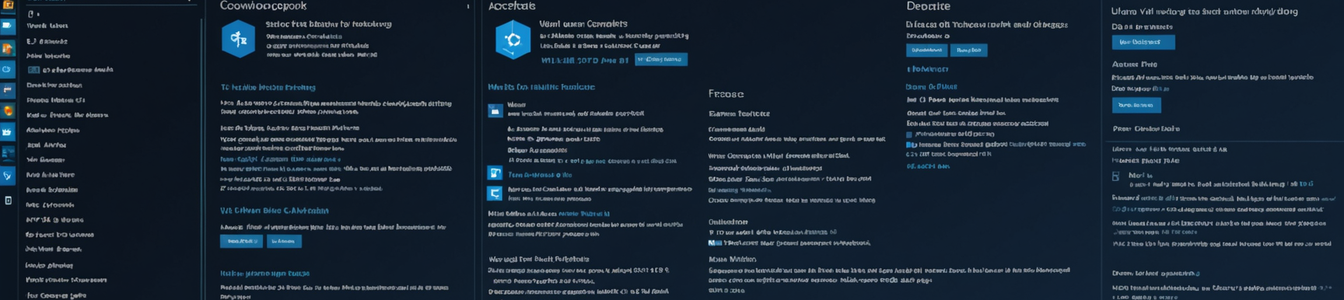
Security researchers have uncovered a sophisticated malware distribution campaign, designated 'ClickFix,' that leverages fake Windows update screens to deceive users into installing malicious software. The campaign represents a significant evolution in social engineering tactics, exploiting the trust users place in routine system maintenance processes.
The ClickFix campaign operates by presenting users with fraudulent update interfaces that closely mimic legitimate Windows update screens. These fake updates appear during normal browsing activities or through malicious advertisements, creating a false sense of urgency that prompts users to initiate the update process. The visual design and user interface elements are carefully crafted to resemble Microsoft's official update mechanisms, making detection challenging for average users.
Technical analysis reveals that the campaign employs multiple infection vectors. The primary method involves redirecting users to malicious websites that automatically display the fake update prompts. In some instances, the fake updates are delivered through compromised advertising networks or malicious redirects from otherwise legitimate websites. The malware payload varies but typically includes information stealers, remote access trojans, and in some cases, ransomware components.
What makes ClickFix particularly concerning is its psychological manipulation approach. By mimicking a familiar and trusted system process, the attackers bypass users' natural skepticism toward unknown software installations. Users who encounter these fake updates often proceed without hesitation, believing they are performing necessary system maintenance.
The infection chain begins when a user visits a compromised website or clicks on a malicious advertisement. The fake update screen appears, complete with progress bars, Microsoft branding, and technical details that lend credibility to the deception. Once the user interacts with the prompt, the malware download begins, often disguised as a legitimate update file with names like 'Windows_Security_Update_KB5005565.exe' or similar convincing nomenclature.
Security professionals note that the campaign demonstrates advanced social engineering techniques. The attackers have studied user behavior patterns and understand that people are conditioned to accept system updates without extensive verification. This exploitation of established user habits represents a significant shift in attack methodology.
Organizations should implement several defensive measures against this threat. Employee education is crucial, with specific training on how to distinguish legitimate updates from fake ones. Technical controls should include application whitelisting, network filtering to block known malicious domains, and endpoint protection configured to detect and block suspicious update processes.
Microsoft's official update channels remain secure, and users should verify that updates originate only through Windows Update settings or the Microsoft Update Catalog. Any update prompt that appears during web browsing or through pop-up windows should be treated with extreme suspicion.
The ClickFix campaign underscores the ongoing challenge in cybersecurity: as organizations strengthen technical defenses, attackers increasingly focus on manipulating human psychology. This trend highlights the need for comprehensive security strategies that address both technological vulnerabilities and human factors.
Security teams should monitor for indicators of compromise associated with this campaign, including unusual network connections to unknown domains, unexpected system processes, and unauthorized installation of software. Regular security awareness training that includes real-world examples of such attacks can significantly reduce the risk of successful infections.
As the campaign continues to evolve, researchers anticipate that similar tactics may be adapted for other platforms and software ecosystems. The security community remains vigilant in tracking these developments and sharing intelligence to protect users worldwide.
Comentarios 0
Comentando como:
¡Únete a la conversación!
Sé el primero en compartir tu opinión sobre este artículo.
¡Inicia la conversación!
Sé el primero en comentar este artículo.