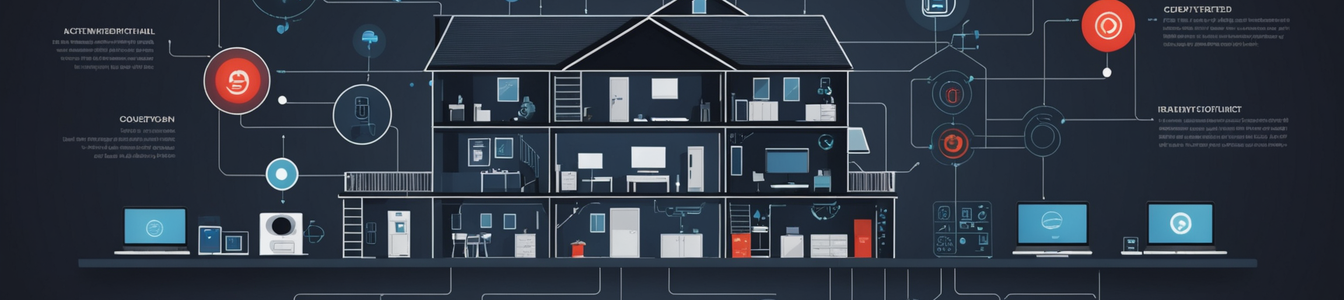
The FBI's Smart Home Hijack Warning: Three Signs Your IoT Devices Are Secretly Working Against You
In a recent public service announcement, the FBI's Cyber Division has escalated its warnings about the security of Internet of Things (IoT) devices in the home. The agency outlined three critical signs that a smart device—from voice assistants and thermostats to security cameras and smart lights—may have been covertly hijacked by cybercriminals. This advisory is not merely theoretical; it reflects a documented surge in attacks where compromised devices are used as proxies for further criminal activity, data exfiltration, or as entry points into broader home and corporate networks.
The three primary indicators highlighted by the FBI are: 1) Unexplained spikes in network activity or data usage, often a sign of a device participating in a botnet or exfiltrating information; 2) Devices behaving erratically or responding slowly to commands, which may indicate malicious processes running in the background; and 3) Settings changing without user input, such as passwords being reset, new unknown users appearing in admin panels, or devices turning on/off autonomously. These signs point to a device that is no longer under its owner's sole control.
The Expanding IoT Frontier: From Medical Sensors to Robotic Skin
While the FBI's warning focuses on consumer products, the underlying vulnerability extends far beyond smart speakers. Concurrent advancements in sensor technology are creating a new generation of IoT devices with even higher stakes. For instance, researchers at the University of Cádiz have designed a novel sensor capable of detecting neurotransmitters in blood serum associated with degenerative diseases like Parkinson's and Alzheimer's. This represents a breakthrough in medical diagnostics, moving towards continuous, at-home health monitoring. However, such a device, if connected to a home network, becomes a treasure trove of highly sensitive biometric data. A hijack could lead to the theft of intimate health information, insurance fraud, or even the manipulation of diagnostic data with potentially life-altering consequences.
Similarly, a separate breakthrough in robotics demonstrates the blurring line between the digital and physical worlds. Scientists have developed an artificial skin for robots that provides tactile sensation nearly as precise as a human fingertip. This technology enables robots to perform delicate tasks in manufacturing, healthcare, and even personal assistance. Yet, this sophisticated sensor network is, at its core, an IoT system. If the FBI's warnings about hijacking apply to a simple smart plug, they are exponentially more critical for a robot with sensitive touch sensors. A compromised industrial or caregiving robot could have its sensory data intercepted, its movements manipulated, or its functionality disabled, posing direct physical safety risks.
The Convergence: A Perfect Storm for Cyber-Physical Attacks
The common thread is the transformation of everyday objects—and now advanced medical and robotic systems—into data-collecting, network-connected nodes. Each new sensor, whether monitoring neurotransmitter levels or pressure on a robotic hand, expands the "attack surface." Cybercriminals are no longer just after credit card numbers; they seek persistent access to networks, computational resources for cryptomining or DDoS attacks, and increasingly, sensitive operational and biometric data.
The techniques used to hijack a consumer IoT device are often rudimentary: default passwords, unpatched firmware vulnerabilities, and insecure communication protocols. Alarmingly, these same weaknesses are frequently found in more sophisticated "Industrial IoT" and medical devices, which are designed with functionality, not security, as the primary focus. The new sensor from Cádiz or the robotic skin system, if not designed with "security by design" principles from the outset, could be vulnerable to the exact threats the FBI is warning about.
Mitigation Strategies for Consumers and Enterprises
For consumers, the FBI's advice is foundational: change default passwords immediately, regularly update device firmware, segment IoT devices on a separate guest network to isolate them from primary computers and smartphones, and disable unnecessary features like remote access when not needed. Vigilance for the three warning signs is crucial.
For developers and enterprises integrating advanced sensor technologies, the mandate is more profound. Security cannot be an afterthought. This includes implementing strong encryption for data in transit and at rest, ensuring secure boot processes and hardware-based root of trust, mandating multi-factor authentication for administrative access, and establishing a robust process for issuing security patches throughout the device's lifecycle. For medical and robotic sensors, the concept of "safety" must be intrinsically linked to "security." A failure in cybersecurity could directly lead to a failure in patient safety or physical operation.
Conclusion: Securing the Sensorized Future
The FBI's warning serves as a critical wake-up call for the present state of consumer IoT insecurity. However, it also casts a long shadow over the next wave of connected devices. The promise of sensors that can diagnose disease or give robots a human touch is immense, but so is the potential for harm if these systems are compromised. The cybersecurity community, device manufacturers, and regulatory bodies must collaborate to build resilience into the fabric of these technologies before they become ubiquitous. The alternative is a future where our most advanced tools—and the intimate data they collect—are silently working against us.
Comentarios 0
Comentando como:
¡Únete a la conversación!
Sé el primero en compartir tu opinión sobre este artículo.
¡Inicia la conversación!
Sé el primero en comentar este artículo.