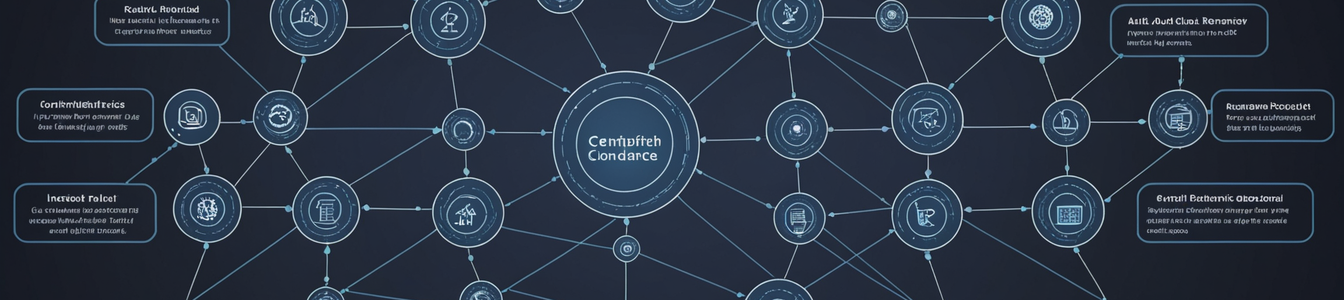
A single catastrophic event—the deadly nightclub fire in Goa—has ignited a regulatory wildfire across India, fundamentally altering the landscape of safety compliance and giving birth to a sprawling new ecosystem of mandated audits, third-party certifications, and reactive policy reforms. This phenomenon, increasingly referred to by governance analysts as the 'compliance-industrial complex,' demonstrates how tragedy catalyzes not just policy change, but the creation of entire bureaucratic and commercial markets centered on verification and certification. For cybersecurity and risk management professionals, this represents a critical case study in the convergence of physical and digital governance, where audit processes themselves become a systemic feature of the security landscape.
The chain reaction began with the legal pursuit of accountability. The owners of the ill-fated Goa venue, the Luthra brothers, were detained in Thailand after fleeing India, highlighting the transnational dimensions of liability following safety failures. This high-profile arrest sent a shockwave through the hospitality industry and regulatory bodies, creating immediate political pressure for demonstrable action.
The response was swift and expansive. The state of Haryana ordered a statewide fire safety audit of all nightclubs, bars, and pubs. Delhi's Chief Minister announced comprehensive fire audit reforms for the hospitality sector, with a pivotal shift: the formal permission for third-party audits for fire licenses. This move effectively privatizes a core component of safety certification, creating a sanctioned market for private audit firms. Furthermore, with the Christmas and New Year holidays approaching, authorities in Delhi mandated immediate and thorough fire-safety inspections for all pubs and bars, illustrating the crisis-driven, calendar-sensitive nature of the regulatory surge.
Significantly, the audit mandate contagion spread beyond its point of origin. The directive for safety checks expanded in scope to encompass critical infrastructure seemingly unrelated to the initial tragedy, such as the safety audit of large dams currently underway nationwide. This indicates a pattern of reactive risk management where a single event triggers broad, cross-sector scrutiny, often governed by political expediency rather than a calibrated, risk-based approach.
The Cybersecurity and Convergence Angle
For cybersecurity leaders, this unfolding scenario is rich with parallels and implications. The rise of the 'compliance-industrial complex' mirrors the evolution in digital security, where frameworks like ISO 27001, SOC 2, and GDPR compliance have spawned their own vast ecosystem of consultants, auditing tools, and certification bodies. The core questions are identical: Does the proliferation of audit mandates and certificates genuinely enhance security posture, or does it incentivize 'checkbox compliance'—where organizations prioritize passing the audit over implementing robust, holistic safety cultures?
The authorization of third-party audits in Delhi introduces a dynamic familiar to infosec teams: the management of external assessors. This requires organizations to develop internal processes not just for being secure, but for proving it to an external entity—a skill set that demands documentation, evidence collection, and process formalization. In the physical safety context, this could drive adoption of Integrated Risk Management (IRM) platforms that unify data from fire suppression systems, building plans, occupancy sensors, and maintenance logs, creating a digital twin of safety compliance.
Furthermore, this trend accelerates the convergence of physical and cybersecurity roles. The data generated by fire alarms, access control systems, and safety equipment is increasingly networked and IP-enabled, making it part of the organization's attack surface. A CISO must now consider how a compromised building management system could falsify audit data or disable safety mechanisms, turning a compliance asset into a liability.
The Systemic Risks of the Audit Surge
While increased scrutiny is a rational response to disaster, the rapid scaling of audit mandates carries inherent systemic risks. First, it can create a supply-demand crisis for qualified auditors, potentially lowering standards as new firms rush to fill the void. Second, it can lead to 'audit fatigue' within organizations, where staff resources are diverted from operational safety improvements to audit preparation. Third, and most critically, it may create a false sense of security—a belief that a certificate on the wall equates to a safe environment, potentially diverting attention from continuous improvement, employee training, and safety culture.
The situation in India serves as a global harbinger. As societies face more frequent crises—from industrial accidents to climate-related disasters—the reflexive policy tool is often the mandated audit. Security professionals must therefore evolve from being mere subjects of these audits to being architects of intelligent compliance. This means advocating for:
- Risk-Based Prioritization: Ensuring audit mandates are proportional to actual risk, not just political reaction.
- Unified Assurance Frameworks: Designing systems where physical safety, cybersecurity, and operational resilience audits share data and context, reducing redundancy.
- Continuous Validation: Moving beyond periodic audits to continuous monitoring solutions that provide real-time assurance, leveraging IoT and security analytics.
- Focus on Outcomes: Shifting the compliance conversation from 'did you pass the audit?' to 'are your safety outcomes improving?'
The Goa tragedy and its aftermath are a stark reminder that in the age of convergence, the line between physical safety and digital security is not just blurring—it's disappearing. The emerging compliance-industrial complex is not merely a regulatory trend; it is a new operational reality. The challenge for security leaders worldwide is to engage with this reality strategically, ensuring that the systems we build to prove we are safe do not, in themselves, become the point of failure.
Comentarios 0
Comentando como:
¡Únete a la conversación!
Sé el primero en compartir tu opinión sobre este artículo.
¡Inicia la conversación!
Sé el primero en comentar este artículo.