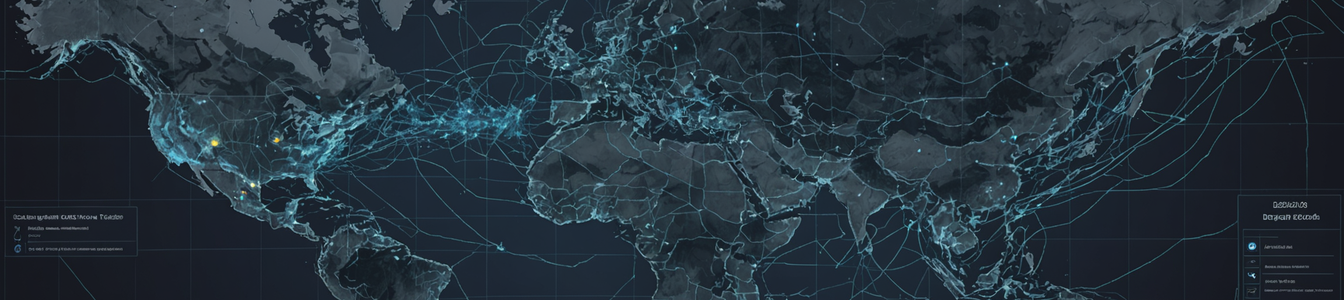
The digital footprints left by fitness enthusiasts are creating an unprecedented national security threat. What began as a niche concern in 2018, when Strava's global heatmap inadvertently outlined secret U.S. military bases in conflict zones, has evolved into a persistent and sophisticated leakage channel for sensitive operational data. The latest incidents confirm that the problem is not solved; it has merely adapted, with real-time tracking now posing the most acute danger.
The core vulnerability is deceptively simple. Military personnel, like millions of civilians, use wearable fitness trackers and smartphone apps to monitor their workouts. These devices log GPS coordinates, heart rate, speed, and timestamps. When this data is synced to platforms like Strava, Garmin Connect, or Polar Flow, it can be aggregated and displayed on public maps. A single soldier's running route might seem harmless. However, when data from dozens of personnel at a single location is combined, it creates a precise digital silhouette of a facility, its perimeter, common exercise routes, and even shift patterns.
A stark example emerged involving a French warship. During a period of heightened geopolitical tension, the aggregated workout data from crew members publicly revealed the vessel's location and movements. Adversaries needed no satellite imagery or signals intelligence; the information was freely available on a consumer fitness platform, offering a real-time tracking capability that would be the envy of any intelligence agency. Similarly, analysis of such data around sensitive air bases has allowed observers to infer unusual activity spikes, potentially correlating with classified operations or incidents, such as drone-related events.
From a cybersecurity and operational security (OPSEC) perspective, this represents a fundamental paradigm shift. The threat vector is not a malicious hacker breaching a fortified network. It is the voluntary, daily actions of trusted individuals using consumer-grade Internet of Things (IoT) devices. These devices operate outside the military's traditional security boundary, creating a massive data exfiltration channel that is incredibly difficult to monitor or control with conventional tools.
The technical challenge is multifaceted. First, there is the data aggregation effect. Individual data points are low-risk, but platform algorithms create high-fidelity intelligence products—like heatmaps and activity clusters—from this aggregate. Second, the real-time nature of the data feed provides dynamic situational awareness to an adversary. Third, the cultural challenge is significant: persuading personnel that their personal wellness routine constitutes a national security vulnerability requires a profound shift in mindset.
Mitigation strategies must be equally layered. Technical controls include geofencing policies on devices, disabling GPS functions on base, and implementing network-level blocks to prevent apps from transmitting location data from within secure facilities. Policy measures are crucial, ranging from outright bans on certain devices in sensitive areas to comprehensive training programs that make digital OPSEC as instinctive as physical security. The "how not to leak" guidelines emphasize basics: turning off tracking, using privacy zones, avoiding recording workouts near sensitive sites, and understanding an app's privacy settings.
For the global cybersecurity community, the Strava saga is a critical case study in unintended consequences and attack surface management. It highlights the convergence of personal and organizational risk in an IoT-saturated world. Security professionals must now consider data aggregation from consumer platforms as a legitimate threat intelligence source and a potential corporate espionage tool. The same techniques that reveal a military base could map the shift patterns at a factory, the research routes of a field scientist, or the executive travel habits of a corporation.
Moving forward, the dialogue must expand. Device manufacturers and app developers bear a responsibility to design for privacy-by-default, especially for users in high-risk professions. Legislators may need to consider regulations around the aggregation and publication of sensitive location data. Ultimately, the era of "fit and forget" is over. Every ping from a wearable is a potential beacon, and operational security in the 21st century must account for the digital exhaust of its human personnel. The Strava spies are not hacking in; they are watching, aggregating, and connecting the dots we willingly provide.
Comentarios 0
Comentando como:
¡Únete a la conversación!
Sé el primero en compartir tu opinión sobre este artículo.
¡Inicia la conversación!
Sé el primero en comentar este artículo.