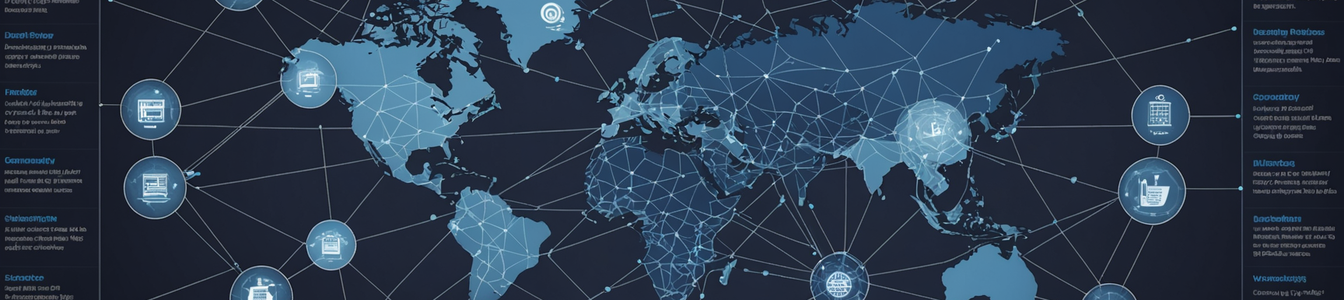
The geopolitical landscape of international cybersecurity is undergoing its most significant transformation in decades, driven by power shifts within the G20 that are fundamentally reshaping global digital governance frameworks. Recent summits have revealed a clear pattern: emerging economies are no longer willing to accept cybersecurity standards developed without their meaningful participation.
Prime Minister Narendra Modi's persistent calls for United Nations Security Council reforms at multiple international forums represent more than diplomatic posturing. They signal a fundamental challenge to the existing international order that has governed cybersecurity norms since the early days of the internet. The concept of 'Integral Humanism' introduced by Modi emphasizes that digital sovereignty and cybersecurity cannot be separated from broader economic and social development goals.
The Johannesburg G20 summit's explicit call for improving global governance mechanisms comes at a critical juncture for cybersecurity professionals. As Modi correctly noted, 'resilience cannot be built in silos' – a statement that resonates deeply with cybersecurity experts who have long advocated for collaborative security frameworks. This recognition is particularly relevant as nations grapple with securing increasingly interconnected critical infrastructure.
Critical minerals and satellite data initiatives proposed at these summits have direct implications for cybersecurity infrastructure. The security of supply chains for rare earth elements essential to hardware manufacturing, combined with the cybersecurity of satellite communication networks, represents a new frontier in digital protection. These initiatives acknowledge that cybersecurity now extends far beyond traditional network perimeters to encompass entire technological ecosystems.
The shifting alliances and U.S. foreign policy changes noted in summit discussions are creating new cybersecurity challenges and opportunities. As Global South nations gain greater influence in international forums, we're witnessing the emergence of alternative cybersecurity standards and data governance models that may compete with existing Western frameworks.
For cybersecurity professionals, these developments necessitate a fundamental rethinking of compliance strategies and risk assessment methodologies. Organizations operating across multiple jurisdictions must now prepare for a more fragmented regulatory environment where regional cybersecurity standards may diverge significantly.
The integration of satellite data security into mainstream cybersecurity discussions highlights another critical trend. As nations increasingly rely on satellite networks for communications, navigation, and surveillance, the cybersecurity of space-based assets becomes inseparable from terrestrial network security. This expansion of the cybersecurity domain requires new expertise and collaboration between traditionally separate technical communities.
Critical infrastructure protection is also evolving in response to these geopolitical shifts. The emphasis on securing supply chains for essential minerals reflects growing recognition that hardware security forms the foundation of any robust cybersecurity strategy. Nations are increasingly viewing control over technology supply chains as a national security imperative, leading to new regulations and security requirements for multinational corporations.
The cybersecurity implications extend to data sovereignty and cross-border data flows. As emerging economies assert greater control over their digital ecosystems, we're likely to see more stringent data localization requirements and sovereignty-focused cybersecurity regulations. This trend challenges the globalized internet model that has prevailed for decades and requires organizations to develop more sophisticated data governance and security architectures.
Professional cybersecurity organizations and standards bodies must adapt to this new reality by ensuring broader global representation in their governance structures. The historical dominance of Western nations in setting cybersecurity standards is no longer sustainable, and inclusive approaches that incorporate diverse perspectives will produce more resilient and widely adopted security frameworks.
Looking ahead, cybersecurity leaders should monitor several key developments: the evolution of UN cybersecurity working groups to include greater Global South representation, the emergence of regional cybersecurity certification regimes, and the integration of new technologies like quantum-resistant cryptography into international standards. The ongoing transformation of global cybersecurity governance represents both a challenge and an opportunity to build more inclusive, effective, and resilient digital security frameworks for the 21st century.
Comentarios 0
Comentando como:
¡Únete a la conversación!
Sé el primero en compartir tu opinión sobre este artículo.
¡Inicia la conversación!
Sé el primero en comentar este artículo.