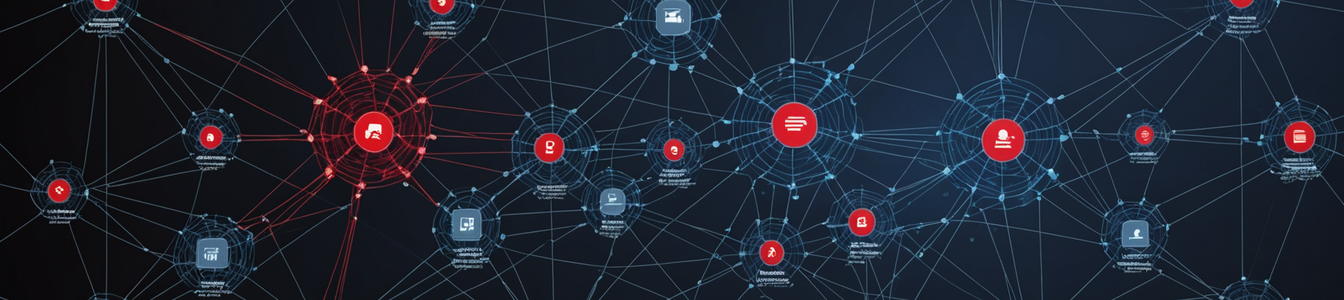
A seismic shift is underway in the cyber threat landscape. The once-predictable world of ransomware, dominated by data encryption and financial extortion, is being upended by a new, more dangerous paradigm: operational disruption. At the forefront of this alarming trend is 'The Gentlemen,' a Ransomware-as-a-Service (RaaS) operation that has exploded in prominence to become the second most active ransomware group globally in 2026. Their rise is not just a story of criminal success; it is a harbinger of a targeted campaign against the very backbone of modern society—critical infrastructure and industrial production.
The RaaS model pioneered by groups like The Gentlemen represents the commoditization of cybercrime. By leasing their malware and infrastructure to a network of affiliates, the core developers lower the barrier to entry for would-be attackers. This franchise-like system has fueled The Gentlemen's exponential growth, creating a diffuse and resilient threat actor that is difficult to dismantle. Affiliates, often with varying skill levels, carry out the attacks, sharing a percentage of the ransom payments with the central operators. This efficiency has propelled The Gentlemen from relative obscurity to a top-tier threat in a remarkably short timeframe.
However, what truly distinguishes The Gentlemen in the crowded RaaS marketplace is a fundamental strategic pivot. Analysis of their recent campaigns reveals a deliberate move away from purely data-centric attacks. While data encryption remains a component, the primary objective has evolved. The new target is operational technology (OT) and industrial control systems (ICS). The group's affiliates are actively scanning for and exploiting vulnerabilities in internet-facing devices—such as unsecured remote access points, VPNs, and industrial gateways—that serve as bridges into industrial networks.
Once inside, the malware is engineered not just to lock files, but to cripple processes. The goal is to halt assembly lines, disrupt energy distribution, and stop manufacturing plants. This shift from 'stealing your data' to 'stopping your factory' marks a profound escalation. The potential impact is no longer measured solely in leaked records or downtime, but in physical damage, supply chain collapse, and risks to public safety. The calculus of extortion changes dramatically when a ransom demand is backed by the threat of millions in lost production and reputational ruin from a physical standstill.
This industrial focus requires a different set of tactics. The Gentlemen's operators and affiliates demonstrate growing sophistication in navigating OT environments, which often have weaker security postures than traditional IT networks due to legacy systems and uptime requirements. Their tools likely include capabilities to identify and manipulate specific industrial protocols, potentially issuing malicious commands to programmable logic controllers (PLCs) or human-machine interfaces (HMIs). The psychological and financial pressure on victim organizations is immense, often leading to faster ransom payments to restore operations, a fact not lost on the attackers.
For the cybersecurity community, The Gentlemen's reign of terror necessitates an urgent paradigm shift in defense strategies. The convergence of IT and OT networks, long warned about, has become the primary attack surface. Defensive measures must now extend far beyond data backups and endpoint detection. Key recommendations include:
- Segmenting Critical Networks: Implementing robust network segmentation, particularly using air-gaps or strong firewalls between corporate IT and production OT environments, is no longer optional.
- Securing Remote Access: Hardening all internet-facing access points with multi-factor authentication (MFA), zero-trust principles, and strict access controls.
- OT-Specific Monitoring: Deploying security monitoring solutions capable of understanding industrial protocols to detect anomalous commands or traffic within OT networks.
- Incident Response for OT: Developing and regularly testing incident response plans that specifically address scenarios involving operational disruption, including manual override procedures and safety shutdown protocols.
- Supply Chain Vigilance: Assessing the security posture of third-party vendors and integrators who have access to industrial systems.
The exponential activity of The Gentlemen serves as a stark warning. Ransomware has matured from a digital nuisance to a tool of strategic disruption. As RaaS models like theirs continue to lower the technical barriers for attacking critical infrastructure, organizations must elevate their preparedness. The focus must move from merely preventing encryption to ensuring operational resilience—the ability to withstand and rapidly recover from an attack designed to bring physical processes to a grinding halt. The era of theoretical threats to industrial systems is over; The Gentlemen have made it a terrifying reality.
Comentarios 0
Comentando como:
¡Únete a la conversación!
Sé el primero en compartir tu opinión sobre este artículo.
¡Inicia la conversación!
Sé el primero en comentar este artículo.