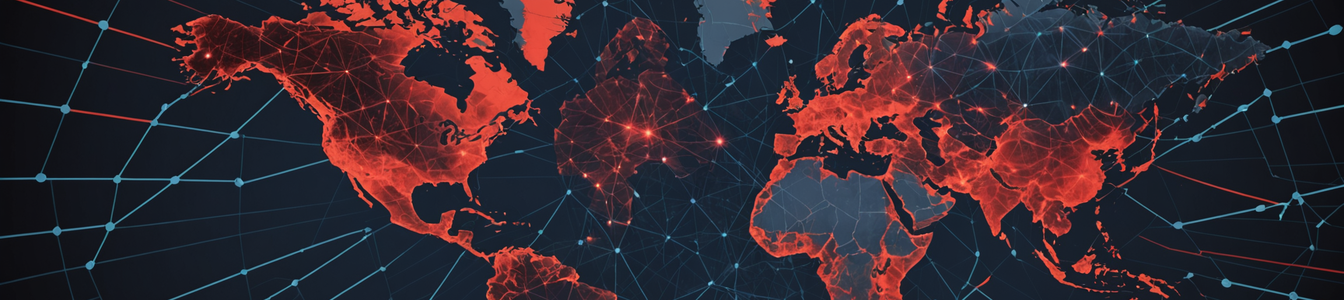
The direct impacts of geopolitical conflict—missile strikes, territorial disputes, and diplomatic breakdowns—dominate headlines. However, for Chief Information Security Officers (CISOs) and security operations centers (SOCs) worldwide, the more insidious and complex challenge lies in the downstream effects: market chaos, supply chain fractures, and a rapidly shifting threat landscape that demand an immediate recalibration of security postures.
The Catalyst: Escalating Conflicts and Market Flight to Safety
Recent weeks have seen a dangerous convergence of kinetic events. Despite ongoing peace talks, Russia launched a significant air attack on Kyiv, underscoring the protracted and volatile nature of the Eastern European conflict. Simultaneously, in Southeast Asia, Cambodia has accused Thailand of conducting air raids on its territory following the announcement of bilateral talks, signaling a potential flare-up in a region critical to global electronics and manufacturing supply chains.
These events have acted as a powerful accelerant for financial markets. Gold, the quintessential safe-haven asset, has soared to record highs, with prices jumping dramatically as investors flee volatility. This rally is further fueled by expectations of U.S. Federal Reserve rate cuts and tensions in key oil-producing regions like Venezuela. The message from the markets is clear: risk is being repriced globally.
The Immediate Cybersecurity Impact: Budgets Under Siege and Supply Chain Vulnerabilities
The financial tremors translate directly into operational pressure for security teams. Soaring commodity prices and market uncertainty create intense budget scrutiny. Every dollar allocated to cybersecurity must now justify its return on investment more rigorously, potentially freezing investments in proactive defense tools, threat intelligence subscriptions, and staff expansion just as the threat level rises.
More concretely, the physical supply chain shock creates digital vulnerabilities. A prime example is the reported surge in RAM prices, which is causing major technology firms like Apple to deepen their strategic reliance on key suppliers like Samsung. For security professionals, this dependency is a red flag. A concentrated supply chain for critical hardware components is a single point of failure. It increases the risk of sophisticated hardware-level tampering, firmware compromises, or disruptive shortages that could delay security hardware refreshes—from firewalls to encrypted storage devices. The integrity of the hardware root of trust, fundamental to secure boot processes and hardware security modules (HSMs), comes under a new cloud of suspicion when geopolitical tensions dictate sourcing strategies.
Evolving Threat Actor Calculus in Times of Conflict
Geopolitical instability does not merely create economic conditions favorable for cybercrime; it actively shapes state-sponsored and affiliated threat actor behavior. During periods of overt conflict or heightened tension, several patterns emerge:
- Distraction and Espionage: Cyber operations intensify as a tool for intelligence gathering on adversary military and economic resilience, and to create strategic distractions. Attacks may target critical infrastructure, government services, and media in adversary nations.
- Economic Warfare: Attacks on the private sector, especially in logistics, energy, and finance, become a means to undermine an opponent's economic stability. The line between criminal ransomware groups and state interests often blurs, with the former given tacit permission to target enemy economies.
- Exploiting Organizational Stress: Security teams distracted by budget cuts, resource allocation to physical security, or internal reorganization due to market conditions present a softer target. Attackers exploit this period of lowered organizational vigilance.
Strategic Recommendations for Security Leaders
In this environment, a reactive security stance is a recipe for failure. Security leaders must adopt a more strategic, resilient posture:
- Conduct a Geopolitical Stress Test: Map your organization's digital assets, supply chains, and physical operations against current global flashpoints. Identify single points of failure, especially in hardware sourcing from politically sensitive regions.
- Fortify the Software and Hardware Supply Chain: Implement stringent software bill of materials (SBOM) practices and demand greater transparency from hardware vendors. Diversify suppliers where possible and invest in capabilities to detect anomalies in firmware and hardware behavior.
- Re-prioritize Threat Intelligence: Shift intelligence gathering to focus on Advanced Persistent Threat (APT) groups affiliated with states involved in active conflicts. Understand their likely secondary targets (often private industry) and preferred intrusion methods.
- Build Financial Resilience into Security Planning: Develop security budget scenarios that account for sudden market downturns or cost spikes. Advocate for the security function as a critical business enabler for resilience, not just a cost center.
- Enhance Cross-Functional Collaboration: Forge stronger links with procurement, finance, and physical security teams. A unified view of organizational risk is essential when threats manifest across both digital and physical domains.
The current geopolitical landscape is a stark reminder that cybersecurity does not operate in a vacuum. The price of gold, a missile strike in Kyiv, and a trade dispute in Southeast Asia are all interconnected signals in a global risk ecosystem. For the security professional, the mandate is clear: build defenses that are as agile and resilient as the threats are fluid and pervasive. The next major incident may not originate from a zero-day exploit, but from a macroeconomic shockwave triggered by a conflict halfway around the world.
Comentarios 0
Comentando como:
¡Únete a la conversación!
Sé el primero en compartir tu opinión sobre este artículo.
¡Inicia la conversación!
Sé el primero en comentar este artículo.