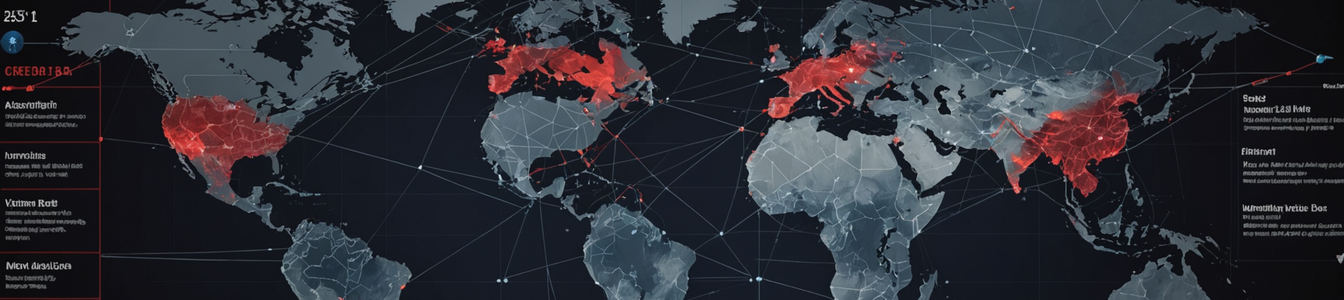
The Unseen Battlefield: When Global Chaos Becomes a SOC Problem
While Security Operations Centers are engineered to detect digital intrusions and malware, some of their most severe tests originate far outside the network perimeter. A simultaneous surge in geopolitical instability and financial market turmoil is currently providing a stark reminder of this reality. From escalating violence in Iran and Bangladesh to an institutional crisis threatening the independence of the U.S. Federal Reserve, these global shocks are creating a complex, high-pressure environment for SecOps teams tasked with maintaining digital vigilance.
Geopolitical Flashpoints and the Cyber Threat Surge
Reports of severe crackdowns on protests in Iran, including the alleged use of military-grade weapons by security forces, signal a period of intense internal conflict. Parallelly, unrest in Bangladesh has instilled fear in international student communities, highlighting the widespread social disruption. For cybersecurity professionals, these events are not merely news headlines; they are direct precursors to heightened cyber risk. Historically, periods of geopolitical tension correlate with increased state-sponsored cyber activity, hacktivism, and opportunistic criminal campaigns exploiting the distraction.
SOC analysts must now scrutinize network traffic with an adjusted threat model. Activity originating from or targeting regions in turmoil may carry different intent. Distributed Denial-of-Service (DDoS) attacks against government or media websites, phishing campaigns themed around the crises to steal credentials, and the spread of misinformation as a hybrid warfare tactic become more likely. The challenge is differentiating this crisis-related noise from targeted attacks against one's own organization, all while managing potential alert fatigue as global digital noise increases.
Financial System Jitters and the Integrity of Digital Assets
Simultaneously, the financial world is experiencing its own tremor. News of a political probe targeting Federal Reserve Chairman Jerome Powell has sparked a crisis of confidence, leading to a plummeting U.S. dollar and record highs for precious metals like gold and silver. This volatility is a stress test for a different facet of operational resilience.
Financial institutions' SOCs are immediately on high alert. Market chaos creates incentives for insider threats, fraud, and rapid-paced attacks aimed at exploiting volatile trading environments. Furthermore, the infrastructure supporting global finance—payment networks, trading platforms, and clearinghouses—becomes a juicier target for actors seeking to amplify panic for profit or geopolitical gain. SecOps teams in this sector must ensure the integrity and availability of critical systems while monitoring for subtle, fraud-based attacks that may seek to capitalize on the confusion and rapid movement of assets.
The SecOps Stress Test: Adapting to Indirect Pressure
This confluence of events creates a unique "stress test" scenario for Security Operations, defined by several key challenges:
- Threat Intelligence Contextualization: Threat intel feeds are flooded with indicators related to the global events. SOCs must rapidly contextualize this information: which new threats are relevant to their industry, geography, and digital footprint? This requires agile tuning of Security Information and Event Management (SIEM) rules and threat-hunting hypotheses.
- Resource Strain and Alert Fatigue: The overall increase in global cyber activity can lead to a surge in low-fidelity alerts. Teams, potentially already facing resource constraints, must avoid becoming desensitized, ensuring that a critical alert related to a direct enterprise threat isn't lost in the noise of global digital unrest.
- Business Continuity Convergence: SecOps is no longer a silo. These external crises force closer collaboration with physical security, corporate communications, risk management, and business leadership. The SOC's data on attack attempts might inform the company's travel policy to a region in turmoil, or its detection of fraud patterns might be crucial for the finance department.
- Supply Chain and Third-Party Risk: Instability affects partners and vendors. A SOC must reassess the cyber hygiene and resilience of third parties located in or doing business with affected regions, as these can become new attack vectors.
Building Resilience for the Next Shock
Proactive organizations are using this period to harden their SecOps posture against indirect pressures. This includes:
- Crisis Playbooks: Developing specific incident response playbooks for "periods of elevated geopolitical/financial tension" that outline adjusted monitoring priorities, communication protocols, and escalation paths.
- Integrated Risk Monitoring: Fusing traditional threat intel with geopolitical and financial risk analysis to provide SOC leaders with a holistic early-warning dashboard.
- Cross-Functional Drills: Conducting tabletop exercises that simulate a cyber incident occurring concurrently with a real-world crisis, involving stakeholders from security, legal, PR, and business units.
Conclusion
The true measure of a modern SOC's resilience is increasingly tested not by a direct ransomware attack alone, but by its ability to operate effectively when the world is on fire. The current landscape, marked by protest violence and institutional doubt, proves that the most significant operational challenges can emerge from the most unexpected, non-digital directions. For cybersecurity leaders, the mandate is clear: build SecOps teams and processes that are as adaptable and context-aware as the volatile world they operate in. The next major stress test may not be a zero-day exploit, but the next global headline.
Comentarios 0
Comentando como:
¡Únete a la conversación!
Sé el primero en compartir tu opinión sobre este artículo.
¡Inicia la conversación!
Sé el primero en comentar este artículo.