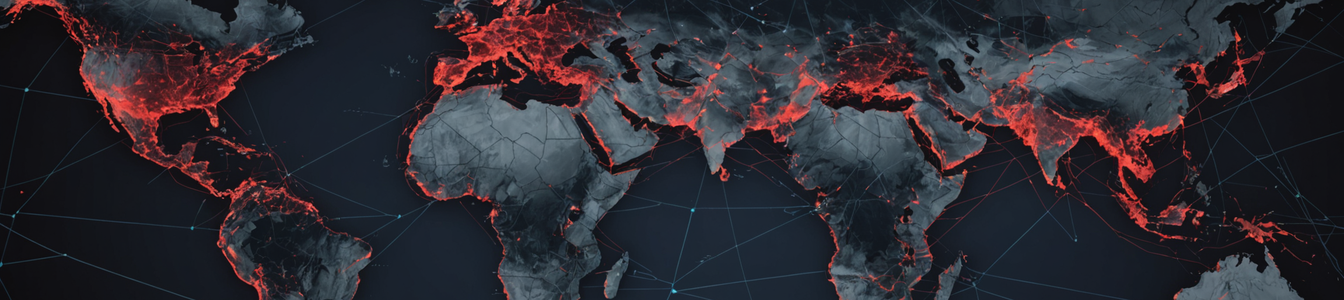
The world is witnessing a stark demonstration of how kinetic geopolitical events can instantly reshape the digital threat landscape. As U.S. warplanes engage in operations to reopen the Strait of Hormuz—a vital chokepoint for global energy supplies—and Israeli leadership makes definitive war statements, the ripple effects are immediate and profound. Financial markets are reeling, with energy prices soaring and investors making aggressive bets on central bank responses to the burgeoning crisis. For cybersecurity leaders, this is not just a news cycle; it is a live-fire exercise that exposes a critical vulnerability within many security programs: the widening chasm between static compliance frameworks and the dynamic reality of security operations during a real-time, multi-vector crisis.
The Compliance Illusion in a Kinetic World
Frameworks like SOC 2, ISO 27001, and PCI DSS provide essential foundations for security governance. They establish necessary controls, enforce documentation, and offer a certificate that satisfies board and customer audits. However, these frameworks are inherently retrospective and prescriptive. They answer the question, "Did you have the correct controls in place as of the audit date?" They are ill-equipped to answer the more pressing question during a crisis: "Can your operations adapt and hold under unprecedented, concurrent pressure?"
The current Middle Eastern conflict triggers threat vectors that compliance audits rarely stress-test adequately. These include:
- Geopolitically-Motivated DDoS Surges: State-aligned or hacktivist groups often launch retaliatory attacks against entities in nations perceived as adversaries. These attacks can scale with terrifying speed, overwhelming static DDoS mitigation thresholds defined in a calm, pre-crisis environment.
- Supply Chain Shockwaves: A company's SOC 2 certification means little if a critical third-party vendor—perhaps a cloud data center provider in a region experiencing instability, or a logistics software firm—is compromised or goes offline due to the conflict, as seen with the strategic expansion of edge data centers in regions like Texas, highlighting infrastructure dependencies.
- Insider Threat Amplification: Periods of extreme market volatility and global tension can be catalysts for insider malfeasance. An employee facing financial ruin from market swings or motivated by ideological alignment may attempt data theft or sabotage. Static access reviews mandated by compliance may not account for this sudden shift in human risk.
- Operational Tempo Mismatch: Compliance processes often move at the speed of quarterly reviews or annual audits. A kinetic crisis evolves by the hour, as evidenced by emergency government meetings like the UK's COBRA session convened to address soaring gas prices. Security operations must match this tempo, making real-time decisions on threat intelligence, asset prioritization, and defensive maneuvers.
Bridging the Chasm: From Compliance Checklists to Operational Resilience
The lesson from this crisis is not that compliance is worthless, but that it is insufficient as an end state. Security programs must use compliance as a floor, not a ceiling. The goal must shift from passing an audit to demonstrable operational resilience. This requires several key evolutions:
- Crisis-Informed Risk Assessments: Move beyond generic risk registers. Conduct tabletop exercises and red-team scenarios based on specific geopolitical flashpoints and their secondary effects (market crashes, energy blackouts, mass disinformation). How would your incident response plan hold if your SOC team couldn't commute due to a fuel shortage triggered by a blockade?
- Dynamic Control Validation: Implement continuous security validation tools that go beyond vulnerability scanning. Actively test whether your security controls (WAF, EDR, email filters) can detect and block the specific TTPs (Tactics, Techniques, and Procedures) being used by threat actors active in the current conflict. Compliance says you have a WAF; resilience means proving it can block the latest attack patterns today.
- Real-Time Threat Intelligence Integration: Feed geopolitical and cyber threat intelligence directly into Security Orchestration, Automation, and Response (SOAR) platforms and decision-making processes. If a new hacktivist group announces a campaign, automated playbooks should adjust firewall rules, increase authentication scrutiny, and alert relevant teams without waiting for a change advisory board meeting.
- Stress-Tested Third-Party Management: Understand not just your vendors' compliance status, but their geopolitical exposure and business continuity plans under duress. Can your cloud provider failover if a regional conflict impacts a data center? The strategic deployment of secondary edge data centers, as seen in recent infrastructure news, is a physical manifestation of this resilience thinking.
The Path Forward
The images of military mobilization in the Strait of Hormuz and the charts of spiking energy prices are a wake-up call. They prove that the threat environment is not a steady-state condition to be audited annually. It is a living system, violently perturbed by world events. Cybersecurity leadership must advocate for programs that value operational readiness as highly as audit readiness. This means dedicating budget and resources to continuous testing, crisis simulation, and the development of agile response protocols that can pivot as fast as the headlines change.
In the end, the true measure of a security program will not be the certificate on the wall, but its ability to maintain operations, protect data, and support the business when the next real-world crisis—whether geopolitical, financial, or environmental—inevitably arrives. The gap between compliance and operations is not just a theoretical concern; it is a strategic risk laid bare by current events. Closing it is the defining challenge for cybersecurity in an age of perpetual crisis.
Comentarios 0
Comentando como:
¡Únete a la conversación!
Sé el primero en compartir tu opinión sobre este artículo.
¡Inicia la conversación!
Sé el primero en comentar este artículo.