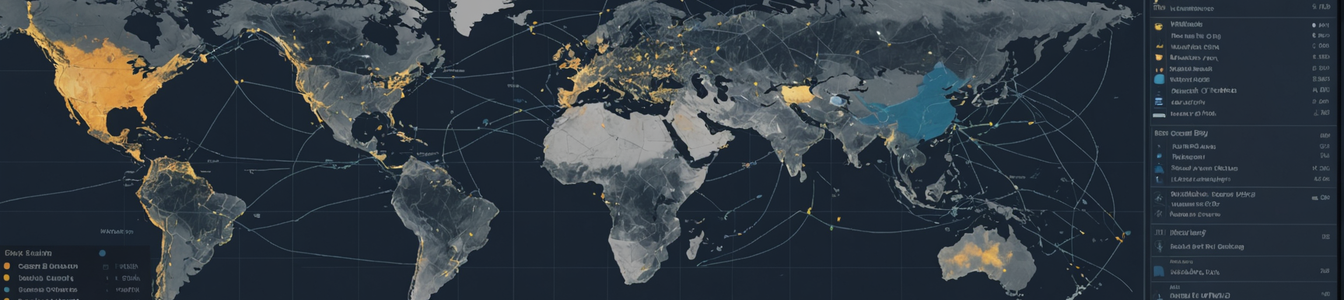
Security Operations Centers (SOCs), the nerve centers of organizational cyber defense, are facing a paradigm shift. The traditional model of monitoring network logs and known threat indicators is being overwhelmed by a new class of cascading, systemic risks born from the intersection of geopolitics, environmental crises, and global financial turbulence. This 'polycrisis' environment is creating dangerous blind spots that demand a fundamental re-evaluation of threat intelligence sourcing and response strategies.
Geopolitical Shockwaves and the Cyber Proxy Battleground
The recent escalation of tensions between the United States and Iran, marked by the deployment of a significant US naval force to the region and subsequent stark warnings from Iranian officials, represents a classic geopolitical flashpoint with immediate cyber implications. Historically, such periods of heightened military and diplomatic tension have served as catalysts for a surge in state-sponsored and affiliated cyber activity. SOCs must now anticipate not just direct attacks on government assets but a broadening of the target landscape.
Critical infrastructure operators in energy, aviation, and logistics—sectors already strained by flight cancellations and regional instability—become prime targets for disruptive or espionage campaigns. Furthermore, the fog of war is increasingly digital; sophisticated disinformation and phishing campaigns leveraging the crisis narrative will target employees of multinational corporations, government contractors, and media organizations to steal credentials or sow confusion. The SOC blind spot here lies in the inability of purely technical feeds to capture the intent and timing of such campaigns, which are dictated by geopolitical events rather than vulnerability disclosures.
Environmental Stress: Overheating Systems and Overwhelmed Responses
Parallel to geopolitical strife, extreme environmental events are applying acute pressure on both physical and digital systems. Australia's confrontation with a record-breaking heatwave, with temperatures forecast to soar to 50°C (122°F) and resulting in total fire bans across regions like Victoria, provides a critical case study. Such events trigger a cascade of operational challenges that directly impact cybersecurity posture.
Data centers and network infrastructure face increased cooling demands and physical stress, elevating the risk of hardware failure and unplanned downtime. At the same time, corporate and government SOCs may find themselves understaffed or distracted as personnel contend with personal emergencies, evacuation orders, or widespread power outages. This degradation in physical resilience and human operational capacity creates a window of opportunity for threat actors. Cyber incidents that might normally be contained could spiral during such a crisis, as response teams are split between digital and physical emergencies. The blind spot is the failure to integrate business continuity, disaster recovery, and physical risk assessments into the SOC's threat model.
Financial Market Volatility: Fueling Adversary Motivation
The third pillar of this convergent threat landscape is financial volatility. Significant movements in asset classes, such as a slump in Bitcoin alongside record highs for precious metals like silver and gold, are not merely economic news. They represent shifting motivations and tools for cybercriminals and advanced persistent threats (APTs).
Ransomware groups and nation-states with financial objectives may adjust their targeting based on the liquidity and anonymity of various stores of value. Fluctuations can also trigger market manipulation schemes involving the compromise of trading platforms or financial media. The surge in network activity and fees on platforms like Solana, while a sign of adoption, also attracts threat actors looking to exploit scaling challenges, smart contract vulnerabilities, or to use the network for illicit transaction mixing. For SOCs monitoring the financial sector or companies with significant crypto exposure, the blind spot is treating these market signals as irrelevant noise rather than potential indicators of adversary intent and method evolution.
Bridging the Blind Spots: A Call for Integrated Threat Intelligence
The convergence of these domains exposes the critical flaw in siloed security operations. A SOC relying solely on indicator of compromise (IoC) feeds, vulnerability scanners, and even sector-specific cyber threat intelligence (CTI) will miss the precursor signals emanating from world news, weather reports, and financial tickers.
To adapt, organizations must:
- Expand the Intelligence Horizon: Integrate geopolitical risk analysis, environmental monitoring, and macroeconomic reporting into the threat intelligence function. This requires partnerships with non-traditional vendors or the development of internal capabilities to analyze these open-source signals.
- Stress-Test Playbooks for Compound Crises: Incident response runbooks must be exercised against scenarios where a cyber-attack coincides with a physical evacuation or a period of extreme market stress. Can your secure remote access handle a simultaneous 300% surge in use? Are communication protocols clear if primary channels fail?
- Adopt a Resilience Mindset: Move beyond prevention and detection to focus on adaptive capacity. This includes ensuring redundant, geographically dispersed critical systems can withstand regional environmental or conflict-related disruptions and that staff are cross-trained to maintain security operations during personnel shortages.
In conclusion, the modern threat landscape is no longer confined to the digital realm. The most significant vulnerabilities may now emerge from the complex interplay between server rooms and senate rooms, between firewall logs and fire warnings, and between encryption standards and exchange rates. SOCs that learn to see the connections will be the ones that successfully navigate the turbulent years ahead.
Comentarios 0
Comentando como:
¡Únete a la conversación!
Sé el primero en compartir tu opinión sobre este artículo.
¡Inicia la conversación!
Sé el primero en comentar este artículo.