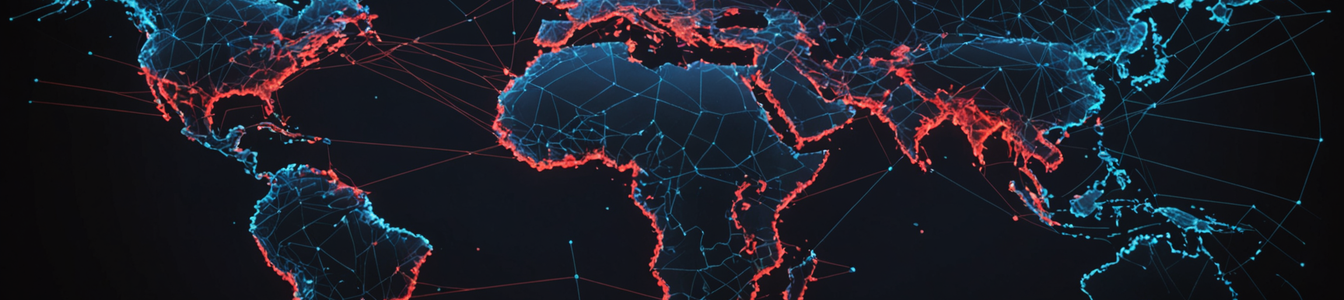
The digital battlefield has expanded far beyond the capabilities of nation-state actors. A groundbreaking report from the UK's National Cyber Security Centre (NCSC) has confirmed what many in the cybersecurity community have long suspected: commercial spyware has become a commodity, with over 100 countries now possessing advanced surveillance systems like Predator and Pegasus. This marks a significant escalation in global surveillance capabilities, transforming what was once the exclusive domain of elite intelligence agencies into an accessible tool for governments and law enforcement worldwide.
The NCSC report paints a stark picture of a world where digital privacy is increasingly under siege. The proliferation of these spyware systems represents a paradigm shift in how states conduct surveillance, both domestically and internationally. Unlike traditional hacking tools that required significant technical expertise and resources, commercial spyware offers a turnkey solution for intercepting communications, accessing device data, and monitoring targets in real-time.
At the heart of this ecosystem are companies like the NSO Group, developer of Pegasus, and Intellexa, the creator of Predator. These firms have built sophisticated spyware platforms that can infect both iOS and Android devices through zero-click exploits, requiring no interaction from the target. Once installed, these tools can access messages, calls, photos, microphone, camera, and location data, effectively giving operators complete control over the compromised device.
New evidence has emerged linking Intellexa's Predator spyware to law enforcement agencies in Greece. According to investigative reports, the company, founded by Israeli entrepreneur Tal Dillian and headquartered in Athens, actively marketed its surveillance solutions to "Law Enforcement Authorities" across Europe and beyond. This marketing strategy targeted police forces with promises of unprecedented access to criminal communications, bypassing traditional legal hurdles and encryption protections.
The Greek connection is particularly significant given the country's position within the European Union and NATO. Intellexa's operations in Athens highlight how spyware companies exploit regulatory gaps and jurisdictional complexities to operate with relative impunity. The company's marketing materials emphasized the ability to intercept encrypted communications from applications like WhatsApp, Signal, and Telegram, raising serious questions about the balance between law enforcement needs and fundamental privacy rights.
The global scale of this proliferation is staggering. From democratic nations to authoritarian regimes, the acquisition of commercial spyware has become a priority for governments seeking to enhance their surveillance capabilities. The NCSC report identifies over 100 countries that now possess or have access to these systems, creating a complex web of surveillance networks that transcend traditional geopolitical boundaries.
For cybersecurity professionals, this proliferation presents unprecedented challenges. The widespread availability of advanced spyware means that threat actors, including criminal organizations and hostile state actors, may gain access to these tools through various means. The black market for spyware exploits has grown exponentially, with zero-day vulnerabilities becoming increasingly valuable commodities.
The human rights implications are equally concerning. Journalists, human rights defenders, political dissidents, and lawyers have been frequent targets of spyware attacks. The ability of governments to monitor their citizens without oversight or accountability threatens the very foundations of democratic societies. The NCSC report emphasizes that the proliferation of these tools has outpaced the development of legal frameworks and international norms governing their use.
In response to these threats, the cybersecurity community is developing new detection and mitigation strategies. Organizations are implementing enhanced mobile device management policies, deploying endpoint detection and response solutions, and educating users about the risks of targeted spyware attacks. However, the sophistication of these tools means that traditional security measures are often insufficient.
The international community has begun to take notice. The United States has imposed sanctions on NSO Group and Intellexa, while the European Union is considering new regulations to curb the spread of commercial spyware. However, enforcement remains challenging given the global nature of the industry and the willingness of some nations to host these companies.
As the line between state-sponsored espionage and commercial surveillance continues to blur, the cybersecurity industry must adapt. The era of ubiquitous commercial spyware has arrived, and with it comes a new set of challenges for protecting digital privacy and security in an increasingly connected world.
Comentarios 0
Comentando como:
¡Únete a la conversación!
Sé el primero en compartir tu opinión sobre este artículo.
¡Inicia la conversación!
Sé el primero en comentar este artículo.