The AI Alliance Avalanche: How Google Cloud's Deepening Partnerships Reshape Mobile and OS Security
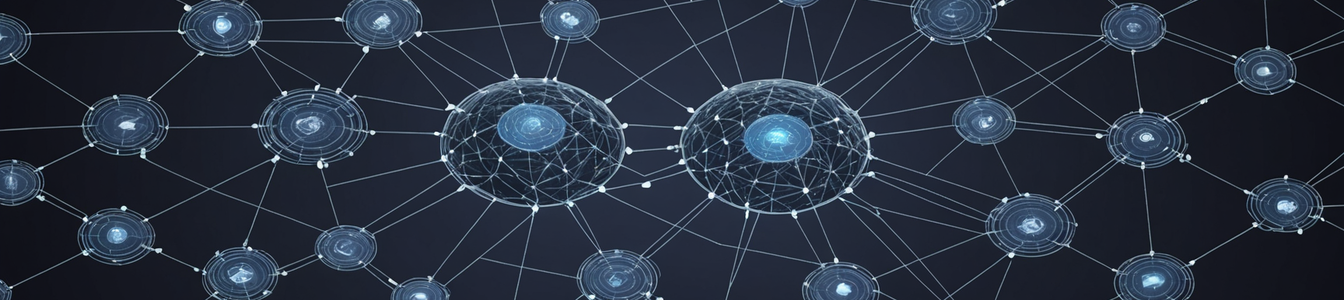
The strategic technology landscape is undergoing a seismic shift, not through solitary innovation, but through the formation of powerful, interconnected alliances. At the epicenter of this shift is Google Cloud, which is aggressively expanding its AI ecosystem through partnerships that bridge mobile hardware, operating systems, and specialized AI services. Recent collaborations with smartphone giant OPPO to develop a next-generation AI operating system and the broader integration of AI translation powerhouses like DeepL into cloud marketplaces are creating a new, complex security paradigm. For cybersecurity leaders, this 'AI Alliance Avalanche' represents both unprecedented opportunity and a radically expanded, multi-layered attack surface that demands immediate scrutiny and new defensive postures.
The OPPO Partnership: Embedding AI at the OS Level
The announced partnership between OPPO and Google Cloud is a direct move to bake AI into the foundational layer of mobile devices. The goal is to co-create a next-generation AI operating system that moves beyond AI-powered features to an AI-native OS. This implies a deep integration of Google's core AI services—likely including Gemini models, Vertex AI tools, and specialized silicon optimizations via Tensor—directly into the kernel and framework layers of OPPO's ColorOS (and its global iterations).
From a security perspective, this creates a novel threat model. Traditional mobile OS security focuses on application sandboxing, permission models, and secure boot. An AI-native OS introduces new critical components: the AI models themselves, the inference engines that run them locally and in hybrid cloud configurations, and the continuous data pipelines that train and refine these models on-device. An attacker's goal may shift from stealing data to poisoning the on-device AI model, manipulating its outputs (a form of 'AI jailbreaking' at the OS level), or exploiting vulnerabilities in the hybrid cloud inference pipeline to exfiltrate sensitive data processed by the AI. The supply chain risk also multiplies, as the security of the OS now depends on the integrity of Google's AI model supply and OPPO's hardware implementation.
The DeepL Factor: Multi-Cloud AI and Data Sovereignty Challenges
Parallel to the hardware-OS alliance, the AI service layer is also consolidating. The availability of advanced AI services like DeepL's translation models on major cloud marketplaces (AWS Marketplace, with inevitable deep integration into Google Cloud Platform) signifies the rise of multi-cloud, API-driven AI. Enterprises can now stitch together AI capabilities from various providers across different cloud environments to build sophisticated workflows.
For security teams, this creates a sprawling data sovereignty and compliance nightmare. A simple user query on an OPPO phone with the new AI OS might trigger an on-device model, which then calls a cloud-based model (like DeepL via Google Cloud), which may itself rely on infrastructure in another region. Data—potentially containing sensitive personal or corporate information—traverses multiple legal jurisdictions and cloud security perimeters. Each handoff point (device-to-cloud, cloud-to-cloud API) becomes a potential attack surface for interception or manipulation. Furthermore, the security posture of the entire chain is only as strong as its weakest link: a vulnerability in DeepL's API or a misconfiguration in the AWS-GCP interconnects could compromise the system.
Convergence and the New Attack Surface
The convergence of these partnerships is where the true security transformation occurs. Imagine a scenario: an executive uses their OPPO AI-OS phone to translate and summarize a confidential contract during an international trip. The OS's native AI handles initial processing, sends encrypted data to a Google Cloud region, which calls a DeepL instance for translation, and uses another Gemini model for summarization. This workflow involves:
- On-Device AI Security: Protecting the model weights and inference engine on the phone from extraction or adversarial attacks.
- Hybrid Cloud Security: Securing the data in transit between the device, Google Cloud, and potentially other cloud services, ensuring end-to-end encryption and integrity.
- AI Model Security: Verifying the integrity and provenance of the third-party AI models (e.g., DeepL) being invoked, guarding against model poisoning or supply chain attacks.
- Data Lineage & Compliance: Tracking where the sensitive data (the contract) resides at every microsecond, ensuring compliance with GDPR, China's DSL, or other regional data laws that may conflict.
Strategic Recommendations for Cybersecurity Teams
To navigate this new landscape, security organizations must evolve:
- Develop AI-Specific Threat Models: Move beyond traditional STRIDE models to include AI-specific threats like data poisoning, model inversion, membership inference, and adversarial examples targeting OS-level AI agents.
- Implement AI Supply Chain Security: Treat AI models like software dependencies. Establish vetting processes for model provenance, training data integrity, and ongoing vulnerability management for models consumed via APIs.
- Architect for Data Sovereignty in AI Pipelines: Deploy technical controls like confidential computing, data tokenization, and explicit geo-routing rules for AI workflows to maintain control over data jurisdiction.
- Demand Transparency from Partners: In partnerships like Google-OPPO, require clear documentation on the AI architecture, data flow diagrams, shared responsibility models, and audit rights for the AI components.
- Invest in AI Security Tooling: Leverage and contribute to frameworks for securing AI systems (e.g., MITRE ATLAS for AI threat mapping) and tools that can monitor AI model behavior for anomalies.
The era of monolithic, siloed software is giving way to a dynamic mesh of AI alliances. Google Cloud's partnerships with OPPO and AI service providers are a leading indicator of this future. The cybersecurity community's task is to ensure that as these alliances create powerful new capabilities, they do not inadvertently construct a house of cards vulnerable to the next generation of threats. The security of the AI-powered future depends on building trust and resilience into these interconnected foundations, starting today.
Comentarios 0
Comentando como:
¡Únete a la conversación!
Sé el primero en compartir tu opinión sobre este artículo.
¡Inicia la conversación!
Sé el primero en comentar este artículo.