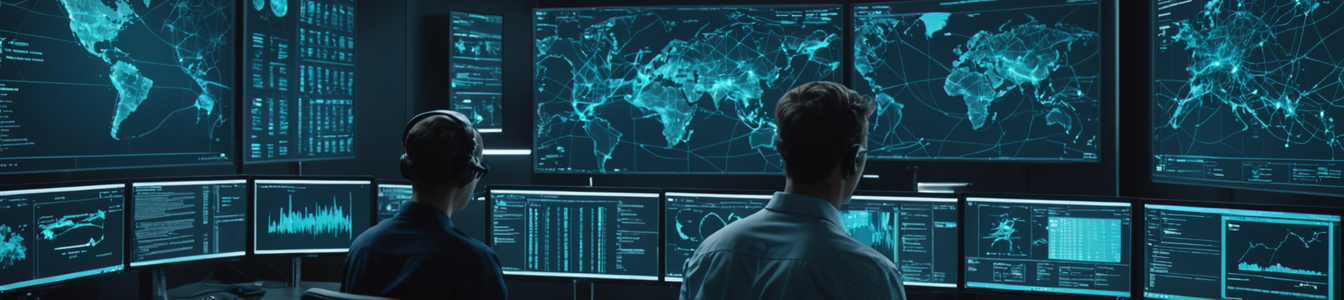
The cybersecurity landscape is undergoing its most significant transformation since the advent of cloud computing, with Google predicting that AI agents will soon dominate Security Operations Centers. This shift represents more than just technological advancement—it's a complete reimagining of how organizations defend against digital threats.
According to industry analysis, autonomous AI systems are poised to take over routine SOC functions, including threat detection, incident analysis, and initial response actions. These systems operate continuously, learning from each interaction and adapting to new attack patterns in real-time. The implications for cybersecurity teams are profound, potentially freeing human analysts from repetitive tasks to focus on strategic security initiatives and complex threat hunting.
The partnership between SentinelOne and Google Cloud exemplifies this transition with the launch of Wayfinder, an AI-powered managed detection and response service. Wayfinder leverages advanced machine learning algorithms to analyze security data across multiple environments, providing organizations with sophisticated threat detection capabilities previously available only to large enterprises with extensive security budgets.
Technical Implementation and Capabilities
Modern AI security agents operate through sophisticated neural networks trained on vast datasets of security incidents, attack patterns, and normal network behavior. These systems can process millions of security events per second, identifying subtle anomalies that might escape human notice. The integration with cloud platforms like Google Cloud enables these agents to access scalable computing resources and global threat intelligence feeds.
Wayfinder's architecture demonstrates the practical application of these principles. The service combines SentinelOne's endpoint security expertise with Google Cloud's AI infrastructure, creating a unified platform that can autonomously correlate events across endpoints, networks, and cloud environments. This holistic approach enables the system to detect sophisticated multi-stage attacks that traditional security tools might miss.
Impact on Cybersecurity Professionals
The rise of autonomous SOCs doesn't necessarily mean the elimination of human roles but rather their evolution. Security professionals will transition from manual monitoring and basic analysis to overseeing AI systems, interpreting complex findings, and managing strategic security posture. This shift requires new skill sets focused on AI governance, machine learning model validation, and ethical AI implementation.
Organizations must prepare for this transition by investing in training programs that help security teams develop the necessary competencies to work alongside advanced AI systems. The most successful security operations will likely feature a collaborative approach where humans and AI agents complement each other's strengths.
Emerging Challenges and Considerations
While the benefits of autonomous SOCs are compelling, several challenges require careful consideration. The dependency on AI systems introduces new attack surfaces, including potential manipulation of training data, model poisoning, and adversarial machine learning attacks. Ensuring the reliability and integrity of these systems becomes paramount as organizations increasingly rely on them for critical security decisions.
Another significant concern involves transparency and explainability. Security teams need to understand why AI systems make specific decisions, particularly when those decisions involve blocking legitimate activities or responding to potential threats. Developing trust in autonomous systems requires robust auditing capabilities and clear communication of AI reasoning.
Future Outlook and Industry Implications
The transition toward autonomous cybersecurity operations is accelerating, driven by the increasing sophistication of cyber threats and the growing shortage of skilled security professionals. Industry analysts predict that within the next three to five years, the majority of routine security operations will be handled by AI systems, with human oversight focusing on exception management and strategic direction.
This evolution will likely reshape the cybersecurity vendor landscape, with traditional security tools incorporating more autonomous capabilities and new players emerging with specialized AI-driven solutions. Organizations should begin preparing now by evaluating their current security operations, identifying areas where AI augmentation could provide immediate benefits, and developing roadmaps for gradual adoption of autonomous capabilities.
The partnership between SentinelOne and Google Cloud represents just the beginning of this transformation. As AI technologies continue to mature and organizations become more comfortable with autonomous systems, we can expect to see increasingly sophisticated implementations that push the boundaries of what's possible in cybersecurity defense.
Comentarios 0
Comentando como:
¡Únete a la conversación!
Sé el primero en compartir tu opinión sobre este artículo.
¡Inicia la conversación!
Sé el primero en comentar este artículo.