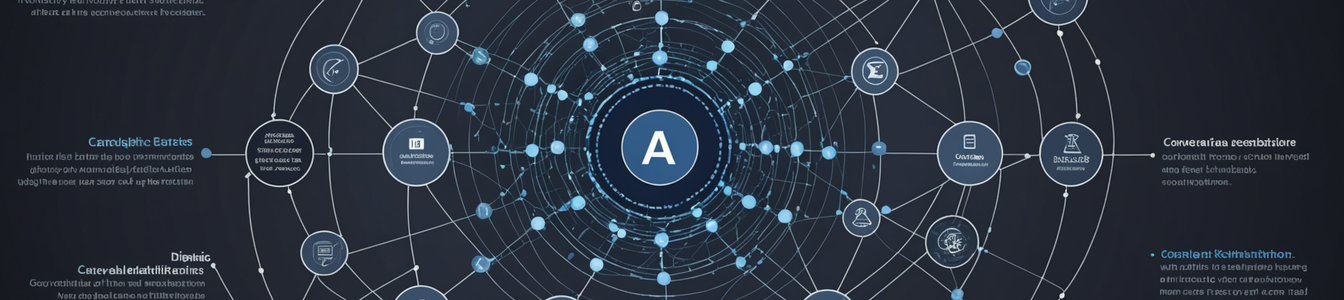
In a move that could redefine proactive cybersecurity, Anthropic has orchestrated one of the most significant alliances in the history of digital defense. Dubbed 'Project Glasswing,' the initiative brings together a consortium of technology titans and financial powerhouses—including AWS, Apple, Google, Microsoft, and JPMorgan Chase—with a singular mission: to hunt and neutralize critical software vulnerabilities before they are weaponized by adversaries. At the heart of this effort is Claude Mythos, an AI model of such formidable capability that Anthropic has explicitly refused to release it publicly, citing unprecedented risks.
The genesis of Project Glasswing stems from a converging set of threats. The proliferation of AI-powered offensive tools has dramatically lowered the barrier to entry for sophisticated attacks, while nation-state actors, particularly from Iran, have demonstrated increasingly aggressive and capable cyber campaigns. This new reality has exposed a critical weakness in traditional cybersecurity models, which are inherently reactive, relying on patches and updates only after a vulnerability has been discovered, often through exploitation.
Claude Mythos is designed to invert this model. Trained on vast datasets of code, vulnerability disclosures, and exploit techniques, the model exhibits an advanced, contextual understanding of software that allows it to predict and identify complex, chained vulnerabilities that might elude human auditors and conventional scanning tools. Its ability to reason about code in a way that mimics a top-tier security researcher, but at a scale and speed impossible for humans, is what makes it both a revolutionary defensive tool and a potentially catastrophic offensive weapon if misused.
'This isn't about finding more bugs; it's about finding the right bugs—the critical, systemic flaws in foundational infrastructure that could cause cascading failures,' explained a technical lead familiar with the project. The consortium will focus its efforts on open-source dependencies, critical enterprise software, and the core infrastructure of cloud providers and financial networks. Findings will be privately disclosed to the relevant maintainers through established, secure channels for rapid patching, following a coordinated vulnerability disclosure (CVD) ethos.
The operational framework of Glasswing is built on strict containment. Access to the Claude Mythos model is heavily restricted, operating within a secure, air-gapped research environment. Consortium members submit code and system specifications for analysis but do not have direct, unrestricted access to the AI itself. This 'walled garden' approach is a direct response to the dual-use dilemma, ensuring the model's power is applied solely for defensive auditing. The project also establishes a shared, anonymized repository of discovered vulnerability patterns, which will be used to further harden the AI's detection capabilities and, in a controlled manner, inform the broader security community's understanding of emerging threat vectors.
For the cybersecurity professional community, Project Glasswing signals several pivotal shifts. First, it validates the concept of AI-driven, proactive security auditing as a necessary evolution beyond penetration testing and bug bounties. Second, it creates a new benchmark for public-private partnership, moving beyond information sharing (ISACs) into active, collaborative defense engineering. However, it also raises profound questions about centralization of power, transparency, and access. Will this elite consortium create a two-tiered security landscape, where only the software used by its members receives this elite scrutiny? How will the findings influence global standards and regulations?
The geopolitical context is unmistakable. Announcements surrounding Glasswing have explicitly referenced the rising digital threat from Iranian state-sponsored groups, linking the initiative to a broader need to secure Western economic and technological infrastructure. This frames cyber defense not just as a technical challenge, but as a strategic imperative. The collaboration between Silicon Valley and Wall Street, represented by JPMorgan Chase, underscores that the threat targets economic stability as much as data privacy.
Looking ahead, the success of Project Glasswing will be measured not by the number of CVEs it generates, but by its silence—the major breaches that never happen. Its long-term impact may be cultural, fostering a new era where the continuous, AI-assisted hardening of critical systems becomes as standard as compiling code. Yet, it also sets a precedent for the governance of advanced, dual-use AI, proving that with great power comes not just great responsibility, but the necessity for great collaboration and even greater restraint.
Comentarios 0
Comentando como:
¡Únete a la conversación!
Sé el primero en compartir tu opinión sobre este artículo.
¡Inicia la conversación!
Sé el primero en comentar este artículo.