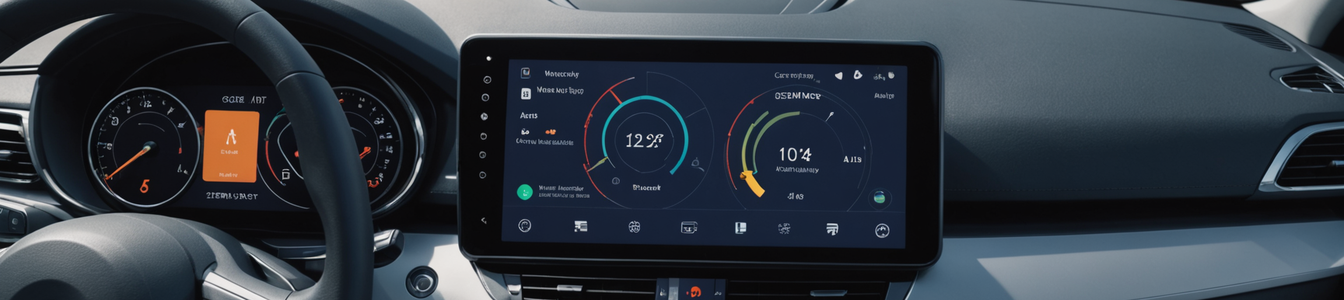
The vision of the car as a rolling extension of the office is rapidly materializing, driven by tech giants integrating productivity and AI tools directly into the driving experience. Google is at the forefront of this shift, with two major developments in early 2026: the launch of Google Meet on Apple CarPlay and the wide rollout of the Gemini AI assistant on Android Auto. While these features promise unprecedented convenience, cybersecurity experts are sounding the alarm about the significant expansion of the vehicle's digital attack surface, introducing novel risks to both driver privacy and vehicle security.
A Surprising First Move: Google Meet on CarPlay
In a strategic maneuver that caught industry observers off guard, Google chose to launch its Google Meet video conferencing app first on Apple's CarPlay platform, ahead of its own Android Auto ecosystem. This initial release is not without its guardrails. According to reports, the CarPlay version implements strict safety features, most notably disabling video transmission while the vehicle is in motion. Participants can still join audio meetings and view other participants' video feeds, but the driver's camera remains off during transit—a clear concession to safety and regulatory concerns. This phased approach, starting with a competitor's platform, suggests Google is testing the waters for user behavior and safety protocols before a full-scale integration into its native Android Auto environment.
Gemini AI Assists the Driver—And Potential Attackers
Parallel to the Meet rollout, Google's advanced AI, Gemini, is finally seeing a broad release for Android Auto users after an extended period of limited availability. Gemini integrates deeply into the in-car experience, allowing drivers to use natural voice commands to control navigation, media, communication, and vehicle settings. It can read and summarize messages, schedule calendar appointments, and answer complex queries—all hands-free. For cybersecurity professionals, this deep integration is a double-edged sword. The AI acts as a powerful conduit between the driver, the personal smartphone, cloud services, and the vehicle's own systems. Any vulnerability in the AI's processing, its connection to the Google ecosystem, or its interpretation of voice commands could be exploited. Threat actors could potentially use adversarial audio prompts (inaudible to humans) to manipulate the AI, access sensitive data from connected accounts, or even issue malicious commands if integration with vehicle controls becomes too permissive.
The Hidden Complexity: Unearthing Android Auto's Secret Menu
Adding another layer to the security analysis, recent discoveries by tech enthusiasts have revealed a hidden developer menu within Android Auto. This menu, accessible through a specific sequence of actions on the car's display, contains toggles and diagnostic information not meant for end-users. While such backdoors are common in software development for debugging, their presence in a consumer-facing automotive product highlights the inherent complexity of these systems. An attacker who gains physical access to a vehicle—or potentially exploits a remote vulnerability—could use such hidden interfaces to alter settings, extract logs containing personal data, or destabilize the system. It serves as a tangible reminder that the software powering the 'in-car office' is layered and may contain unintended access points.
Security Implications: A New Threat Landscape for Connected Cars
The convergence of real-time communication (Meet) and a context-aware cloud AI (Gemini) within the vehicle creates a multifaceted threat model:
- Data Exfiltration and Privacy Breaches: A compromised Google Meet session could leak sensitive business discussions. Gemini, with its access to Gmail, Calendar, and Docs, becomes a high-value target for harvesting personal and corporate information. The vehicle's system becomes a new endpoint in the corporate data chain.
- Expanded Attack Surface: Each new app and integration point—the Meet app, the Gemini API, the connection bridge between phone and head unit—represents a potential vulnerability. The attack surface now includes video/audio streaming protocols, AI language model interfaces, and increased Bluetooth/Wi-Fi data exchange.
- Social Engineering and AI Manipulation: The voice-first interface is susceptible to new forms of social engineering. An attacker could craft audio designed to trick Gemini into performing actions, similar to prompt injection attacks seen in web-based AI. A malicious audio file played over the car's speakers could theoretically issue commands.
- Safety-Critical Distractions: While safety features like disabling video on Meet are a start, the cognitive load of managing AI interactions and complex meetings while driving presents a non-digital risk. Cybersecurity now intersects directly with physical safety.
The Road Ahead: Securing the Mobile Workspace
As Google and other tech companies continue to push the boundaries of the connected car, the cybersecurity industry must adapt its frameworks. Traditional automotive security, focused on CAN bus networks and ECU integrity, must now merge with mobile application security, cloud service protection, and AI security principles. Manufacturers and software providers need to implement:
- Strict sandboxing to isolate productivity apps from critical vehicle controls.
- Robust authentication and session management for all in-car apps accessing cloud data.
- Continuous security testing of AI voice interfaces against adversarial inputs.
- Clear data governance policies defining what user data is processed, stored, or transmitted from the vehicle.
Google's dual launch of Meet and Gemini marks a pivotal moment. The 'in-car office' is no longer a futuristic concept but a present-day reality with real-world security consequences. The industry's response to these emerging risks will determine whether this new era of mobility enhances productivity without compromising the safety and privacy of everyone on the road.
Comentarios 0
Comentando como:
¡Únete a la conversación!
Sé el primero en compartir tu opinión sobre este artículo.
¡Inicia la conversación!
Sé el primero en comentar este artículo.