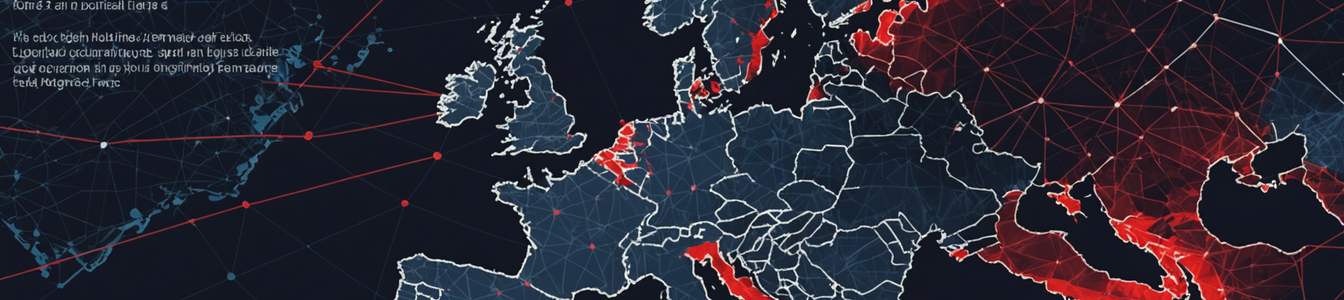
European Governments in the Crosshairs: APT28 Escalates Cyber Espionage Campaigns
A significant escalation in state-sponsored cyber activity has unfolded across Europe, with the Russian-linked advanced persistent threat (APT) group known as APT28, Fancy Bear, or Sofacy, launching coordinated attacks against the German and French governments. These incidents, confirmed by national authorities, represent a brazen intelligence-gathering operation targeting core democratic institutions and come amid a backdrop of strained diplomatic relations and ongoing conflict in Eastern Europe.
The German Bundestag Breach: A Direct Attack on Democratic Infrastructure
German security services have publicly attributed a sophisticated cyberattack against the Bundestag, the federal parliament, to APT28. The attack compromised internal systems, with early reports suggesting a focus on exfiltrating sensitive communications and documents. The breach is understood to have involved credential harvesting, likely through tailored spear-phishing campaigns directed at parliamentary staff and officials. Once initial access was gained, the threat actors employed lateral movement techniques to navigate the network, seeking high-value data stores. The German attribution is a politically significant step, directly naming Russia as the responsible party and signaling a willingness to publicly call out malicious cyber activity. This move is expected to have substantial repercussions for bilateral relations and will likely be discussed at the highest levels of NATO and the EU.
The French Interior Ministry Compromise: Targeting Law and Order
In a parallel development, the French Interior Ministry confirmed a cyberattack that impacted its email systems. While French officials have been more guarded in their immediate public attribution, cybersecurity analysts and intelligence sources closely link the attack's modus operandi to APT28. The targeting of the Interior Ministry, which oversees internal security, law enforcement, and civil defense, suggests an intent to gather intelligence on French security policy, operational protocols, and potential responses to regional crises. The compromise of email systems is a classic APT28 tactic, providing a rich source of informal communication, strategic planning documents, and contact networks that can be exploited for further targeting or influence operations.
Technical Analysis and Modus Operandi
APT28's operations in these campaigns align with its well-documented reputation for precision and persistence. The group is known for:
- Highly Targeted Spear-Phishing: Crafting deceptive emails that appear to originate from trusted entities or colleagues, often containing malicious links or attachments that deploy custom malware.
- Exploitation of Credentials: Using harvested usernames and passwords to gain a foothold in networks, often bypassing perimeter defenses.
- Use of Custom Malware: Employing sophisticated, modular toolkits designed to evade detection by standard antivirus software. These tools can include backdoors, information stealers, and network reconnaissance modules.
- Focus on Political and Governmental Targets: Historically, APT28 has shown a clear preference for targeting ministries of foreign affairs, defense organizations, political parties, and think tanks, aligning with strategic intelligence objectives.
The timing and targeting suggest these are not isolated incidents but parts of a broader campaign to gauge Western resolve, collect diplomatic intelligence, and potentially identify points of political or social leverage within key European states.
Geopolitical Context and Implications
These attacks occur during a period of profound geopolitical realignment in Europe. The ongoing war in Ukraine has placed NATO and EU states in direct opposition to Russian strategic interests. Cyber espionage campaigns serve as a lower-intensity, high-reward tool for state actors to maintain situational awareness, gather negotiating intelligence, and demonstrate capability without triggering a kinetic military response.
The dual targeting of Germany and France—the two leading powers within the European Union—sends a clear message. It underscores the vulnerability of even the most advanced digital government infrastructures to dedicated nation-state attackers. For the cybersecurity community, these incidents are a stark reminder that geopolitical tensions are increasingly played out in cyberspace.
Response and Mitigation Strategies
In response to these breaches, European cybersecurity agencies, including Germany's BSI and France's ANSSI, have likely issued confidential advisories to government departments, detailing indicators of compromise (IOCs) and urging enhanced vigilance. Recommended actions typically include:
- Mandatory multi-factor authentication (MFA) for all privileged and user accounts.
- Enhanced monitoring of email gateways for sophisticated phishing attempts.
- Regular security awareness training focused on identifying advanced social engineering.
- Segmentation of critical networks to limit lateral movement in the event of a breach.
- Increased sharing of threat intelligence within the EU and with Five Eyes partners to build a collective defense picture.
Conclusion: A Persistent and Evolving Threat
The attacks on the German and French governments by APT28 are not an anomaly but a manifestation of the new normal in international relations. State-sponsored cyber groups operate with significant resources and strategic patience, posing a continuous threat to national security and democratic processes. For cybersecurity professionals in both the public and private sectors, these events reinforce the need for a defense-in-depth strategy, assuming breach mentality, and international cooperation. As geopolitical fault lines harden, the digital front line will only become more active, demanding constant vigilance and adaptation from defenders worldwide.
Comentarios 0
Comentando como:
¡Únete a la conversación!
Sé el primero en compartir tu opinión sobre este artículo.
¡Inicia la conversación!
Sé el primero en comentar este artículo.