The landscape of consumer cybersecurity is undergoing a fundamental transformation, shifting from a purely individual or corporate responsibility toward a new model of state provision and oversight. Governments worldwide are increasingly positioning themselves as direct providers of core digital security tools, a move that promises enhanced public protection but also raises critical questions about privacy, control, and the future of an open internet. This trend represents a significant pivot in national cyber policy, with profound implications for security professionals, network architects, and civil society.
In Western Europe, the Netherlands is pioneering a model framed around digital public welfare. A cross-party group of Dutch MPs has formally proposed that the government provide every citizen with a free, state-backed cybersecurity toolkit. This proposed 'digital shield' would include a Virtual Private Network (VPN) to encrypt internet traffic and mask IP addresses, a robust ad-blocker to prevent malvertising and tracking, and a secure password manager. Proponents argue that in an era of sophisticated phishing, state-sponsored espionage, and rampant data breaches, basic cybersecurity should be treated as a public utility, akin to clean water or safe roads. They contend that a government-vetted toolset would guarantee a baseline of security quality, protect vulnerable populations who cannot afford commercial solutions, and strengthen the nation's overall cyber resilience by reducing the attack surface presented by poorly protected personal devices.
However, this well-intentioned proposal is not without its controversies. Cybersecurity and privacy experts immediately flag the inherent tension in a government managing tools designed to obscure user activity from third parties—including, potentially, the state itself. Trust becomes the paramount issue: would the state-operated VPN implement a true no-logs policy? How would the ad-blocker's filter lists be governed, and could they be used to block content beyond malicious ads? The technical implementation details, which are currently vague, will determine whether this is perceived as a genuine public service or a potent surveillance mechanism in disguise. For enterprise security teams, the rise of a state-sanctioned VPN could complicate network monitoring and data loss prevention (DLP) strategies, as corporate traffic might be routed through government infrastructure.
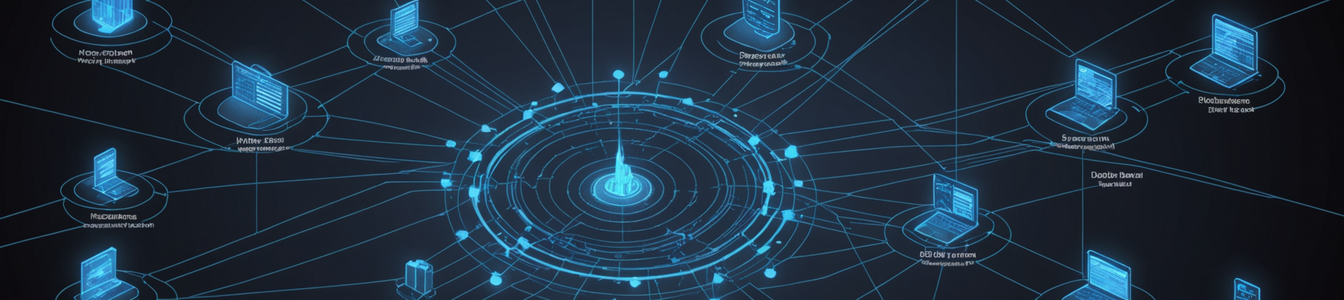
Meanwhile, in South Asia, Pakistan's approach exemplifies a more centralized, infrastructure-level model focused on national defense. During a briefing to the country's National Assembly, cybersecurity authorities emphatically declared that a national firewall is 'vital' for cyber defense. This concept goes far beyond providing tools to individual users; it involves the state implementing a large-scale, network-level filtering and monitoring system at the country's internet exchange points. Such a national firewall is designed to block malicious traffic, phishing sites, and command-and-control servers for botnets before they ever reach end-users or critical national infrastructure. Officials frame this as a necessary defensive perimeter in a hostile cyber environment.
For cybersecurity professionals, a national firewall presents a dual-edged sword. On one hand, it could theoretically reduce the volume of low-level malware and spam attacks that organizations must filter, allowing security operations centers (SOCs) to focus on more advanced threats. On the other hand, it centralizes immense power. The criteria for blocking traffic, the transparency of block lists, and the oversight of the system are critical details that define the line between defense and censorship. There is a significant risk of mission creep, where a tool justified for blocking malware is gradually used to suppress political dissent, restrict access to legal information, or stifle competition. This model also creates a single point of failure—if the national firewall is compromised or misconfigured, it could disrupt the internet for an entire country.
Parallel to these direct provision models, regulatory actions in nations like Russia illustrate another facet of state intervention in the digital ecosystem. While not providing tools directly, the Russian Federal Antimonopoly Service (FAS) has moved against advertising on platforms like Telegram and YouTube, with the national communications regulator, Roskomnadzor (RKN), not contesting the findings. This reflects a broader strategy of asserting control over the digital economic layer and the flow of information, which is intrinsically linked to cybersecurity narratives. Governments may justify such controls as necessary to combat fraud, protect citizens from harmful content, or prevent foreign influence—objectives that often overlap with cybersecurity goals. This creates a 'splinternet' effect, where national boundaries are reinforced in cyberspace, challenging the global, interconnected nature of the internet that security protocols were built upon.
The convergence of these models—direct tool provision (Netherlands), national infrastructure control (Pakistan), and economic/ informational regulation (Russia)—defines the new era of state-sanctioned security. For the global cybersecurity community, the implications are vast:
- Threat Modeling Evolution: Security teams must now consider the state not only as a potential threat actor (APT groups) or defender (CERTs) but also as the provider of the very tools used for defense. The threat model for a citizen using a state VPN is radically different from one using a commercial provider.
- Trust and Verification: The principle of 'zero trust' extends to the infrastructure layer. Can organizations trust traffic originating from a government-issued VPN? How is certificate management handled? Auditing and transparency mechanisms for these state tools will become a new field of expertise.
- Fragmentation of Standards: The internet risks becoming a patchwork of national protocols and approved toolsets. This fragmentation complicates international collaboration on threat intelligence, incident response, and the development of universal security standards.
- Vendor Landscape Disruption: Widespread adoption of free, government-provided security tools could disrupt the commercial market for consumer VPNs, password managers, and security software, potentially stifling innovation in the private sector.
In conclusion, the push for government-issued cyber tools marks a pivotal moment in the evolution of digital society. While the intent to elevate baseline security for all citizens is commendable, the path is fraught with risks to privacy, innovation, and the open web. The cybersecurity industry's role is no longer just to build better tools, but to actively engage in policy debates, advocate for technical safeguards like open-source code audits and independent oversight boards, and develop new frameworks for security in an age where the line between guardian and gatekeeper is increasingly blurred. The technical decisions made in the coming years will define not just our security, but the fundamental architecture of digital freedom.
Comentarios 0
Comentando como:
¡Únete a la conversación!
Sé el primero en compartir tu opinión sobre este artículo.
¡Inicia la conversación!
Sé el primero en comentar este artículo.