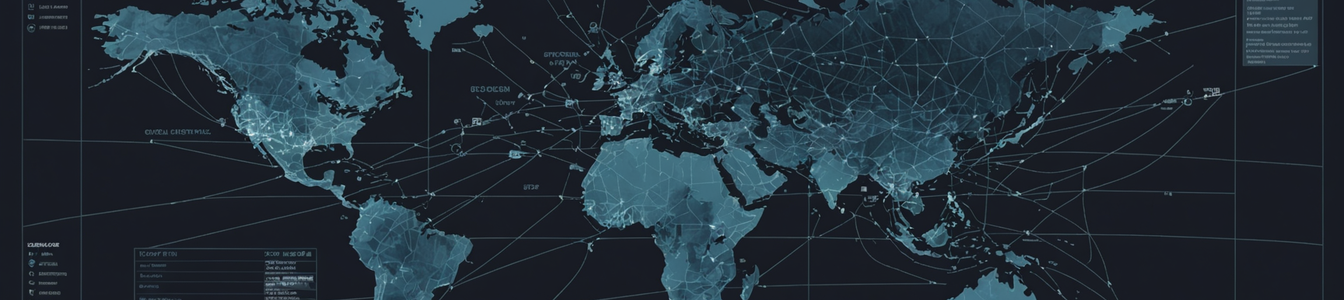
Critical Infrastructure in the Crosshairs: A Dual-Front Cyber Assault
The global cybersecurity landscape is facing a stark new reality as sophisticated threat actors launch coordinated attacks against the very foundations of modern society: critical infrastructure. Two recent, high-impact incidents—one targeting aviation in India and another aimed at government services in the United States—illustrate a dangerous escalation in tactics, blending physical disruption with digital extortion.
GPS Spoofing: A Clear and Present Danger to Aviation Safety
Indian aviation authorities have confirmed a significant and disruptive GPS spoofing campaign that affected hundreds of commercial flights across multiple major airports. The incident, which impacted key hubs like Delhi's Indira Gandhi International (IGI) Airport, represents one of the most widespread publicly acknowledged attacks of its kind on civilian air travel.
GPS spoofing is a sophisticated cyber-physical attack where adversaries broadcast counterfeit Global Positioning System signals that are stronger and more convincing than the authentic ones from satellites. These malicious signals "trick" GPS receivers on aircraft into calculating incorrect positional data. Pilots and air traffic control systems may then believe an aircraft is miles off its actual course, posing severe risks to navigation, approach procedures, and overall flight safety. Unlike simple GPS jamming, which merely blocks the signal, spoofing is a deceptive and targeted manipulation that can be harder to immediately detect.
The scale of the disruption in India, affecting "hundreds of flights," underscores the vulnerability of a system the world relies upon for safe, efficient travel. While no accidents have been reported, the incident forced contingency protocols, increased pilot workload, and likely caused delays and economic ripple effects. This attack serves as a live-fire demonstration of how OT systems in critical sectors are no longer isolated from digital threats.
A Ransomware Repelled: Securing the Backbone of Commerce
On a separate front, the Georgia Superior Court Clerks' Cooperative Authority in the U.S. successfully defended against a ransomware attack targeting the state's real estate transaction portal. This portal is not a mere informational website; it is a critical piece of financial and legal infrastructure that facilitates property deeds, mortgages, and liens—the lifeblood of the real estate market and local government revenue.
The authority's swift detection and response prevented the encryption of systems and the subsequent downtime that typically characterizes such attacks. While details of the specific ransomware variant and initial attack vector (e.g., phishing, vulnerability exploit) were not fully disclosed, the thwarted incident highlights a trend of ransomware gangs increasingly targeting government and quasi-governmental entities that manage essential services. The motivation is clear: these organizations possess sensitive data and provide services upon which the public depends, creating immense pressure to pay ransoms to restore operations quickly.
Analysis: Convergence and Escalation in Critical Infrastructure Attacks
Analyzed together, these incidents reveal several alarming trends for cybersecurity professionals and national security planners:
- The OT Security Gap: The aviation GPS attack exploits the inherent trust placed in OT systems like navigational aids. These systems were often designed for reliability and safety in an era before pervasive connectivity, not with modern cybersecurity threats in mind. Securing them requires a paradigm shift that integrates cybersecurity resilience into physical system design and operations.
- The Blurring of Motives: The attacks showcase different ends of the threat spectrum. The GPS spoofing incident carries hallmarks of a state-sponsored or highly sophisticated actor potentially testing capabilities, causing disruption, or gathering intelligence. The ransomware attempt on Georgia is classic cybercriminal activity for financial gain. This blurring means defenders must prepare for both disruptive and financially motivated threats against the same critical assets.
- The High Stakes of Resilience: In both cases, the impact transcends data loss. The potential consequences include catastrophic safety incidents, severe economic disruption, and erosion of public trust in essential institutions. The Georgia case demonstrates that proactive defense, robust backups, and effective incident response can prevent a crisis.
Recommendations for a Resilient Future
To counter this evolving threat matrix, a multi-layered defense strategy is non-negotiable:
- For Aviation and OT-Dependent Sectors: Implement and mandate alternative or backup navigation systems (e.g., inertial navigation, ground-based navigation aids) that are independent of GPS. Enhance monitoring for anomalous GPS signal data and invest in spoofing detection technologies. Foster international information sharing on such incidents, as GPS spoofing is a global threat to aviation and maritime sectors.
- For Government and Critical Service Providers: Adopt a "zero trust" architecture for critical networks, segment vital systems like real estate portals from general IT networks, and conduct relentless penetration testing and security audits. Ensure immutable, offline backups are in place and that incident response plans are drilled regularly.
- Cross-Sector Collaboration: Public-private partnerships are crucial. Aviation authorities must work closely with cybersecurity agencies, satellite signal providers, and aircraft manufacturers. Government IT agencies should collaborate with cybersecurity firms and federal law enforcement to share threat intelligence.
The simultaneous attacks in India and Georgia are not isolated events but warning flares. They signal that critical infrastructure is now a primary battlefield in cyberspace. Building resilience requires moving beyond compliance checklists to embracing a culture of security-by-design, continuous monitoring, and cross-sector solidarity. The safety of our skies and the stability of our economies depend on it.
Comentarios 0
Comentando como:
¡Únete a la conversación!
Sé el primero en compartir tu opinión sobre este artículo.
¡Inicia la conversación!
Sé el primero en comentar este artículo.