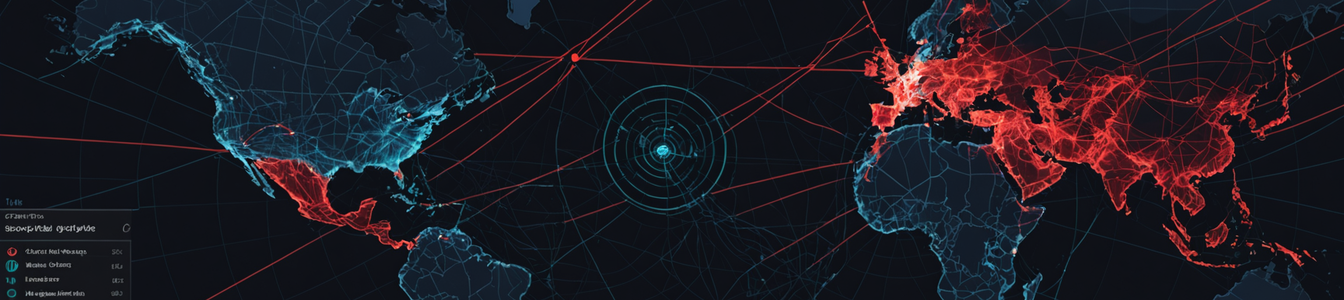
The aviation industry faces an unprecedented cybersecurity threat as sophisticated GPS spoofing attacks target critical navigation infrastructure, with Delhi International Airport experiencing 465 confirmed incidents over 16 months that disrupted more than 800 flights and raised serious concerns about aviation safety and national security.
The Delhi Airport Incident: A Case Study in GPS Spoofing
Recent events at Delhi's Indira Gandhi International Airport have exposed critical vulnerabilities in global aviation infrastructure. While initial official statements ruled out cyber attacks, subsequent technical analysis revealed a pattern of GPS spoofing incidents that affected aircraft navigation systems and air traffic management. The disruption caused significant flight delays, operational chaos, and highlighted the aviation sector's unpreparedness for sophisticated cyber-physical attacks.
GPS spoofing involves broadcasting counterfeit Global Positioning System signals that deceive receivers into calculating incorrect position, navigation, and timing data. Unlike GPS jamming, which simply blocks signals, spoofing provides convincing but false location information that can mislead pilots and automated systems without triggering immediate alarms.
Technical Analysis of the Threat
Aviation cybersecurity experts have identified several concerning patterns in the Delhi incidents. The spoofing attacks demonstrated sophisticated understanding of aviation navigation protocols and appeared coordinated to maximize disruption during peak operational hours. The attackers exploited the inherent trust that modern aviation systems place in GPS data, which serves as a primary navigation source for everything from flight management systems to ground-based navigation aids.
Modern aircraft rely on multiple navigation systems, including inertial navigation, radio navigation, and satellite-based positioning. However, GPS spoofing can corrupt the primary reference system, causing cascading errors across other navigation subsystems. The attacks in Delhi showed particular sophistication in maintaining plausible but incorrect position data, making detection challenging for both pilots and automated monitoring systems.
Broader Implications for Critical Infrastructure
The Delhi incidents represent just one visible manifestation of a growing global threat. Cybersecurity researchers have documented increasing GPS spoofing activities targeting commercial shipping, military operations, and critical infrastructure worldwide. The aviation sector's particular vulnerability stems from its heavy reliance on precise timing and positioning data for safe operations.
What makes these incidents particularly alarming is their potential to escalate from operational disruptions to safety-critical situations. While current aviation safety systems include multiple redundancies, coordinated spoofing attacks could potentially overwhelm these safeguards, especially if combined with other cyber attack vectors.
Industry Response and Mitigation Strategies
The aviation industry and regulatory bodies are scrambling to develop effective countermeasures. Key mitigation strategies include:
- Implementation of multi-source navigation verification systems that cross-reference GPS data with inertial navigation, celestial navigation, and ground-based systems
- Development of cryptographic authentication for civil GPS signals, similar to military GPS encryption
- Enhanced pilot training for recognizing and responding to potential spoofing incidents
- Real-time monitoring systems that detect anomalies in GPS signal characteristics
- International cooperation on establishing spoofing detection and reporting protocols
National Security Implications
The GPS spoofing incidents raise significant national security concerns. Aviation infrastructure represents critical national assets, and successful attacks could have devastating consequences beyond operational disruptions. The ability to manipulate aircraft navigation could be exploited for purposes ranging from economic disruption to coordinated terrorist activities.
Government agencies worldwide are increasing scrutiny of GPS-dependent critical infrastructure and developing contingency plans for GPS-denied environments. The incidents highlight the urgent need for robust backup systems and the development of alternative positioning, navigation, and timing technologies that don't rely solely on vulnerable satellite systems.
Future Outlook and Recommendations
As GPS spoofing technology becomes more accessible and sophisticated, the aviation industry must adopt a proactive security posture. Key recommendations include:
- Accelerated deployment of alternative navigation technologies
- Enhanced international information sharing about spoofing incidents
- Development of standardized spoofing detection and response protocols
- Increased investment in cybersecurity research specific to aviation navigation systems
- Regular security audits and penetration testing of navigation infrastructure
The Delhi airport incidents serve as a wake-up call for the global aviation community. While no accidents resulted from these particular spoofing events, they demonstrate the urgent need to address vulnerabilities in critical navigation systems before more serious consequences occur.
As the industry moves toward increasingly automated and GPS-dependent operations, ensuring the security and integrity of navigation systems becomes not just a technical challenge but a fundamental safety requirement. The lessons from Delhi must inform global aviation security practices to prevent future incidents from escalating into tragedies.
Comentarios 0
Comentando como:
¡Únete a la conversación!
Sé el primero en compartir tu opinión sobre este artículo.
¡Inicia la conversación!
Sé el primero en comentar este artículo.