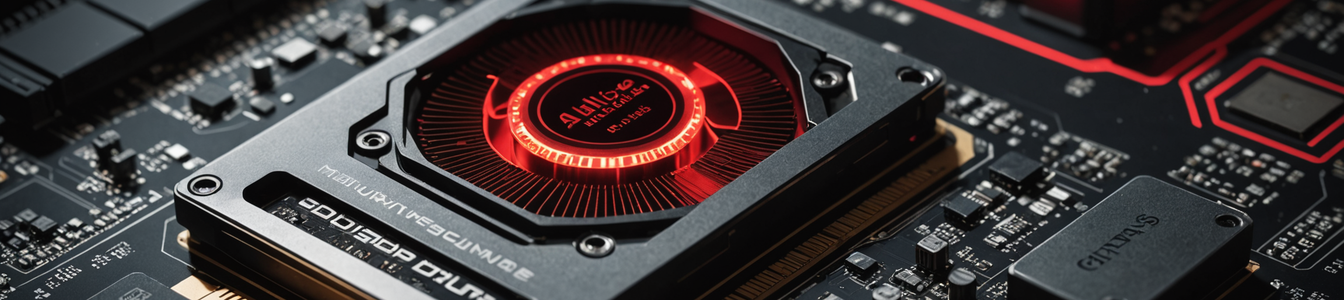
The cybersecurity landscape is witnessing a dangerous evolution as threat actors shift their focus from software vulnerabilities to hardware and firmware components. The latest battleground is the Graphics Processing Unit (GPU), a powerful and ubiquitous piece of hardware that has largely operated outside the scrutiny of traditional security tools. Concurrently, a resurgence in attacks leveraging signed but vulnerable drivers is providing attackers with unprecedented kernel-level access. Together, these trends are creating a perfect storm for defenders, enabling malware to operate with near-invisibility and devastating effectiveness.
GPU Memory: The New Stealthy Safehouse
For years, malware has resided in system RAM, a space actively scanned by antivirus and EDR solutions. To evade this, advanced actors are now exploiting the dedicated memory of graphics cards—known as VRAM or GDDR memory. Malware families identified as "GeForge" and "GDDRHammer" exemplify this technique. By loading malicious code into GPU memory, these threats bypass host-based security controls that typically do not inspect this area. The GPU, designed for parallel processing of graphics and computational tasks, becomes an unwitting accomplice, executing instructions that can establish backdoors, mine cryptocurrency, or stage further attacks.
This method offers several advantages to attackers. First, it provides a persistent foothold that survives operating system reboots in some implementations. Second, it is exceptionally difficult to detect, as few security tools have the capability to scan GPU memory or interpret its contents. Third, it can be used to directly attack the GPU itself or other system components via DMA (Direct Memory Access) channels, potentially leading to system instability or complete compromise.
Weaponizing Trusted Drivers: The Return of Kernel-Mode Attacks
In a parallel and equally concerning development, ransomware groups like Qilin and Warlock have refined a classic attack vector: Bring Your Own Vulnerable Driver (BYOVD). These groups are exploiting known vulnerabilities in legitimate, digitally signed drivers from hardware manufacturers. Because these drivers carry a valid signature from trusted companies, they are allowed to load into the Windows kernel—the most privileged part of the operating system.
Once inside the kernel, the malicious code—disguised as or injected into the legitimate driver—gains the highest level of system privileges. From this position of absolute trust, it can systematically disable, uninstall, or tamper with security software. Reports indicate that the toolkits used by Qilin and Warlock are capable of neutralizing over 300 distinct EDR, antivirus, and endpoint protection products. This effectively blinds the security stack before the main ransomware payload is deployed, ensuring encryption proceeds unimpeded.
Convergence and Impact on the Security Industry
The convergence of GPU-based evasion and driver-based privilege escalation represents a multi-layered offensive strategy. An attacker could theoretically use a GPU-resident loader to deploy a vulnerable driver, which then disables EDR, creating a clean environment for a ransomware detonation. This "defense-in-depth" approach by attackers forces defenders to protect every layer of the stack.
The impact on the cybersecurity community is profound. Security architectures predicated on monitoring CPU and system RAM are now insufficient. The assumption that signed drivers are inherently safe has been shattered. For enterprise security teams, this means:
- Expanded Monitoring Scope: Security solutions must now incorporate the ability to monitor GPU memory access patterns, driver load events, and kernel-level operations for suspicious activity.
- Stricter Driver Policies: Organizations need to implement policies that restrict which drivers can be loaded, leveraging features like Windows Defender Application Control (WDAC) or similar solutions to create allow lists of known-good drivers.
- Behavioral Analysis Emphasis: Signature-based detection is futile against these techniques. Security must focus on behavioral analytics, detecting the anomalous actions that occur when a driver starts killing security processes or when the GPU begins executing unusual computational tasks.
- Firmware and Hardware Security: A longer-term view must include securing the firmware of peripheral devices like GPUs and implementing hardware-based security features that can restrict unauthorized memory access.
Conclusion: A Call for Architectural Rethinking
The emergence of GeForge, GDDRHammer, Qilin, and Warlock is not an anomaly but a signpost for the future of cyber threats. Attackers are relentlessly seeking the path of least resistance, and they have found it in the blind spots of our security models—the trusted hardware components and the privileged software bridges we rely on. Defending against these advanced techniques requires a fundamental rethinking of endpoint security architecture. It is no longer just about protecting the operating system; it is about securing the entire computational ecosystem, from the silicon up. The era of hardware-aware and trust-validating cybersecurity has unequivocally begun.
Comentarios 0
Comentando como:
¡Únete a la conversación!
Sé el primero en compartir tu opinión sobre este artículo.
¡Inicia la conversación!
Sé el primero en comentar este artículo.